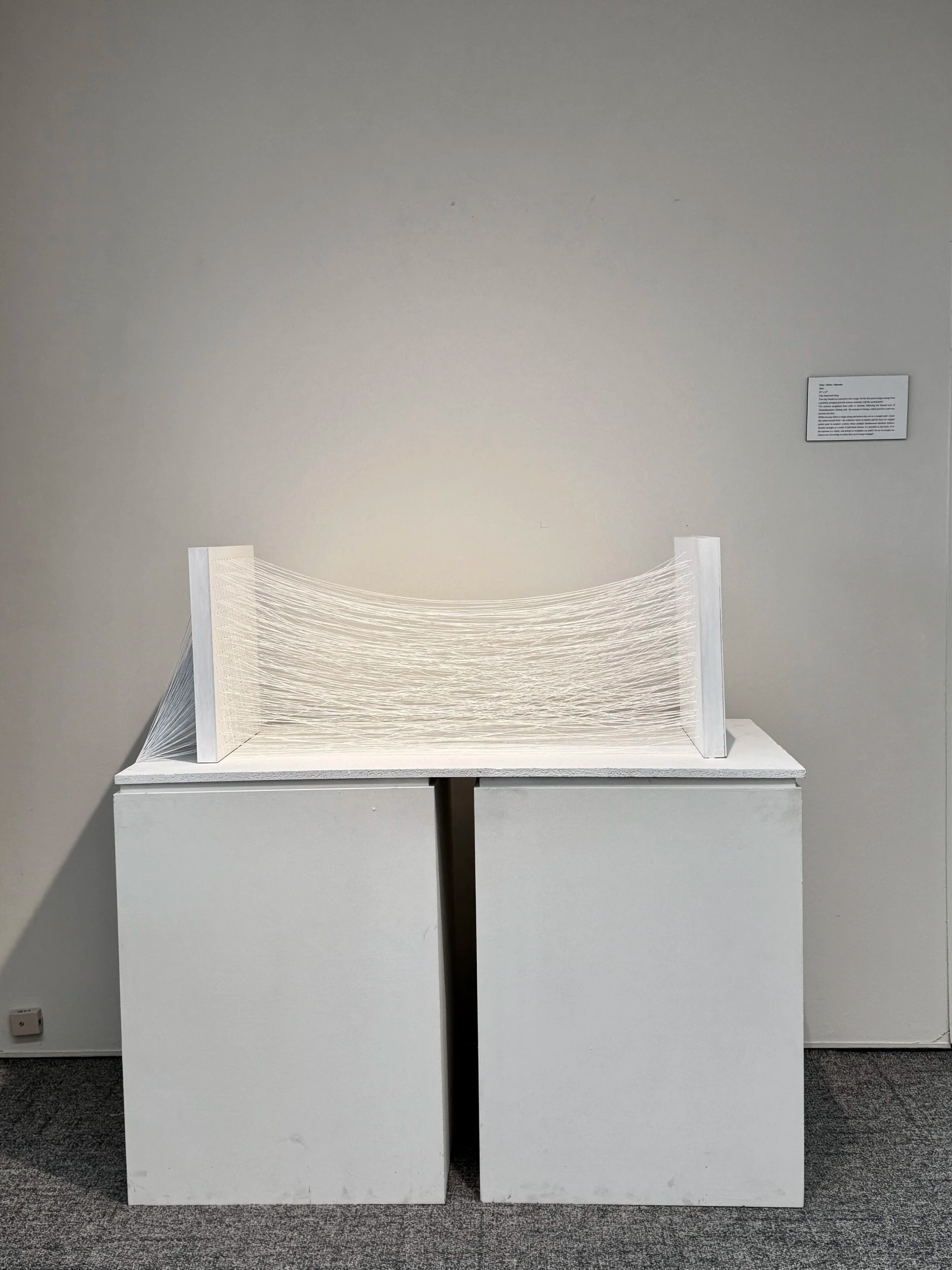
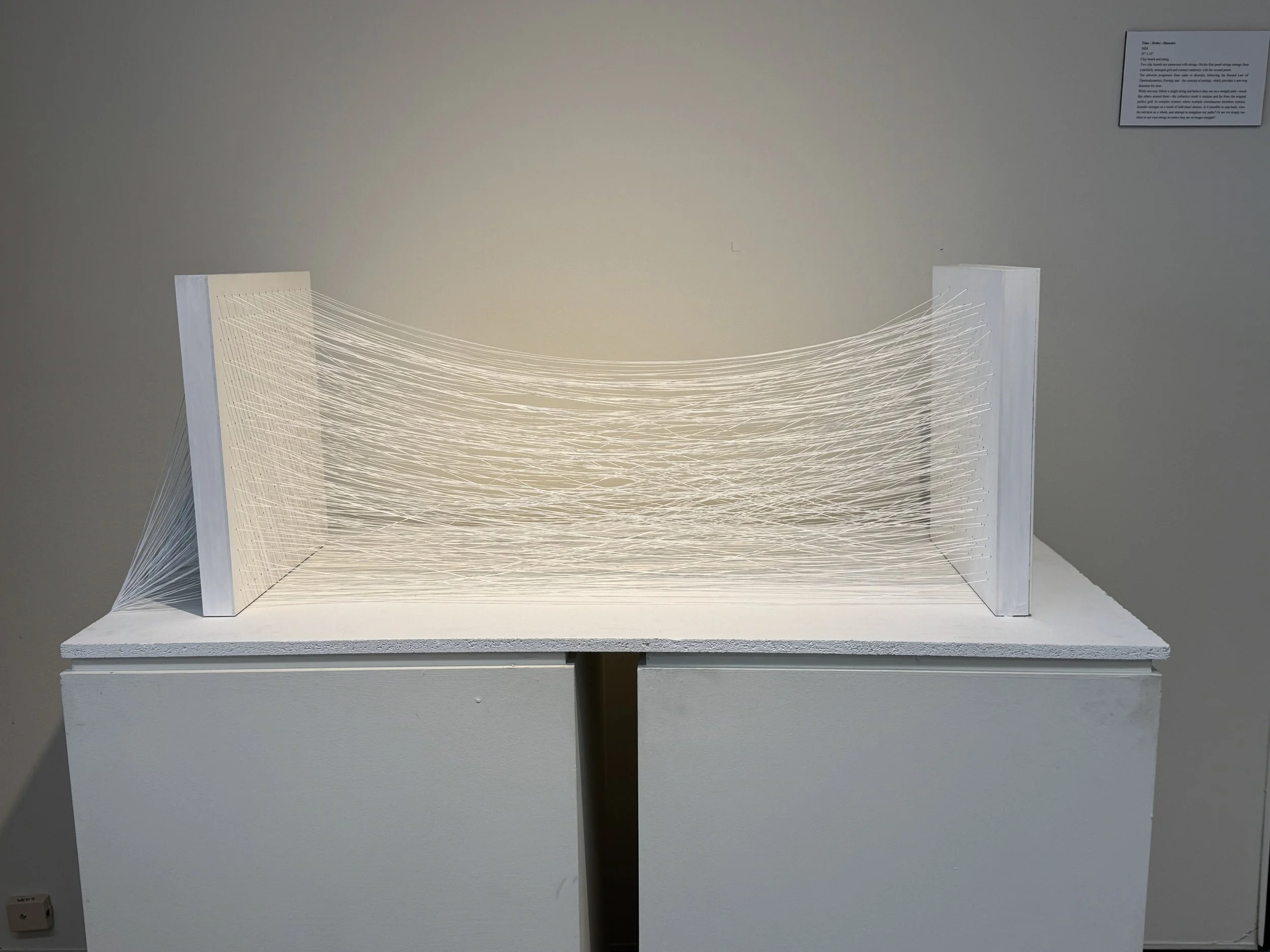
16” x 16”
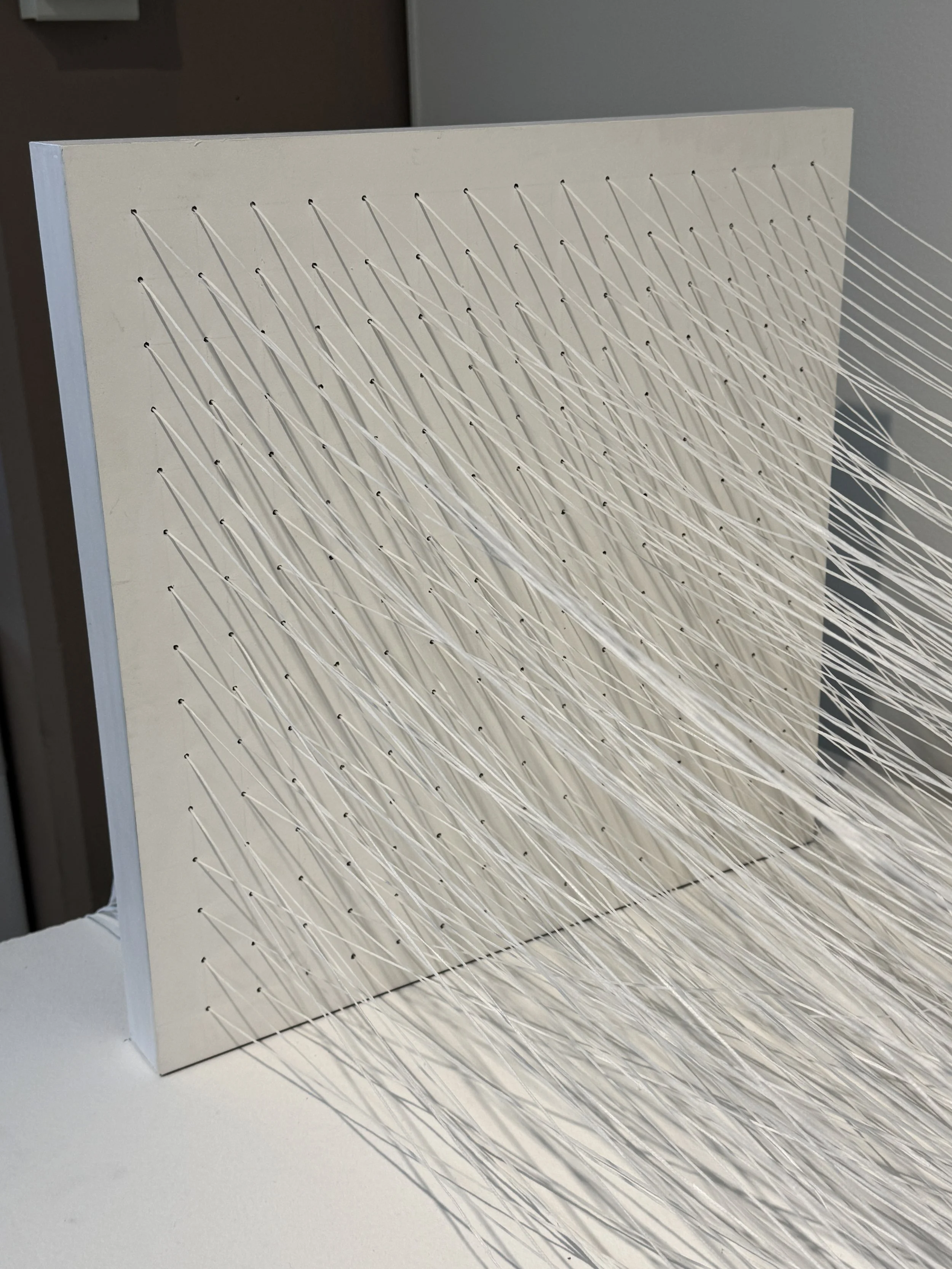
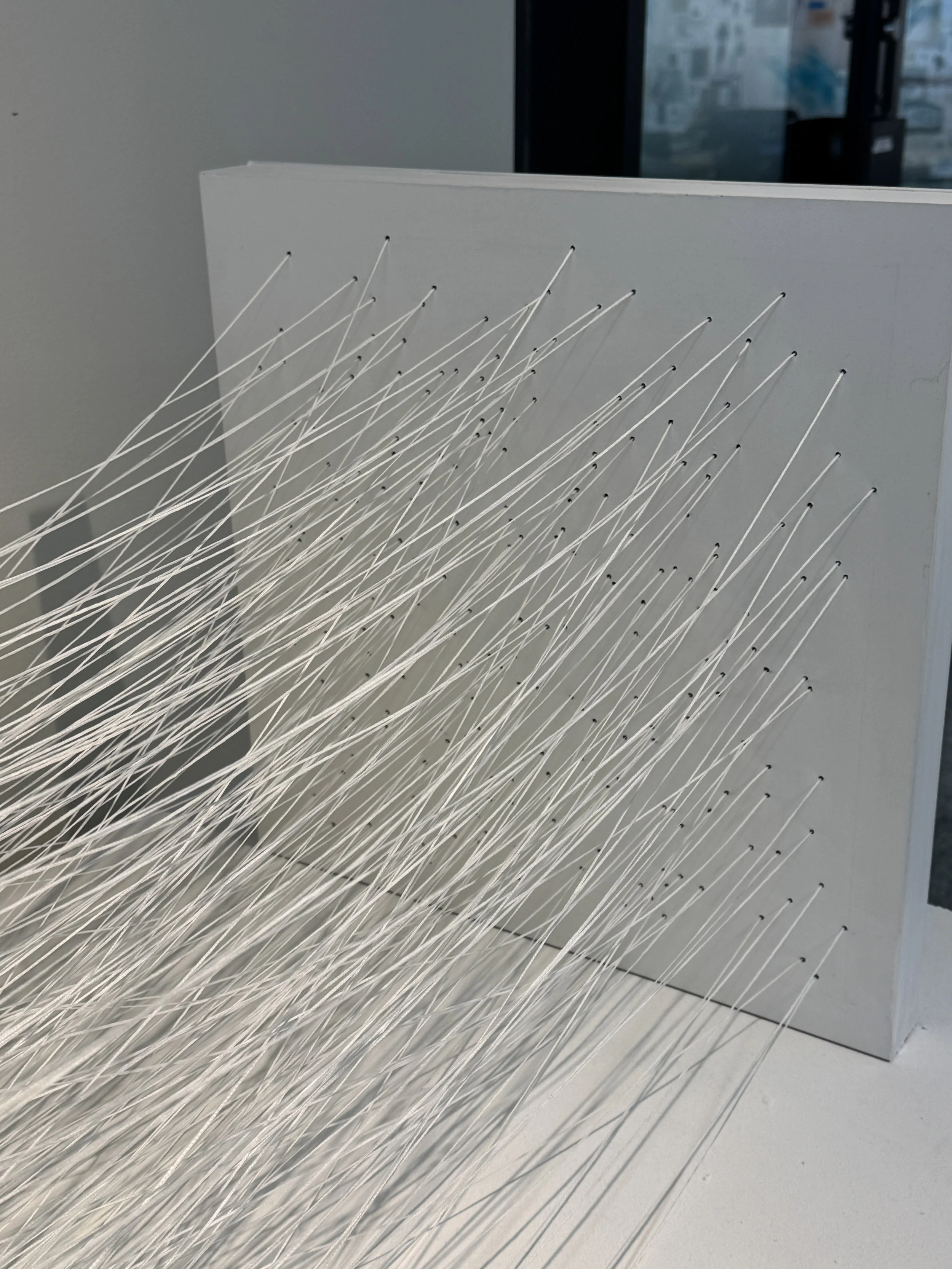
Clay board and string
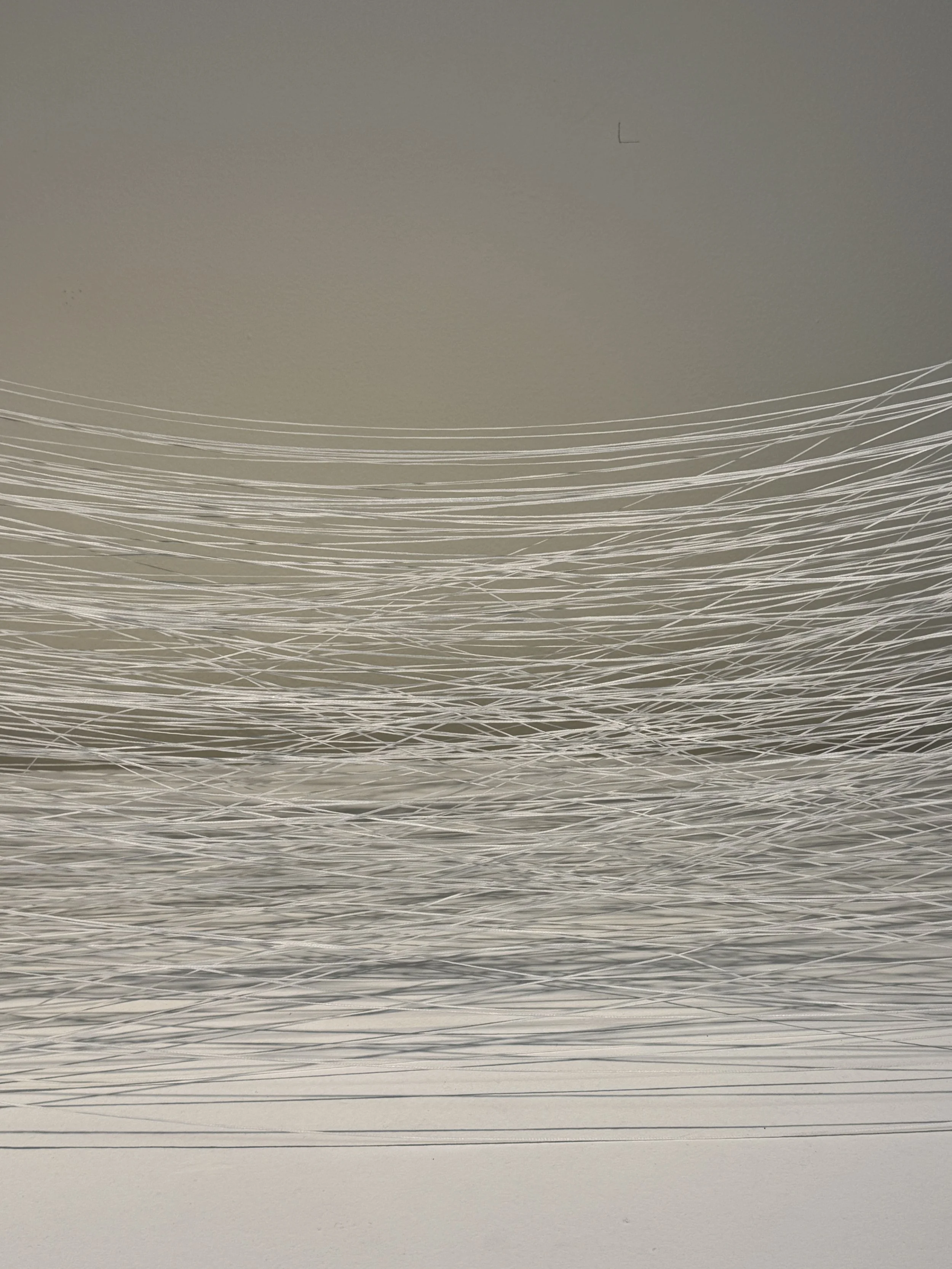
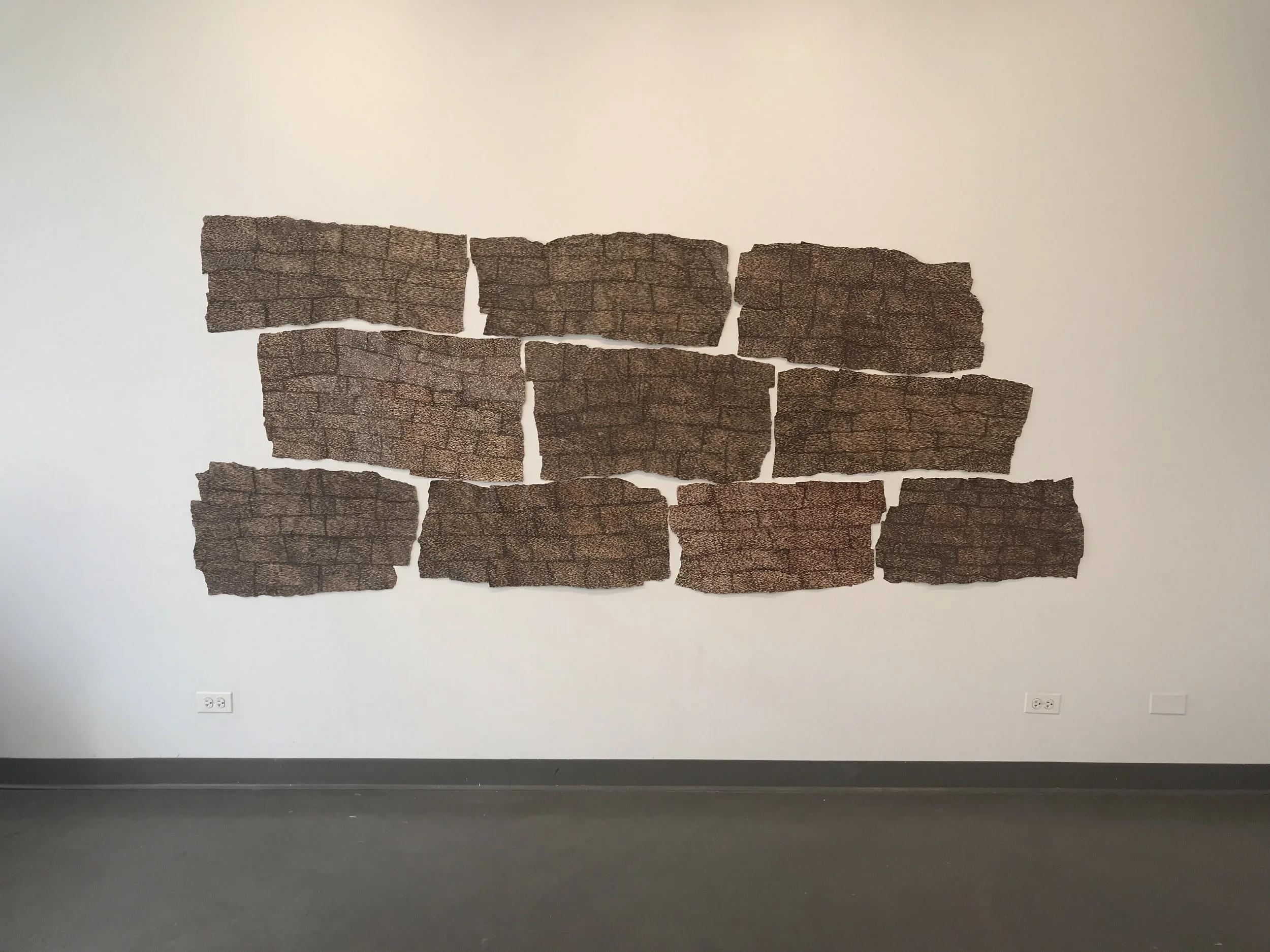
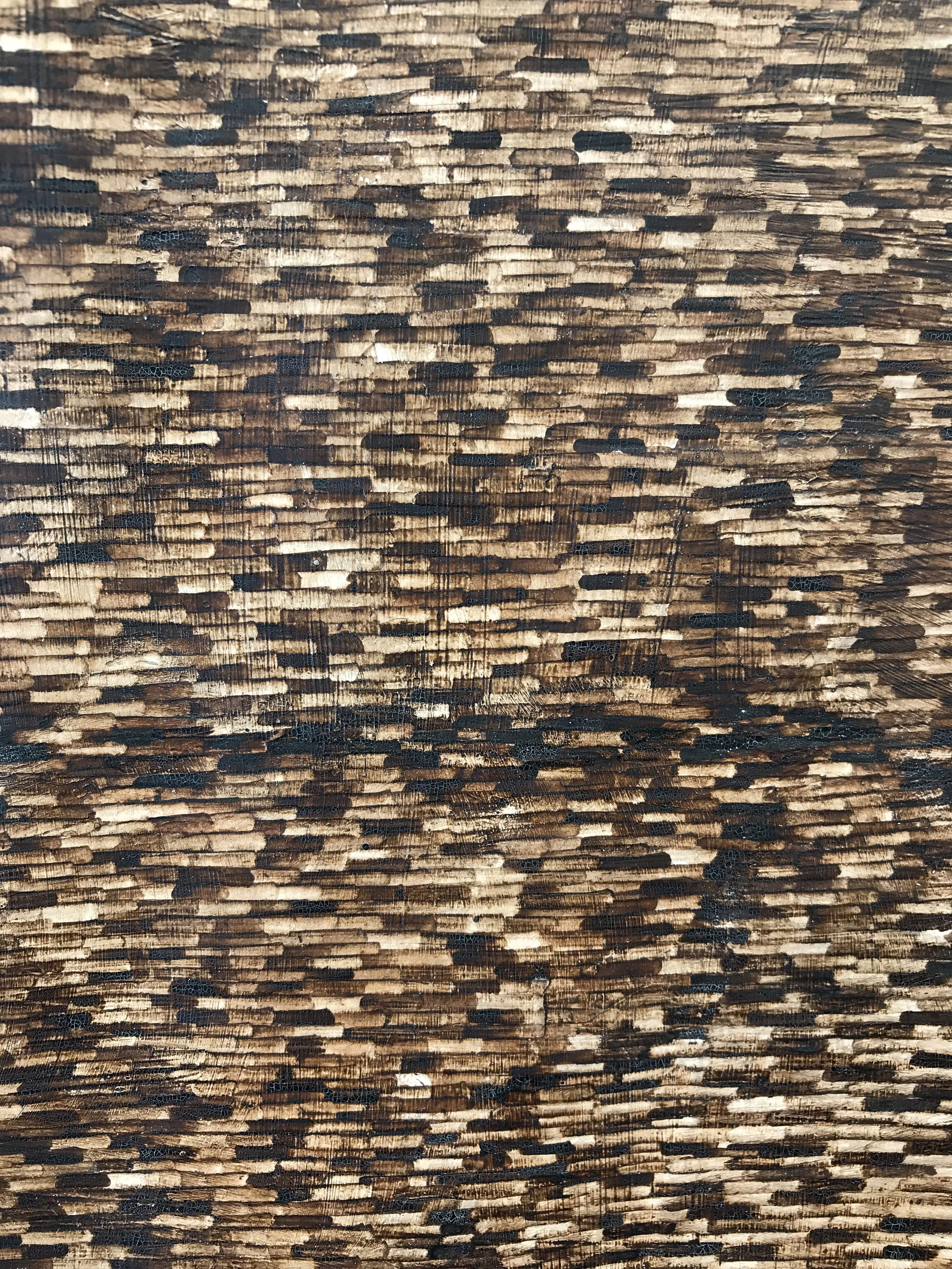
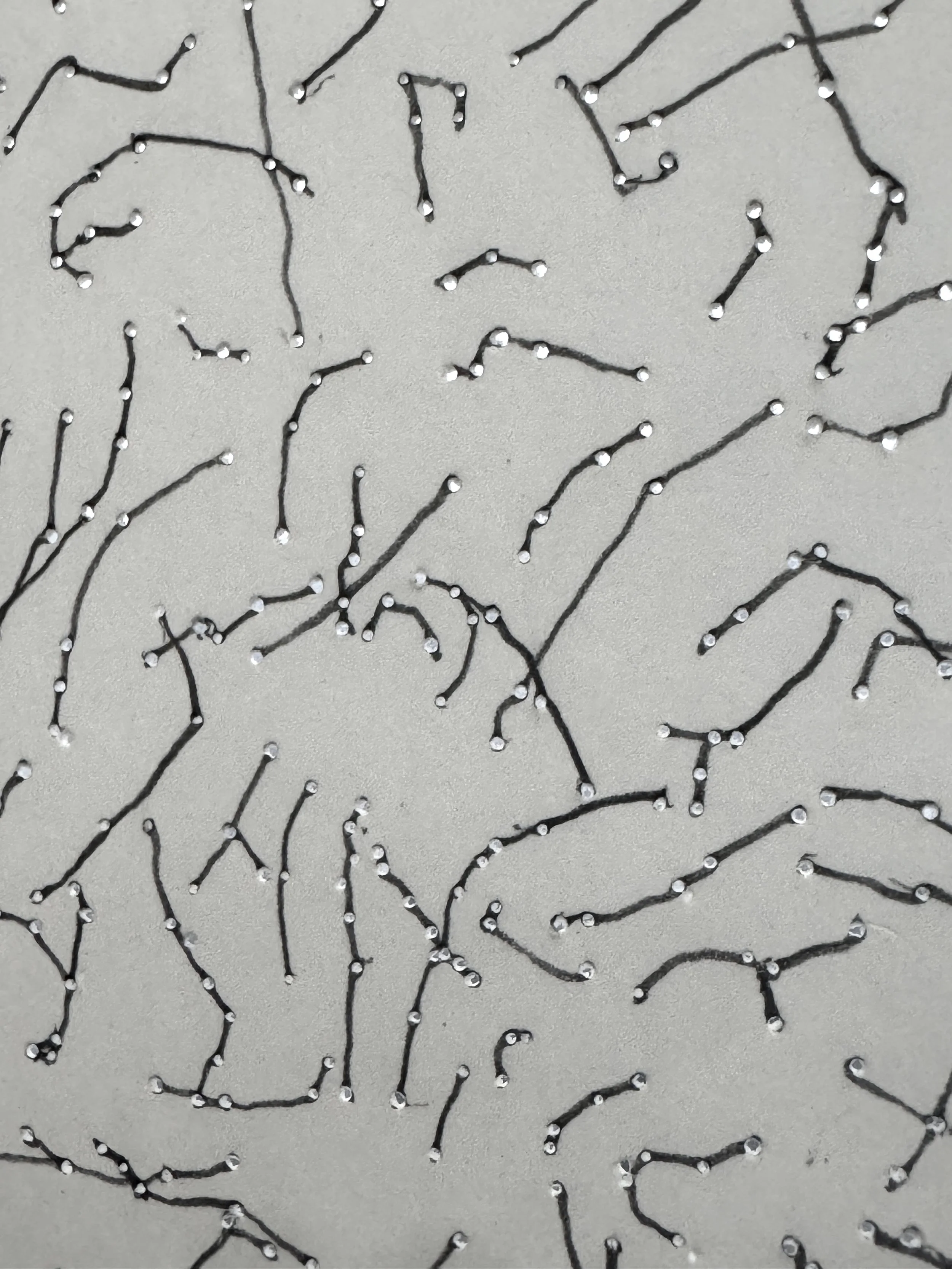
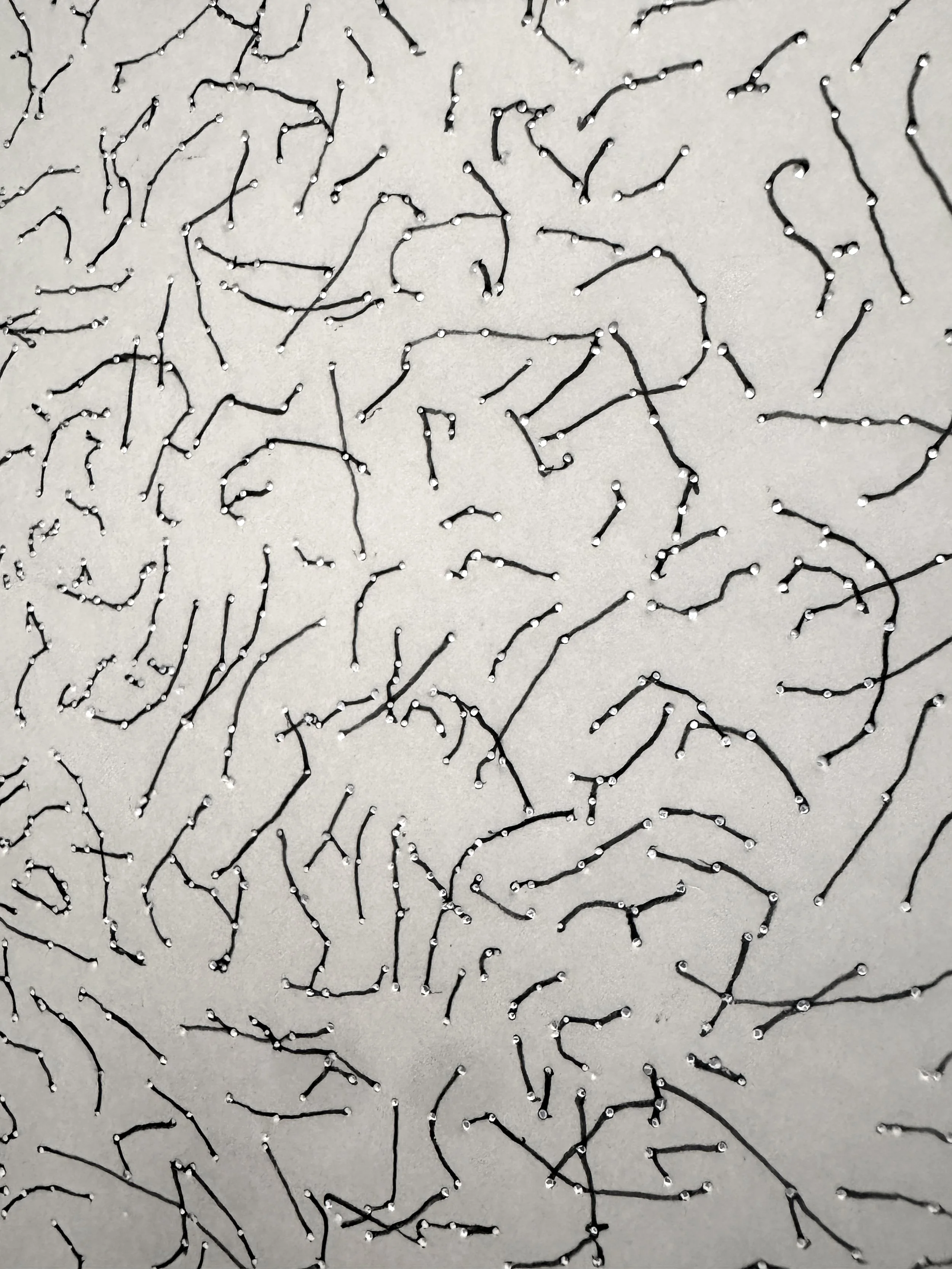
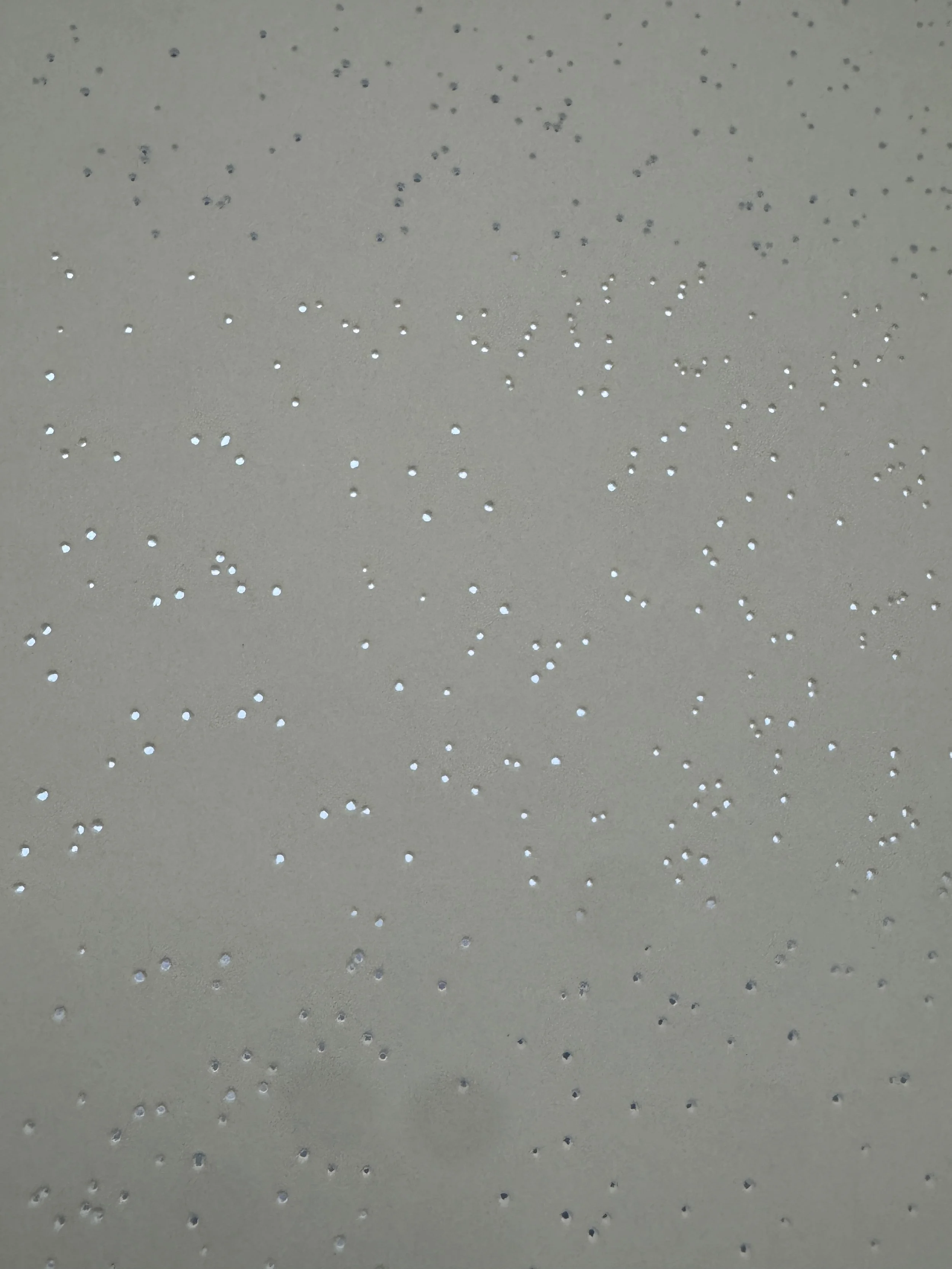
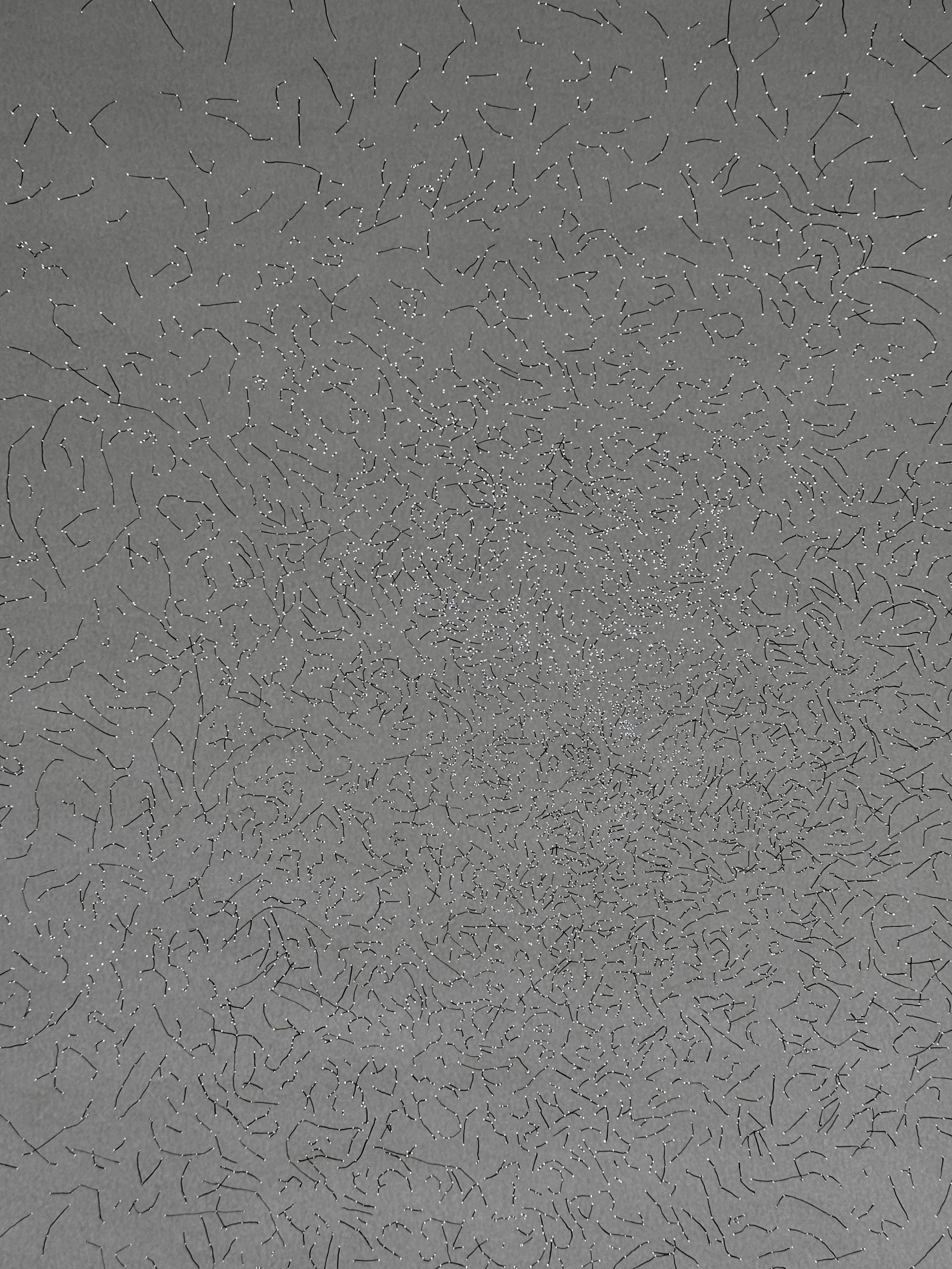
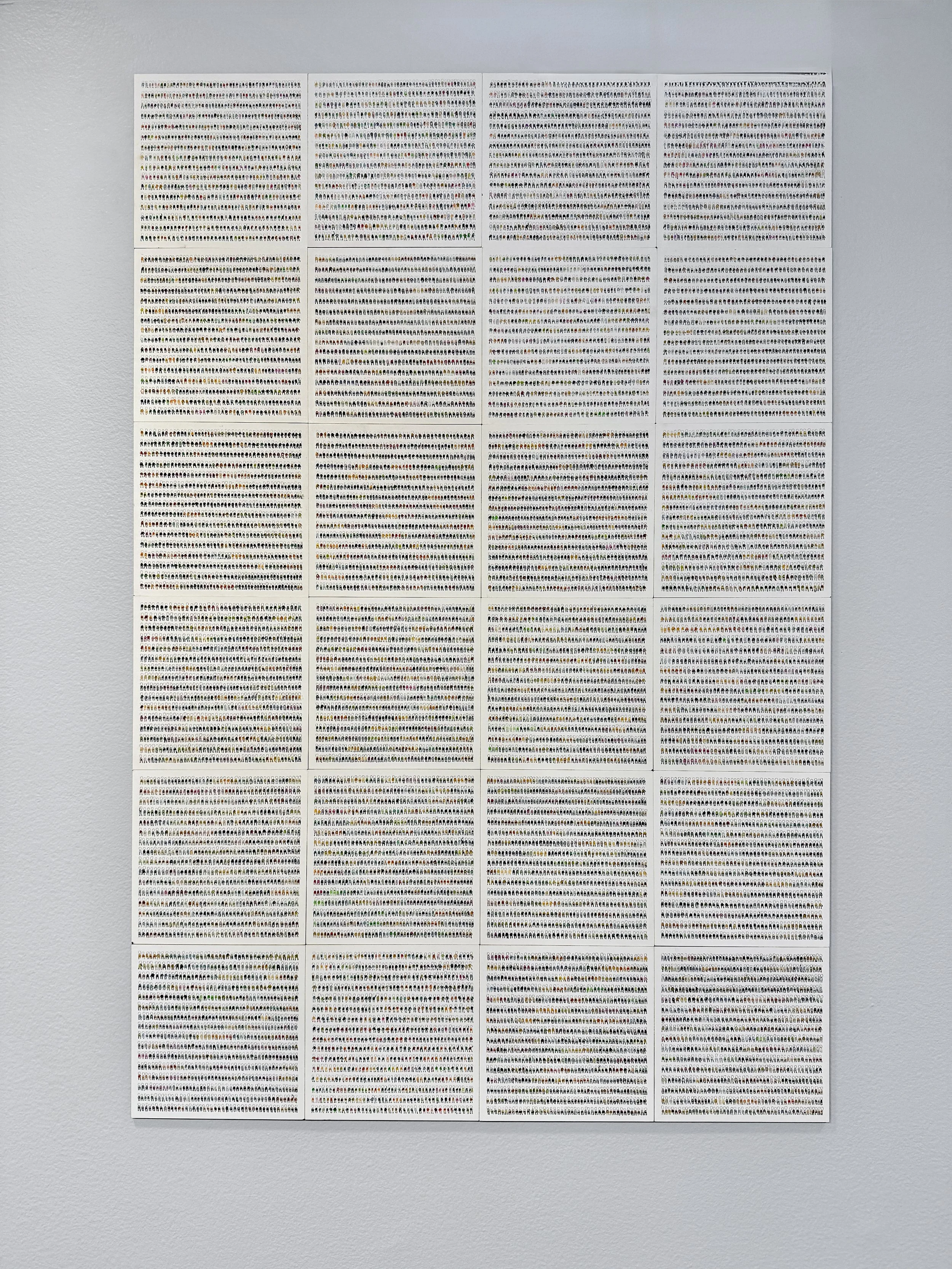
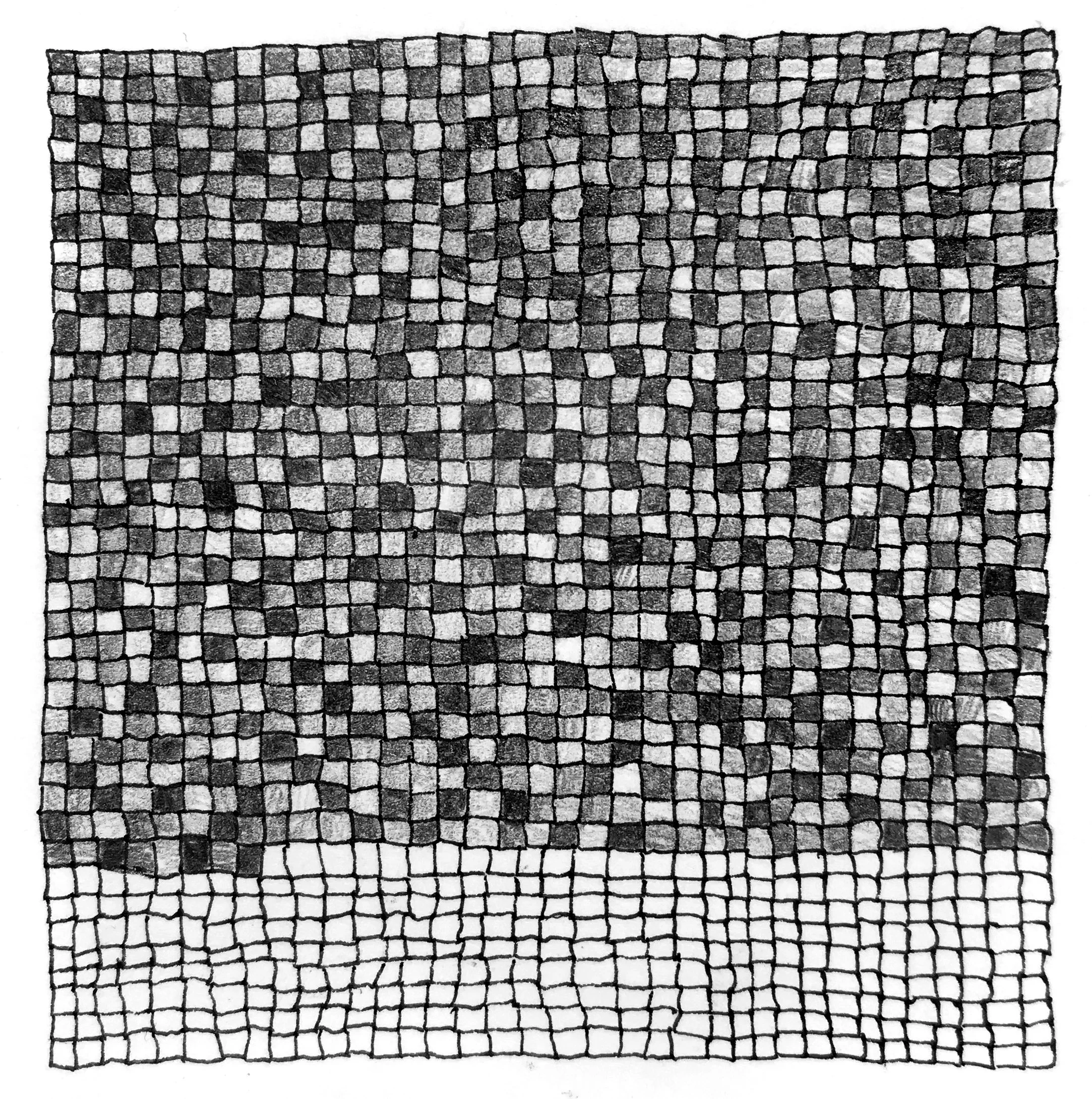
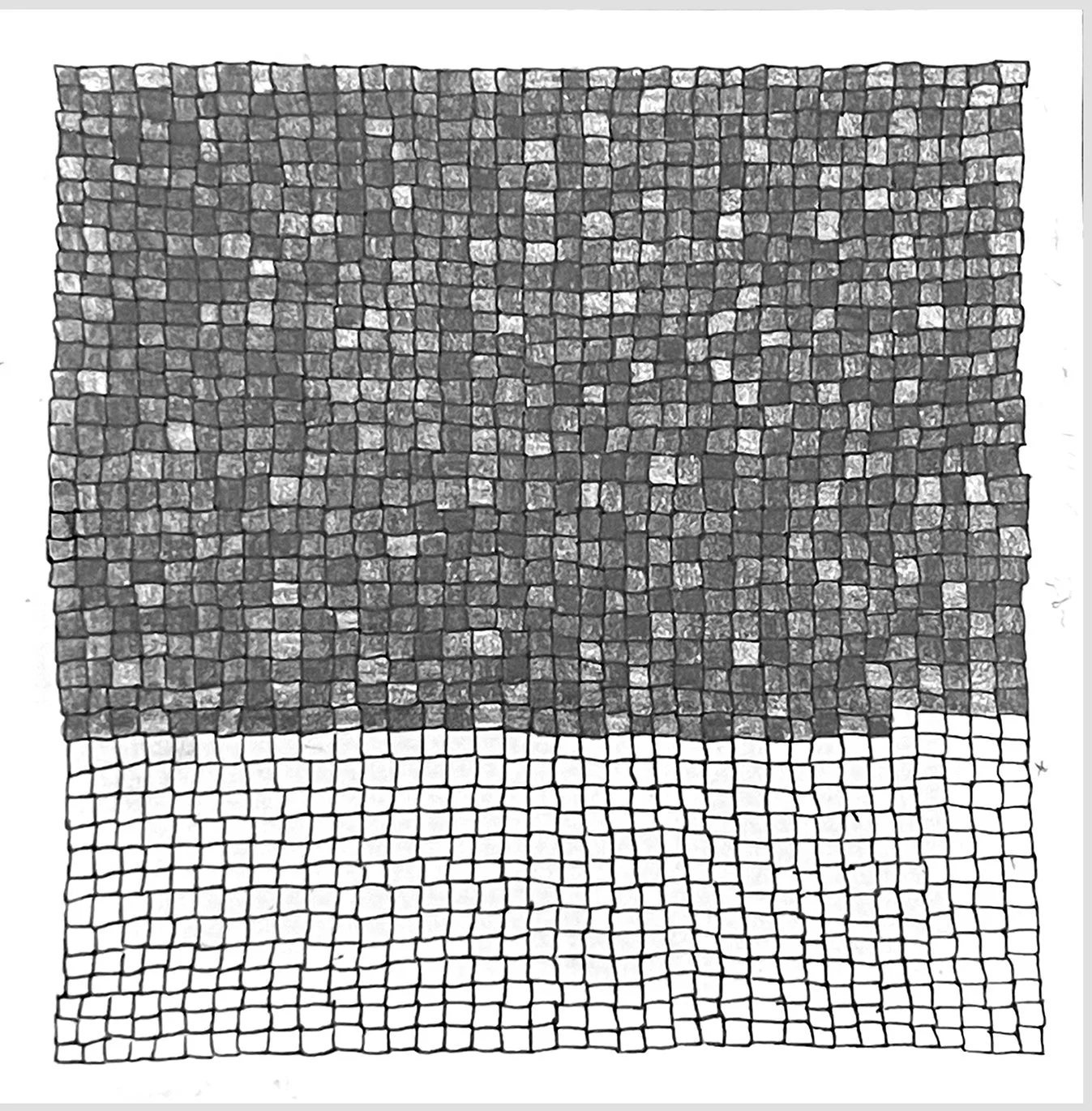
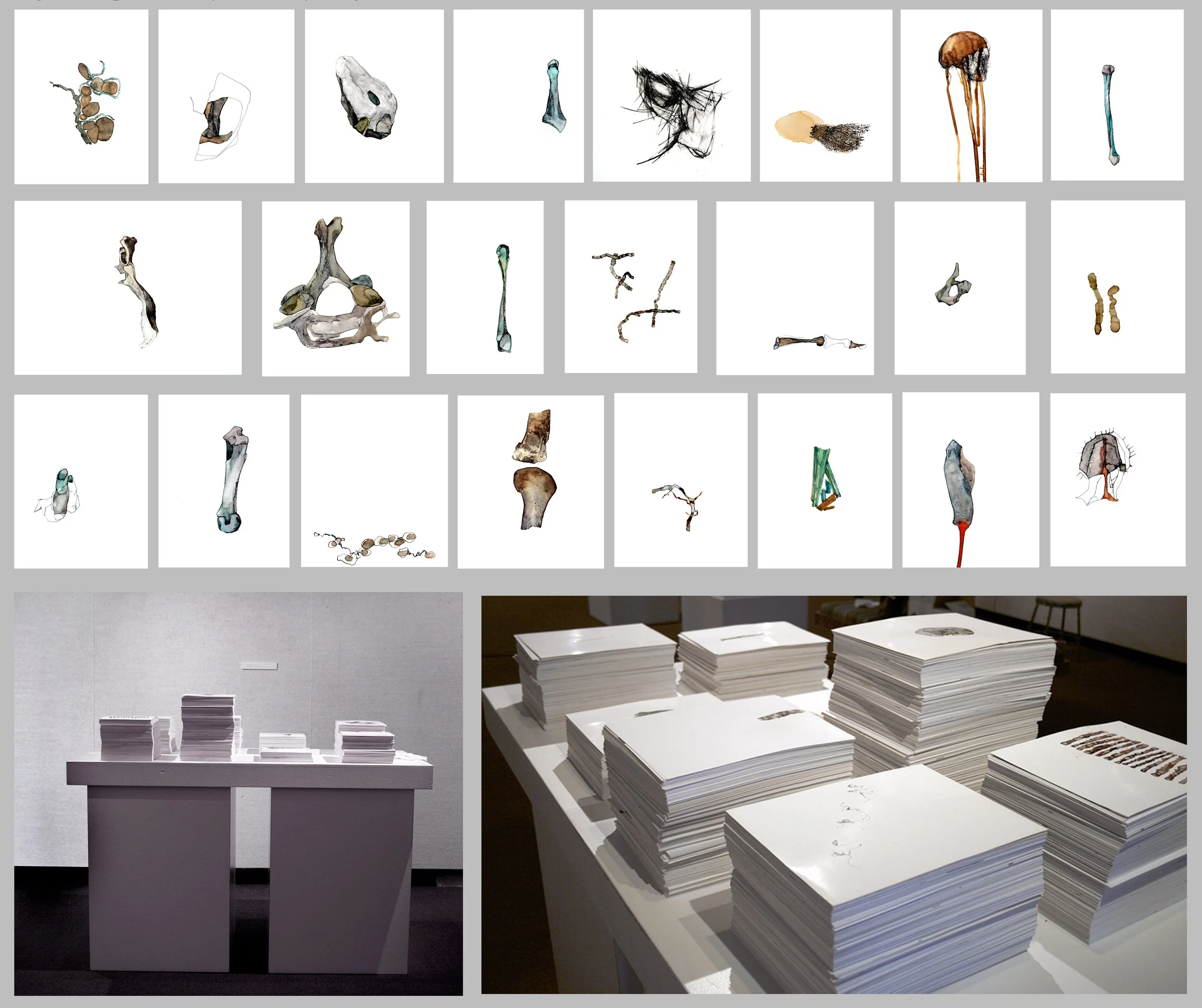
Two clay boards are connected with strings. On the first panel strings emerge from a perfectly arranged grid and connect randomly with the second panel.
The universe progresses from order to disorder, following the Second Law of Thermodynamics, Entropy and the concept of entropy, which provides a one-way direction for time.
While one may follow a single string and believe they are on a straight path—much like others around them—the collective result is random and far from the original perfect grid. In complex systems where multiple simultaneous timelines interact, disorder emerges as a result of individual choices. Is it possible to step back, view the universe as a whole, and attempt to straighten our paths? Or are we simply too close to our own strings to notice they are no longer straight?
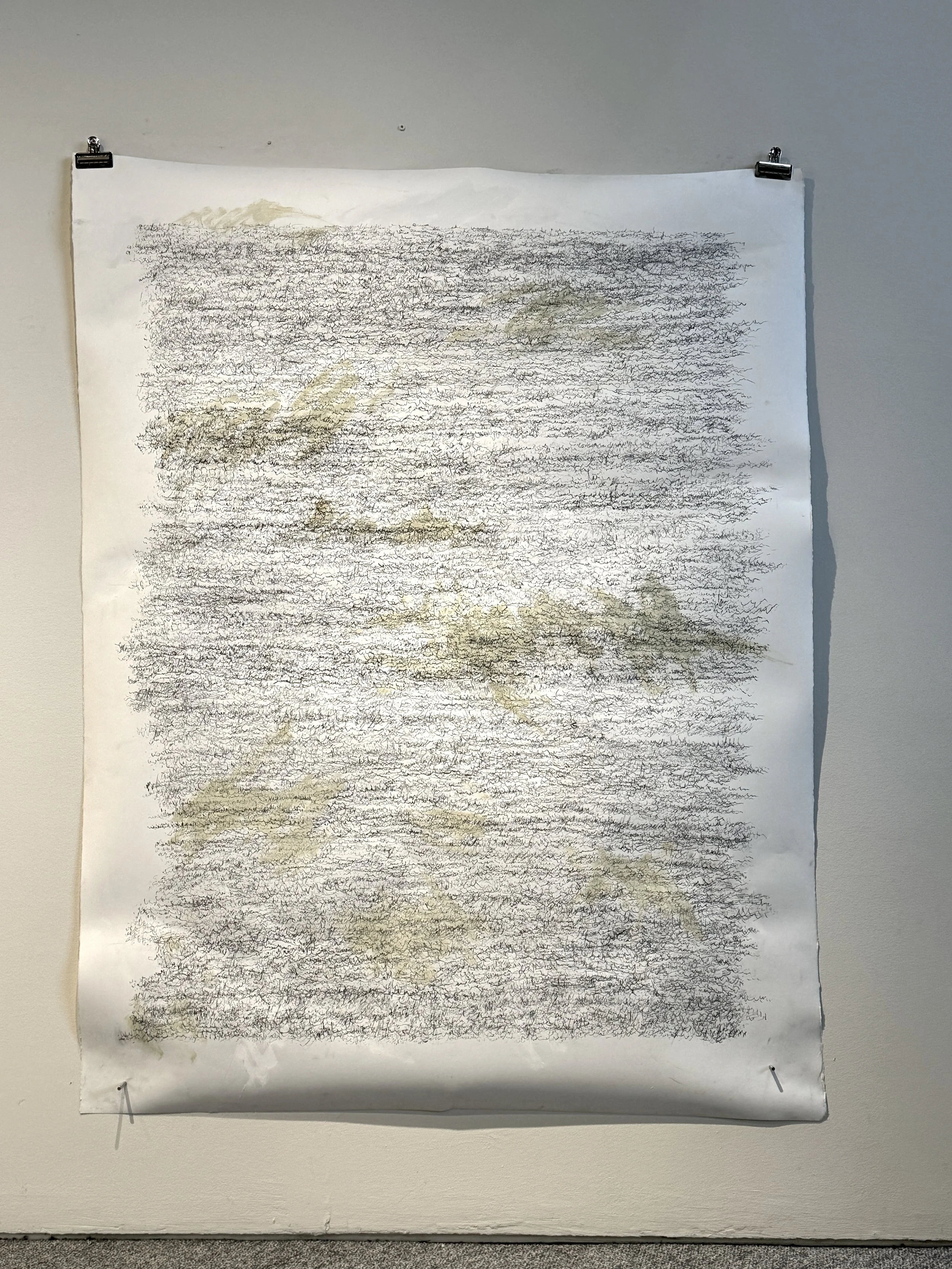
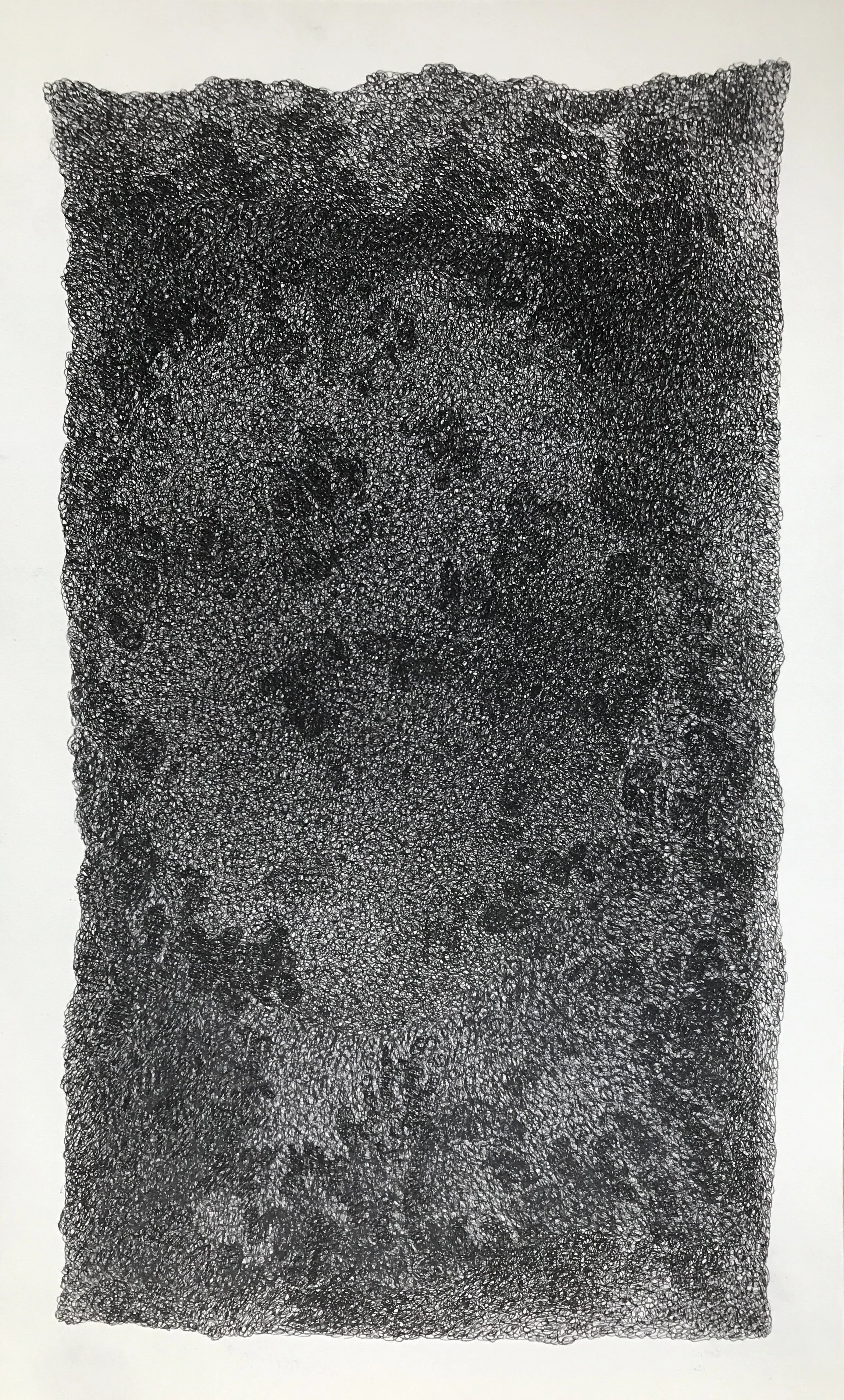
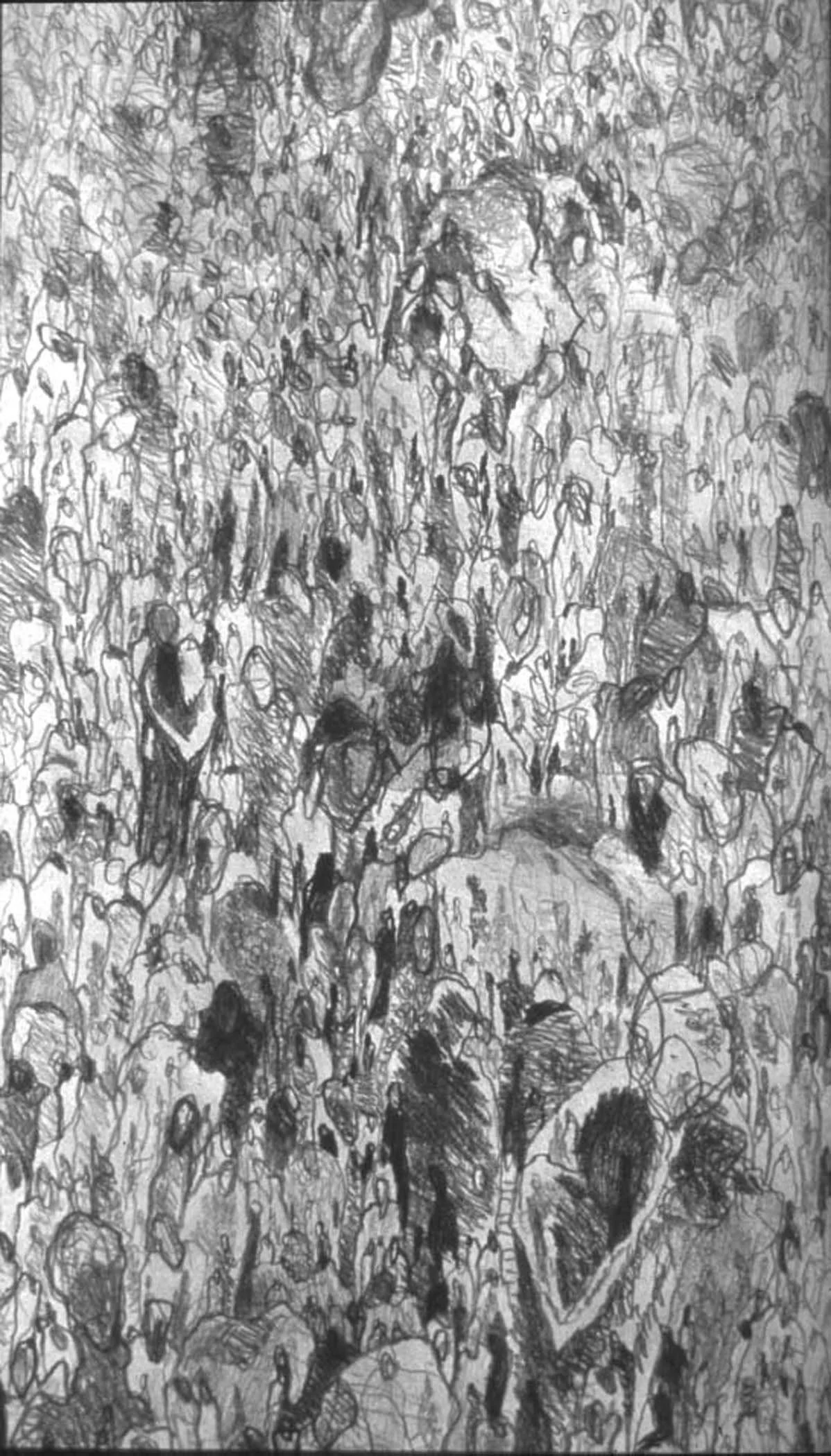
68” x 52”
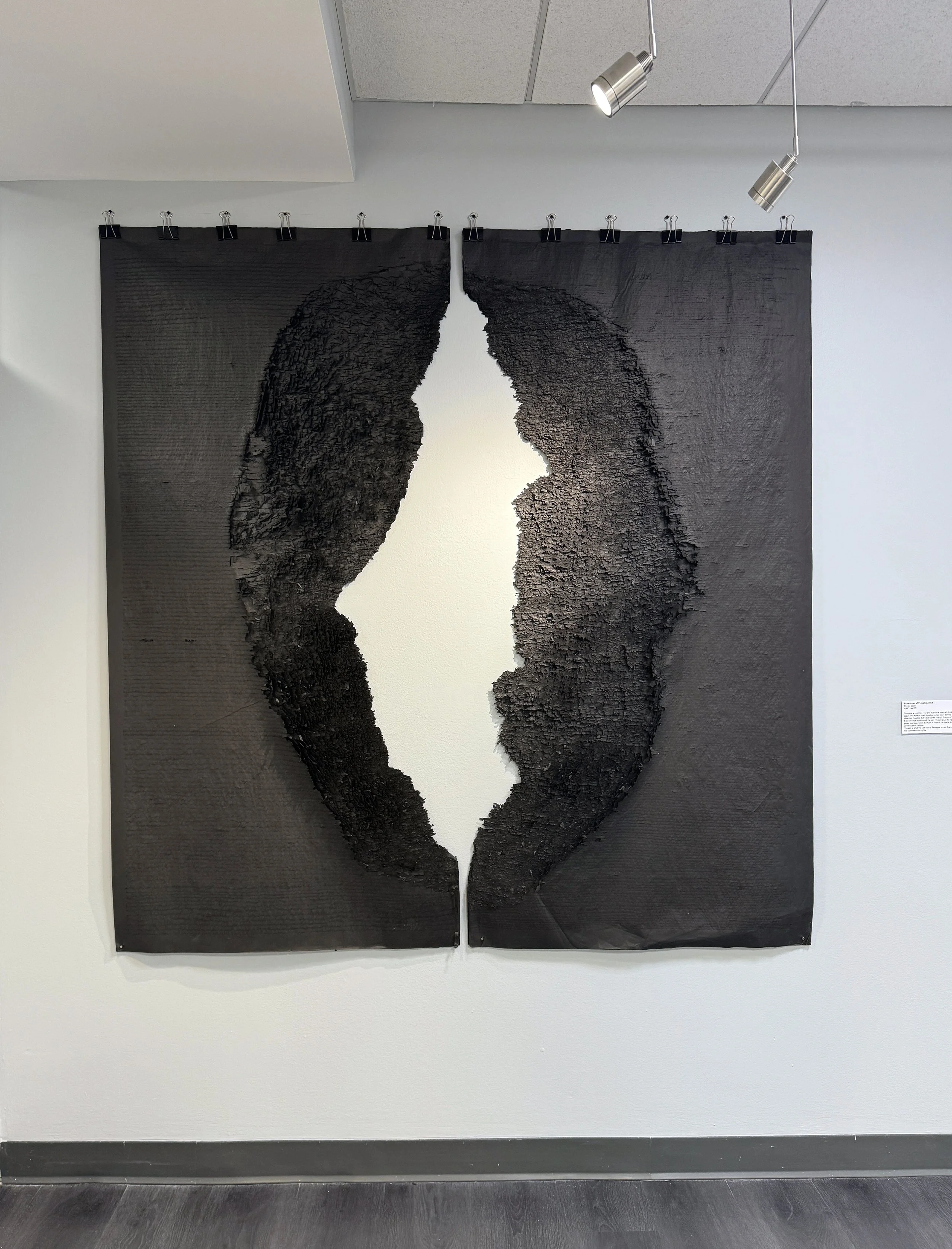
Paper, oil paint, house paint, gesso, and 12 pencils
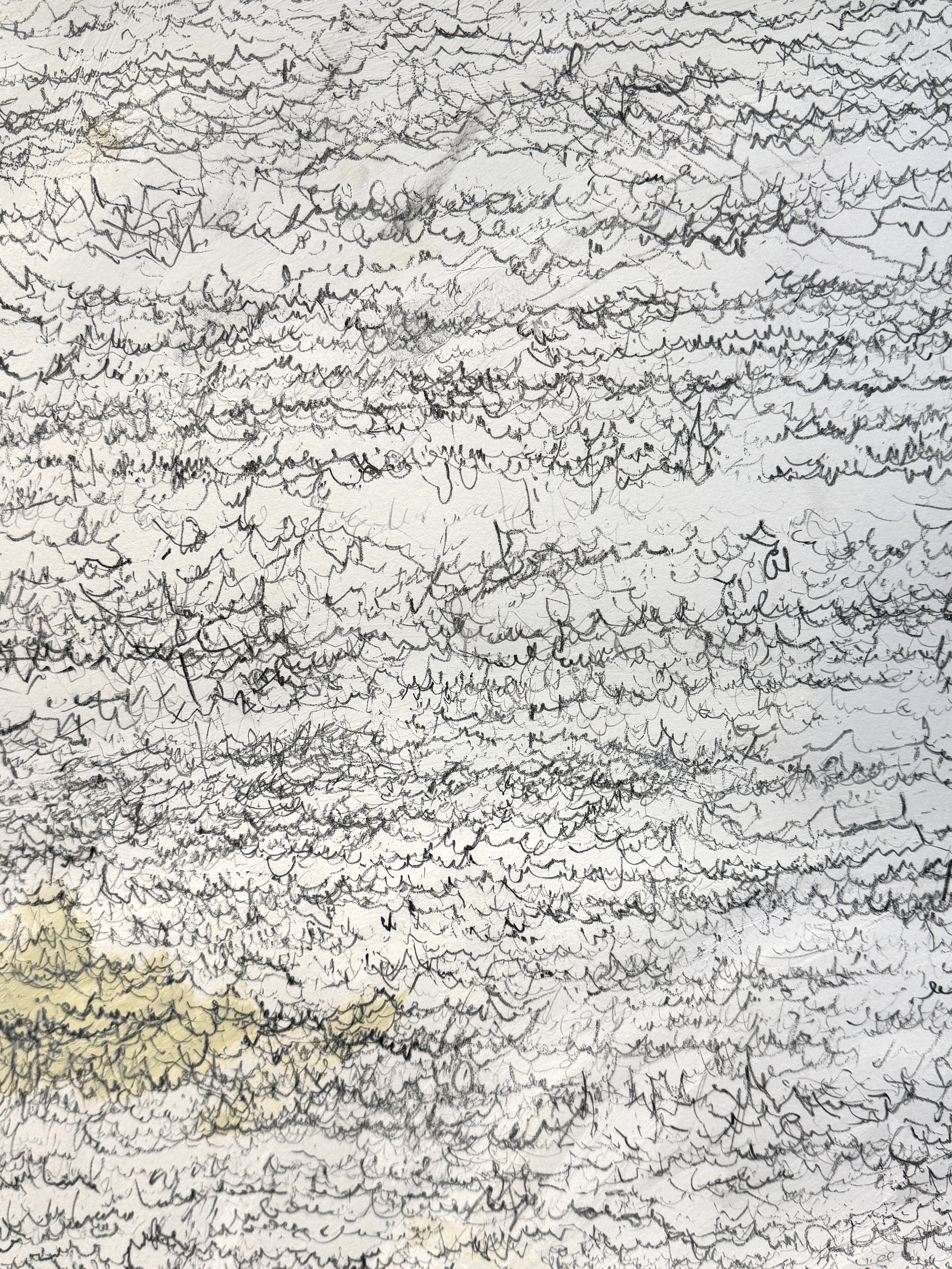
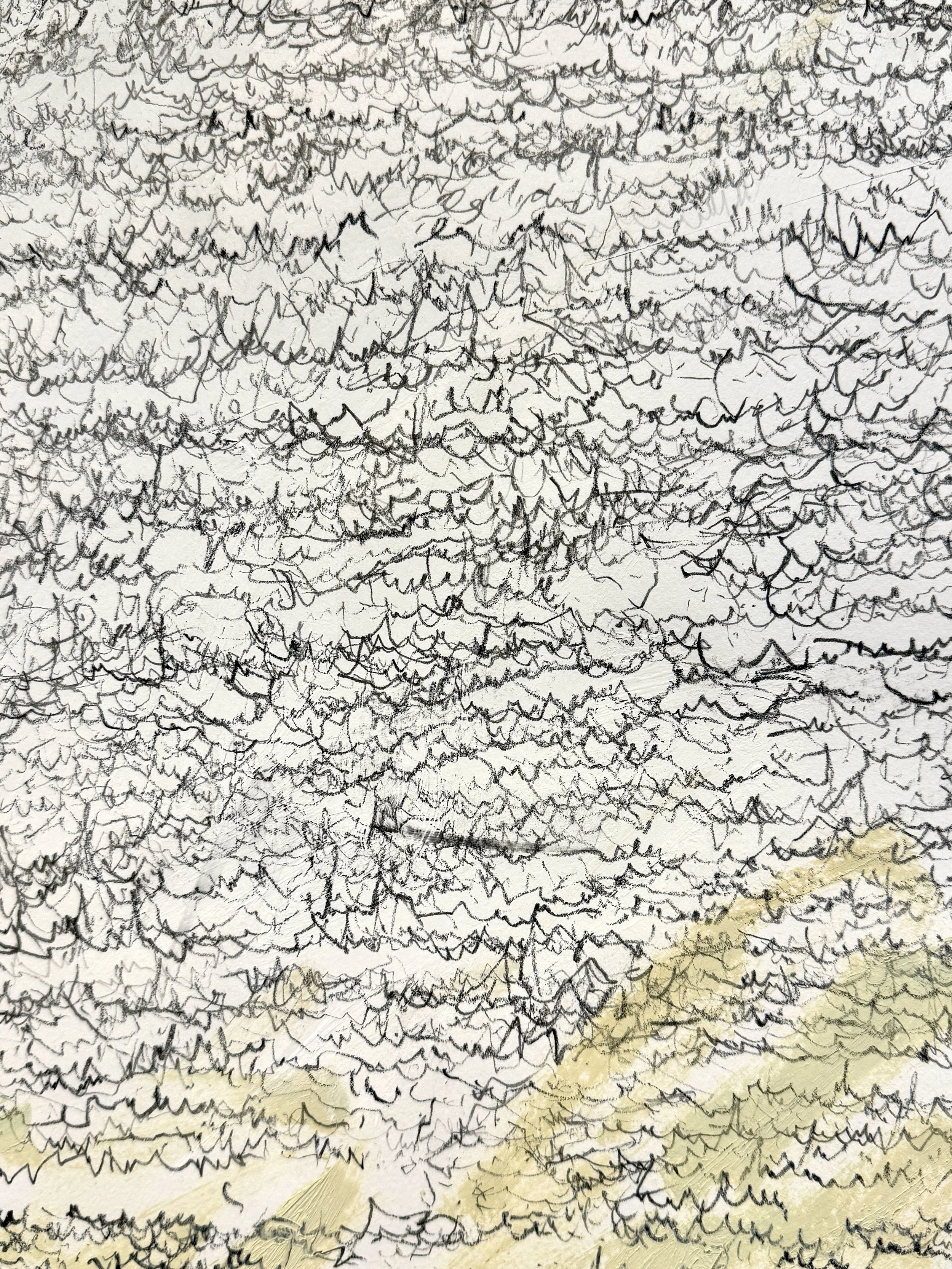
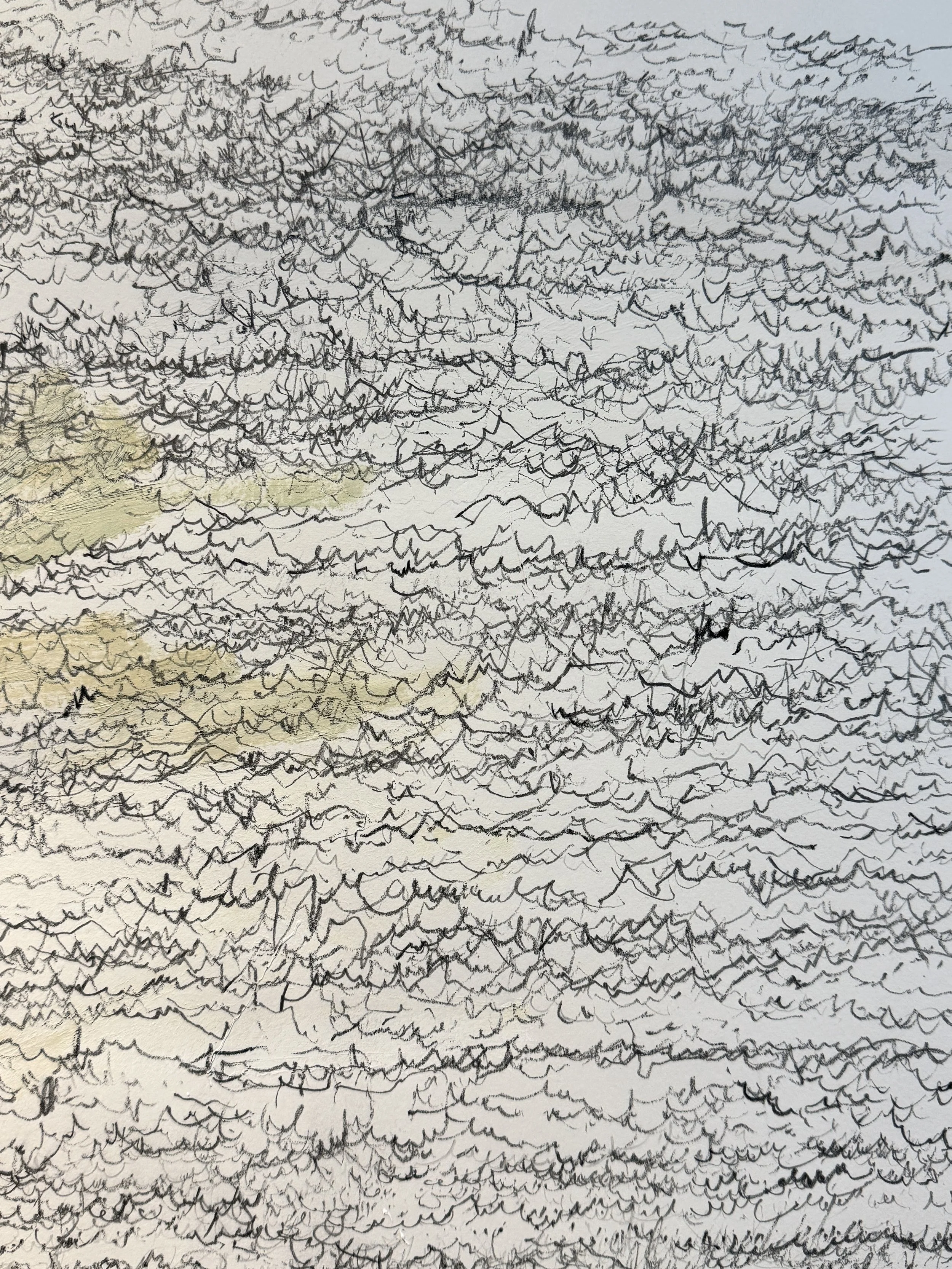
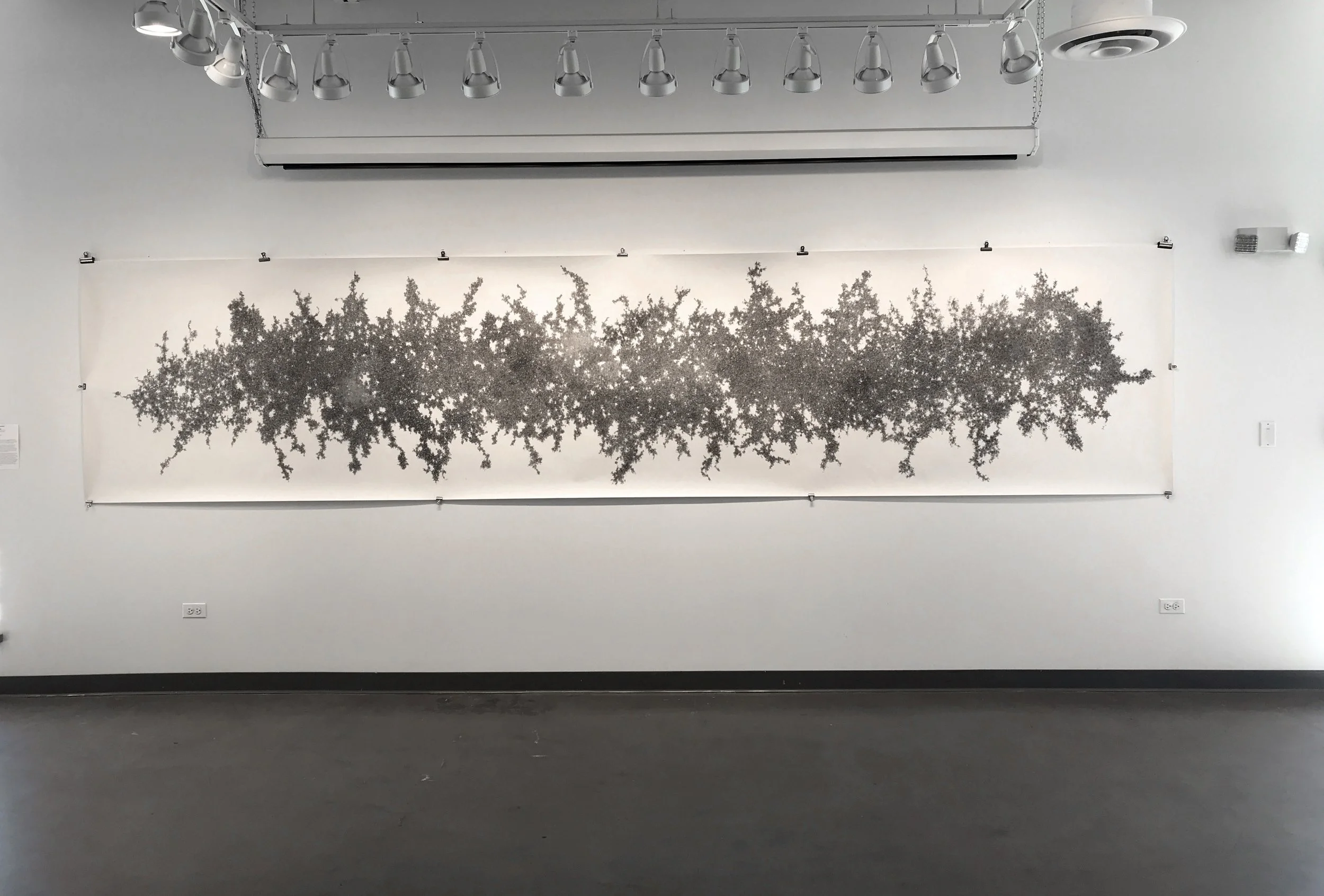
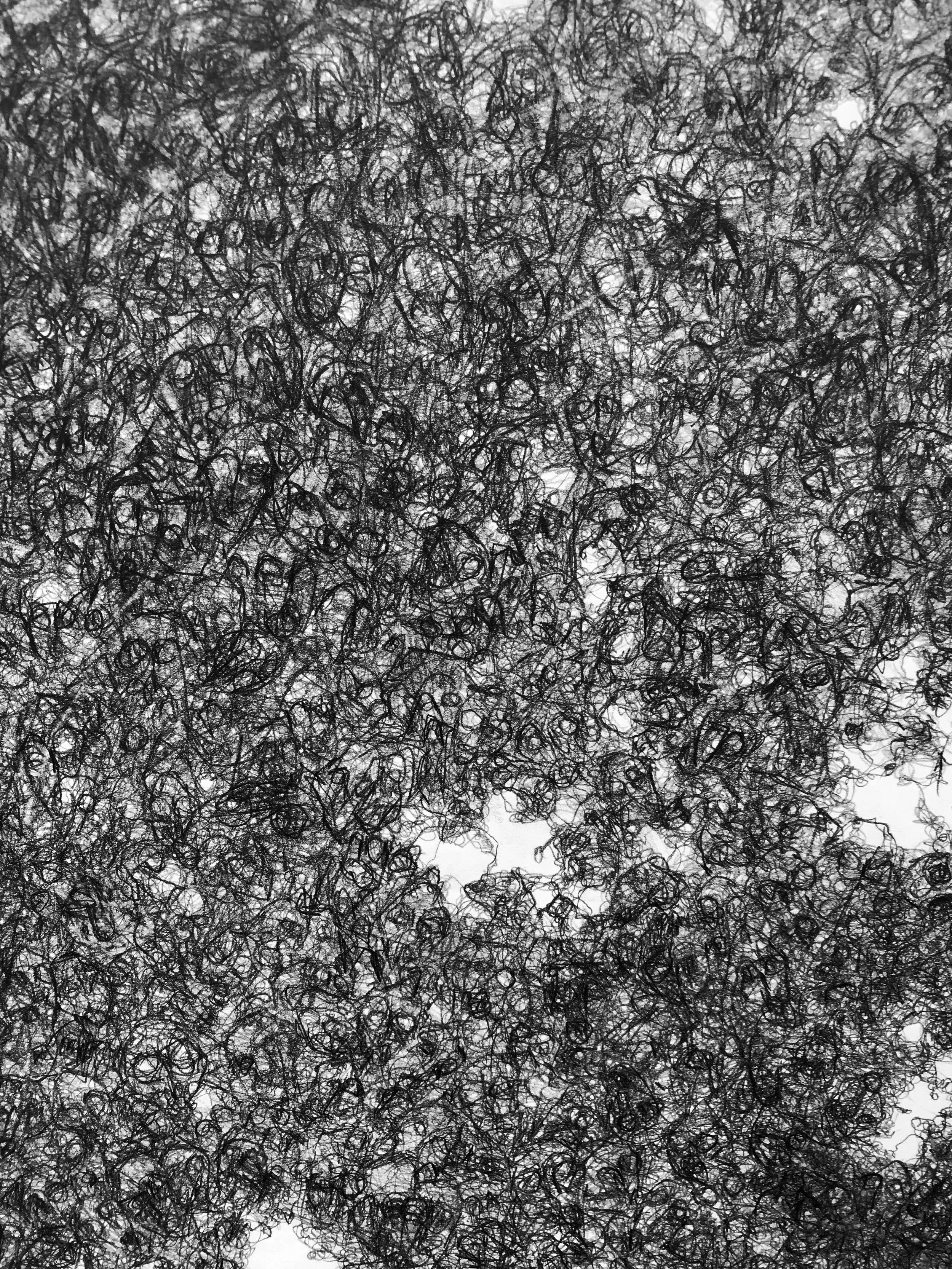
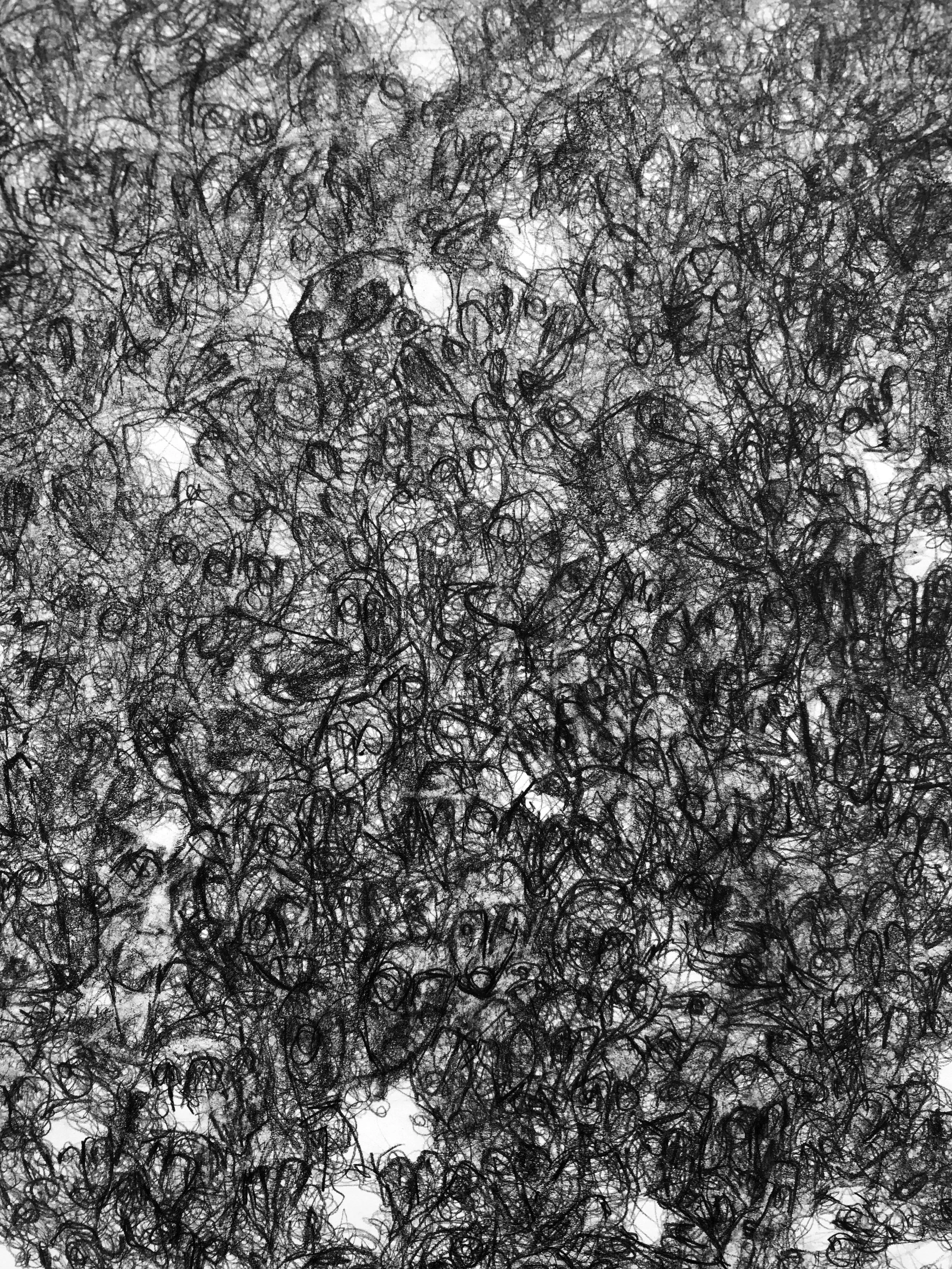
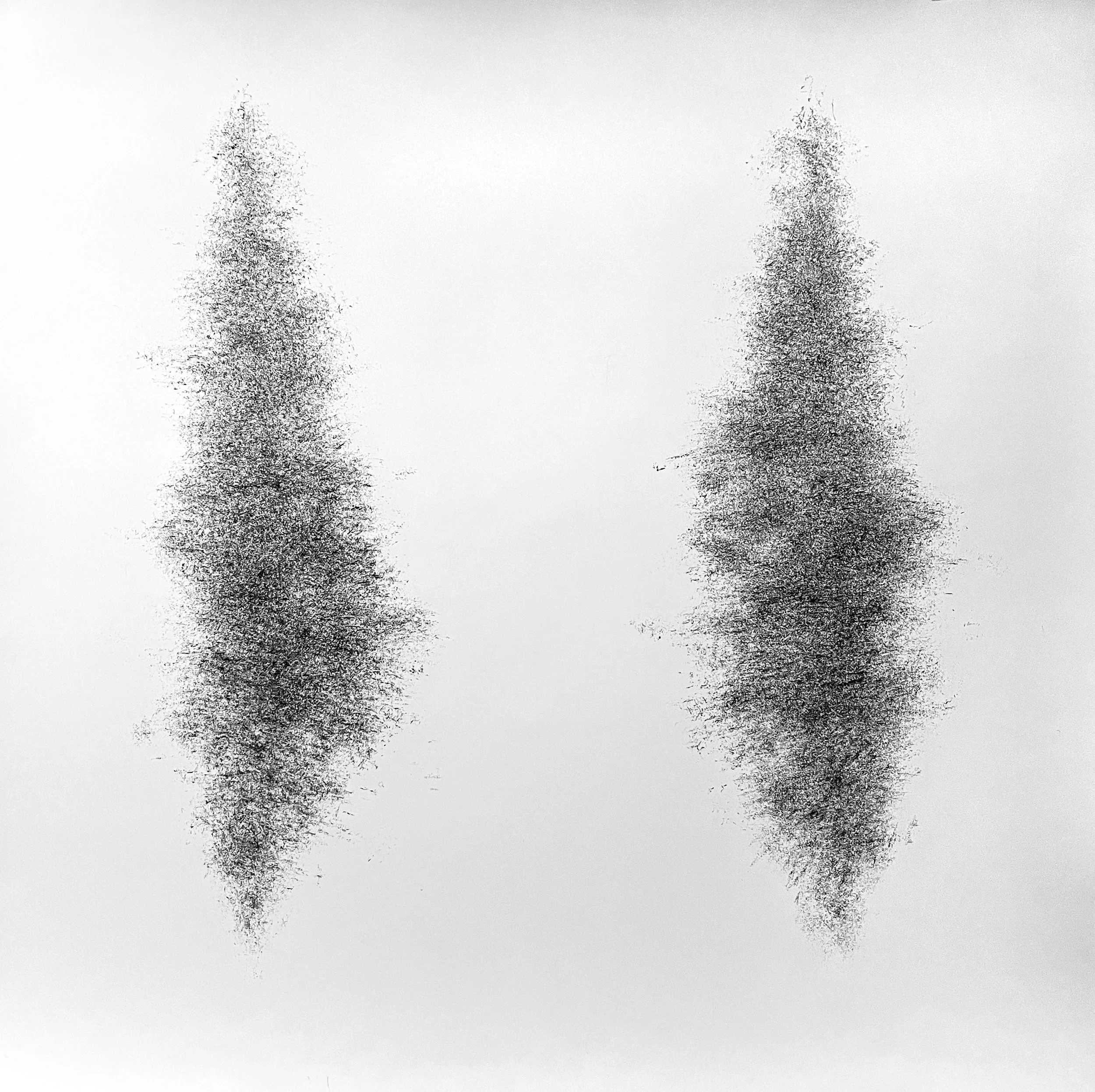
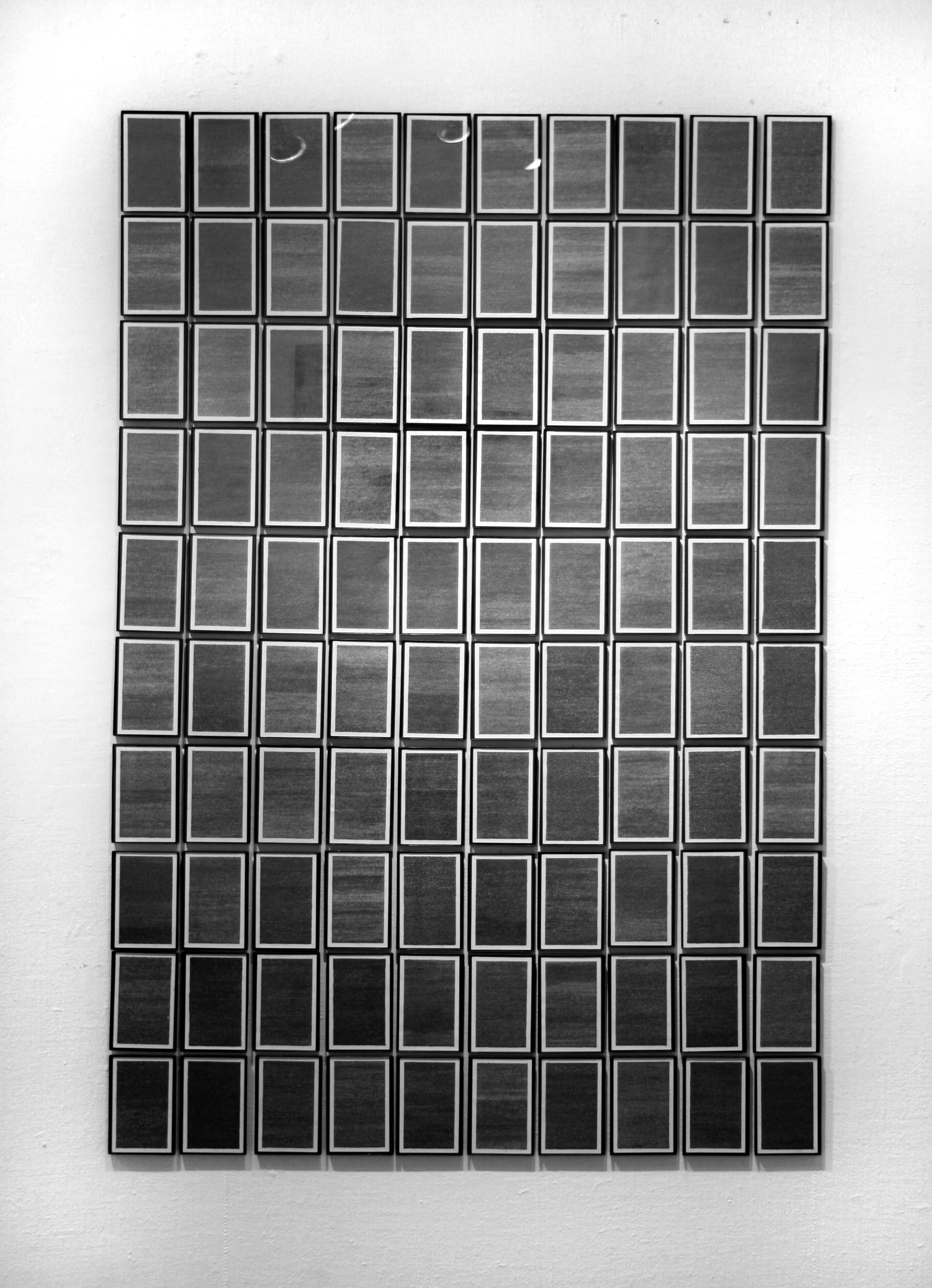
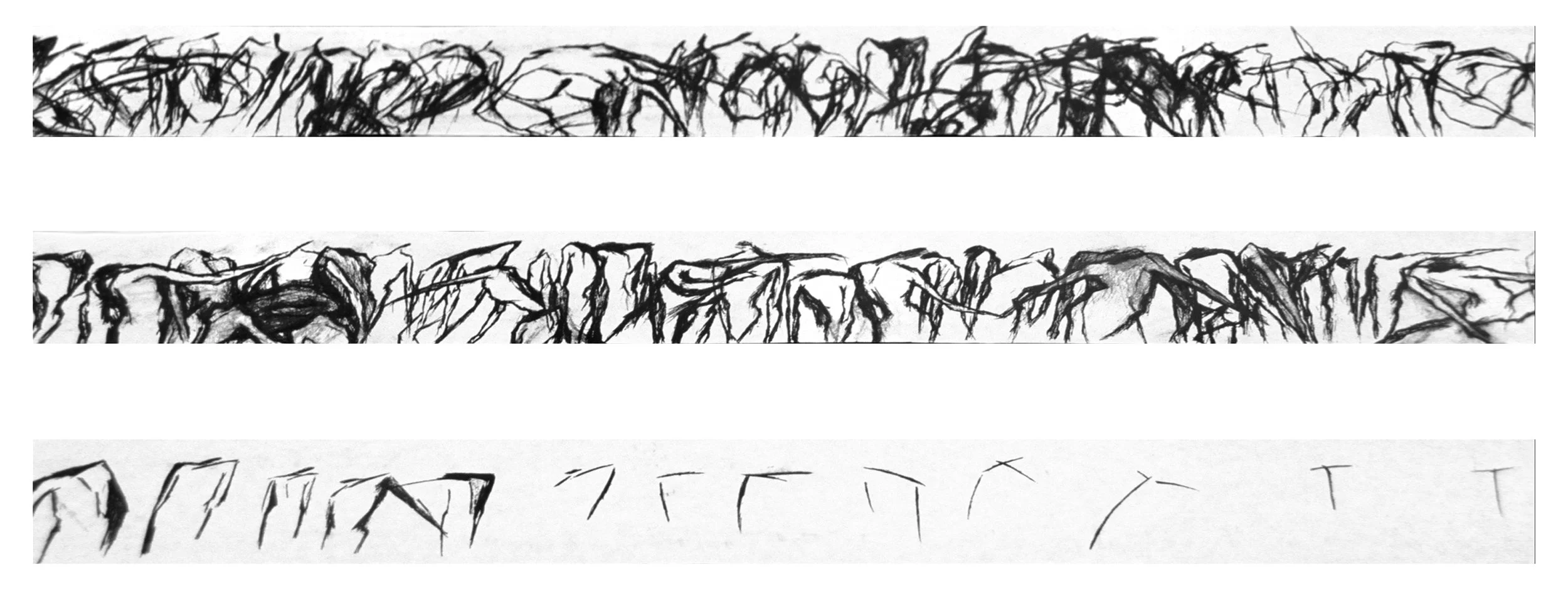
This work utilizes twelve pencils to represent the twelve fermions of matter, used simultaneously to record continuous thoughts. Each pencil varies in grade from 6H to 9B. Four distinct materials, representing bosons as force carriers, are applied unevenly across the paper. The paper functions like the Higgs field, providing the foundation that allows these materials to interact and materialize.
While all pencils are used simultaneously to convey the same information, the resulting traces vary greatly based on their specific energy levels—determined by the pressure and angle with which they were held—and their interaction with surface materials like oil paint or gesso; interacting fields creating the material world.
Ultimately, this process reflects how our thoughts, however unique, are continuously molded by the environments with which they interact.
Sizes vary from 1”x1” to 60”x130”
Mixed media
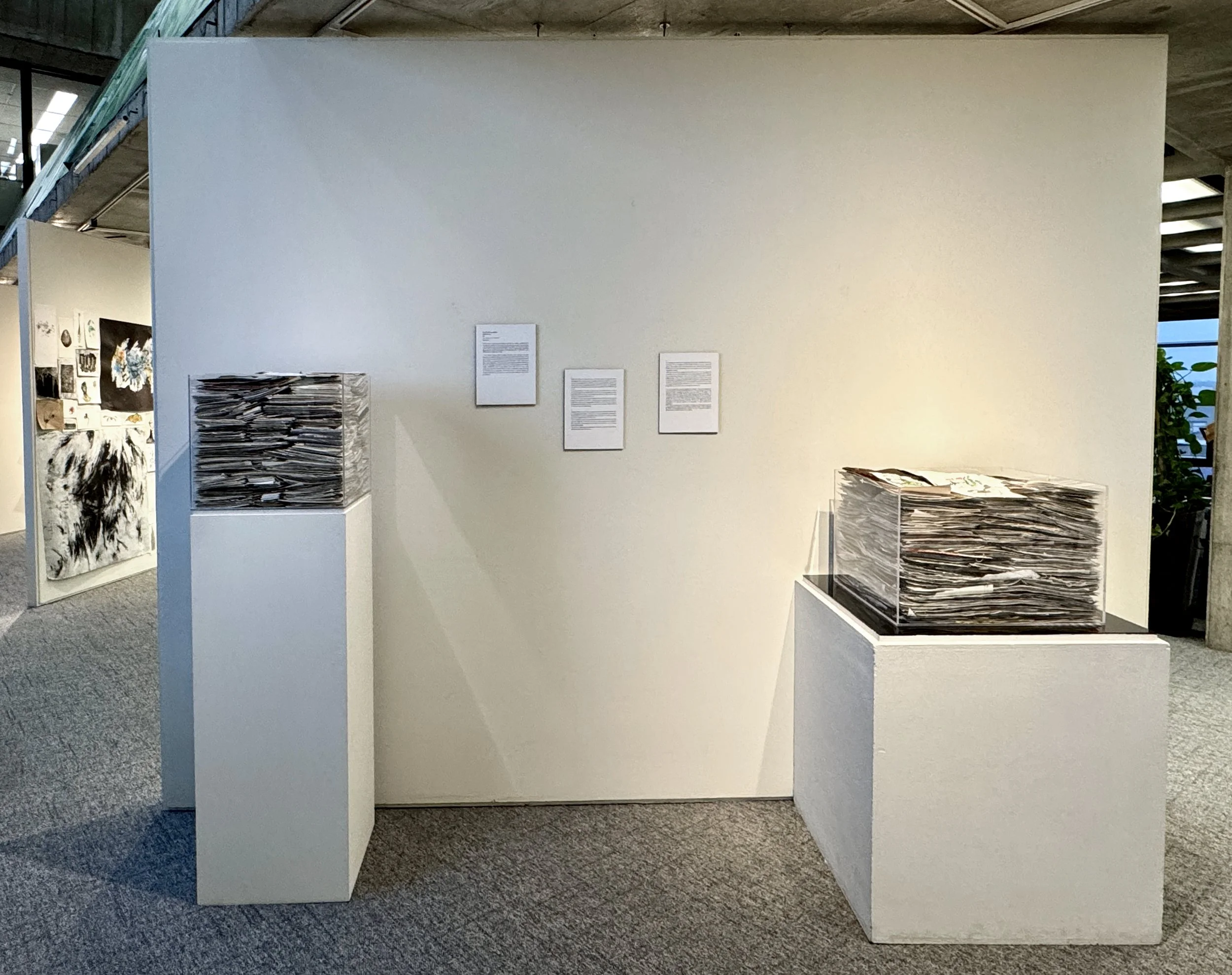
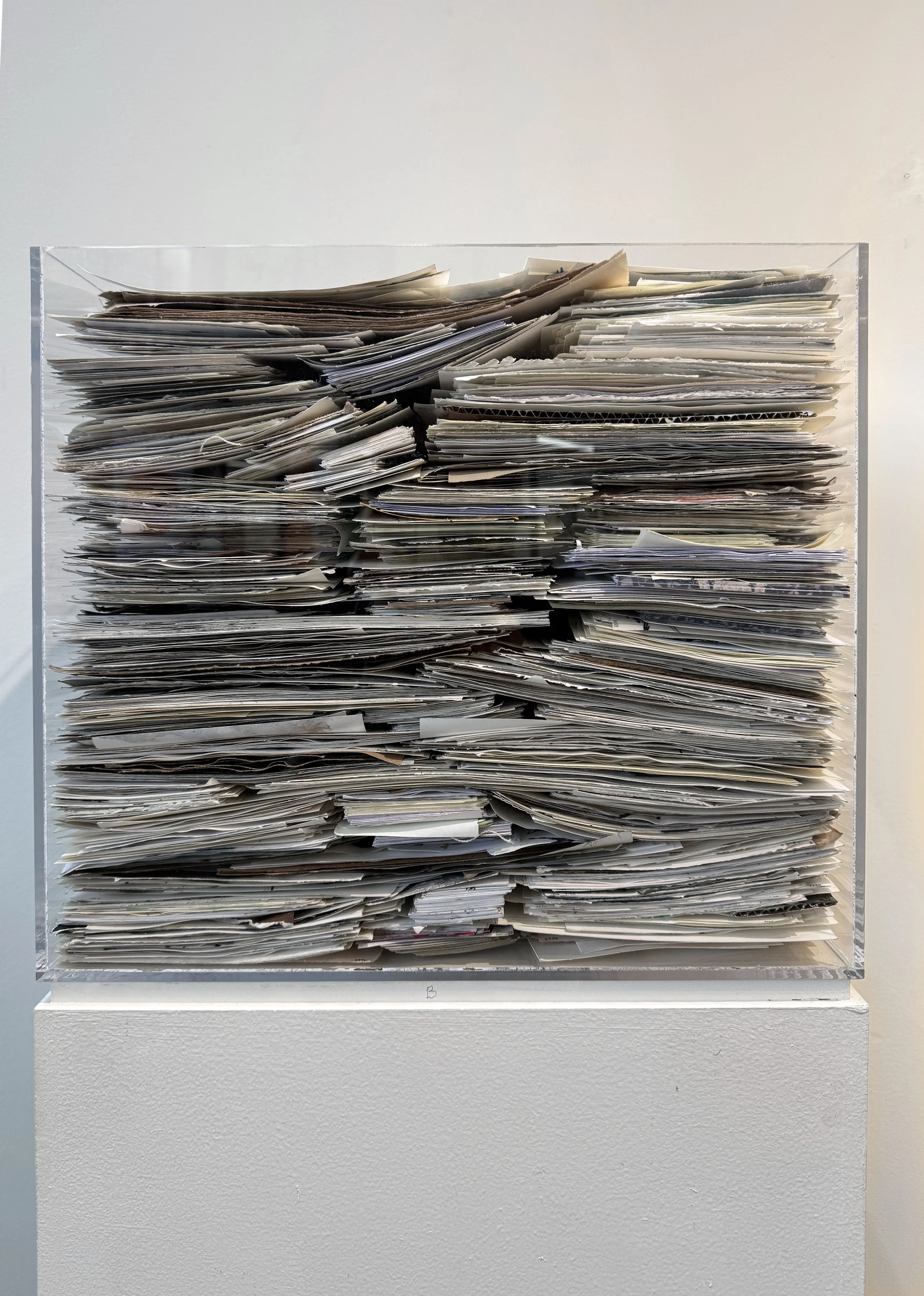
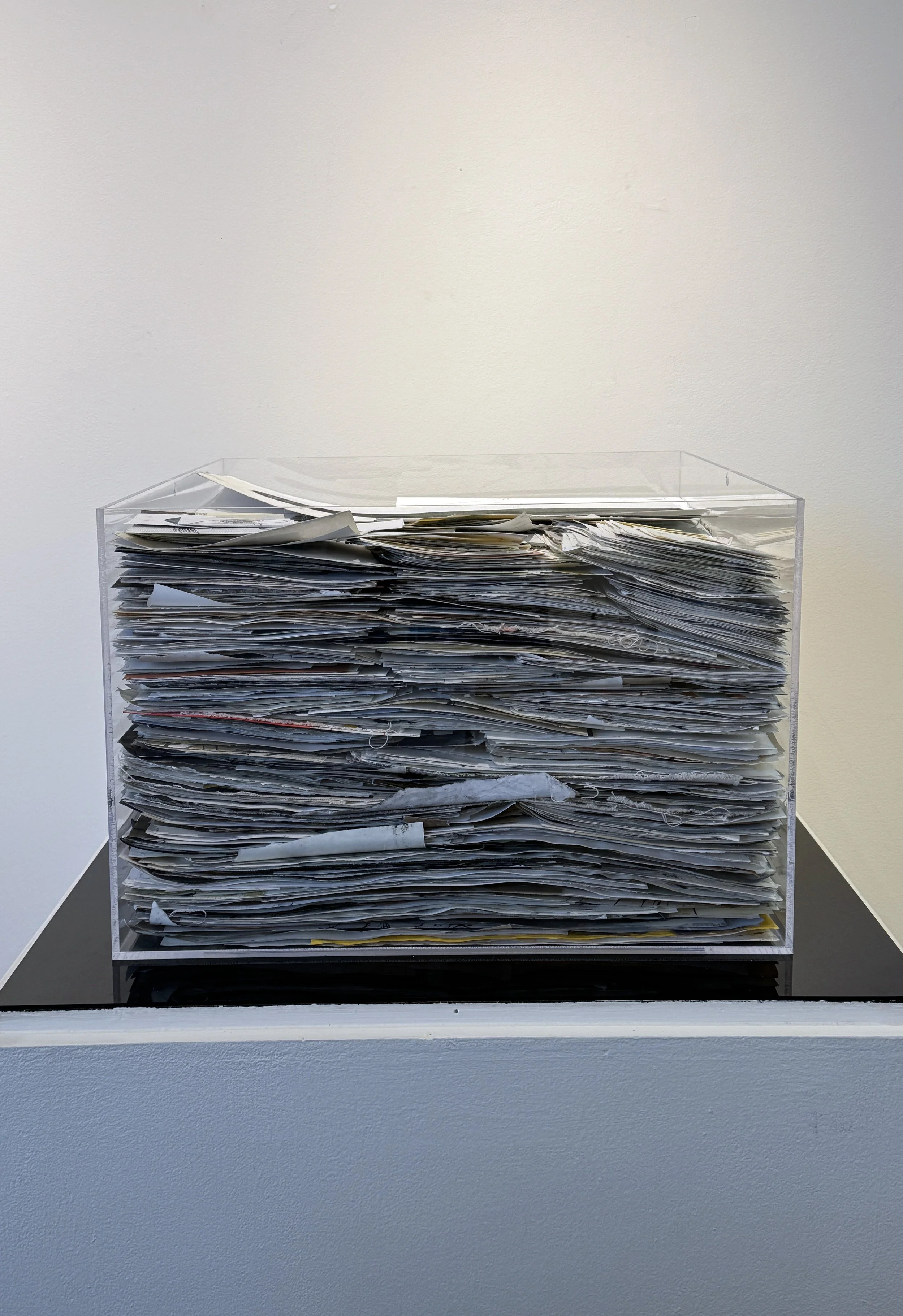
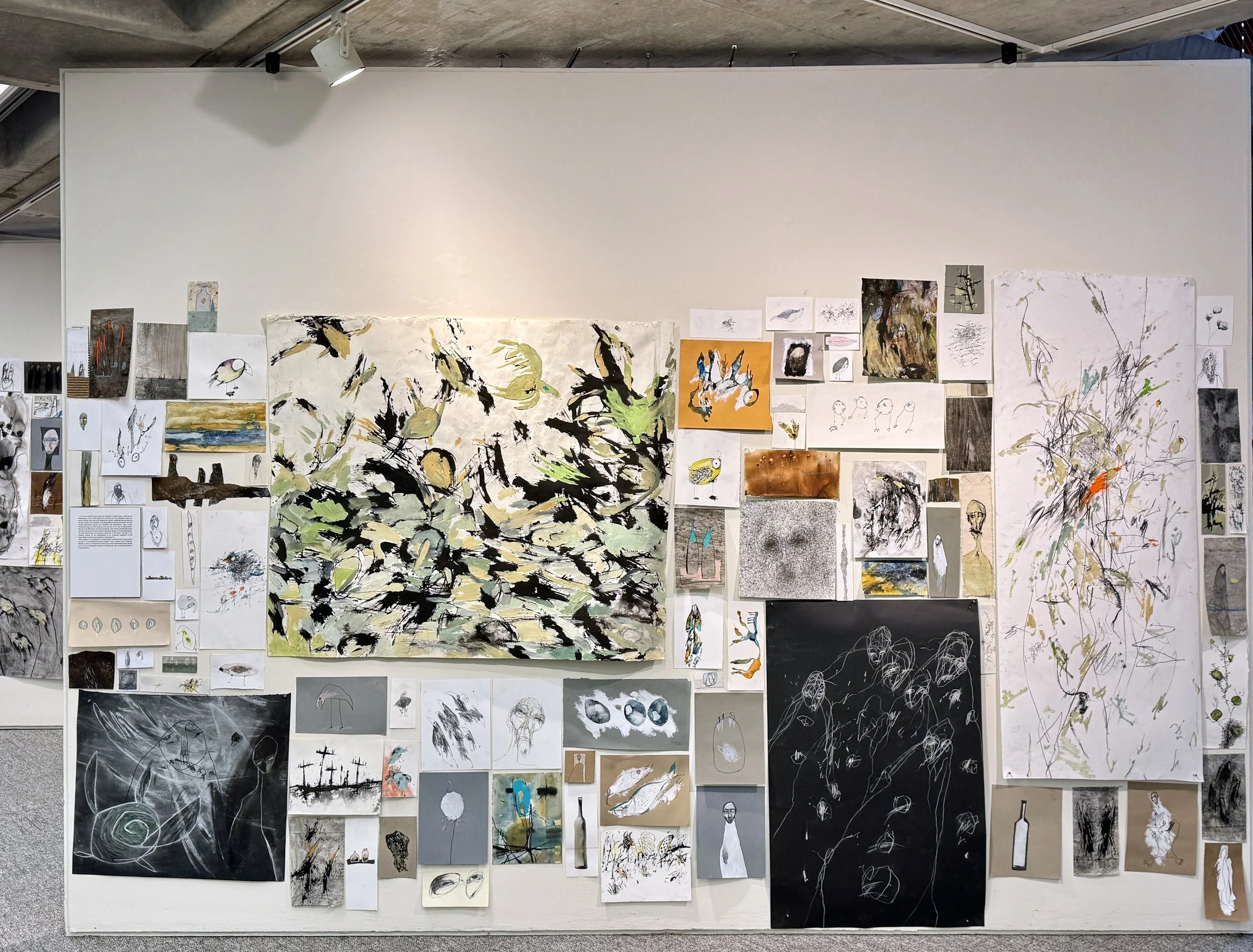
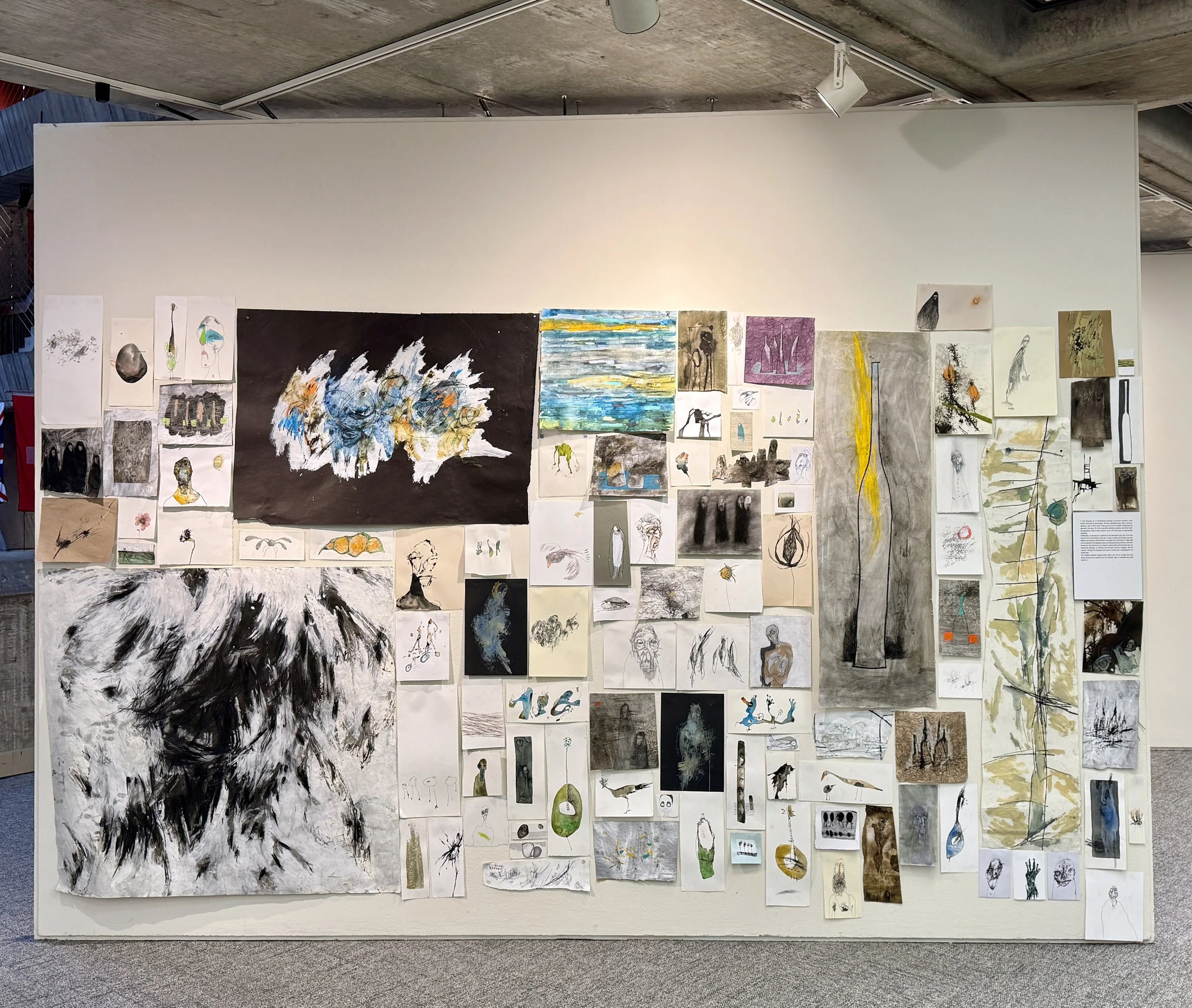
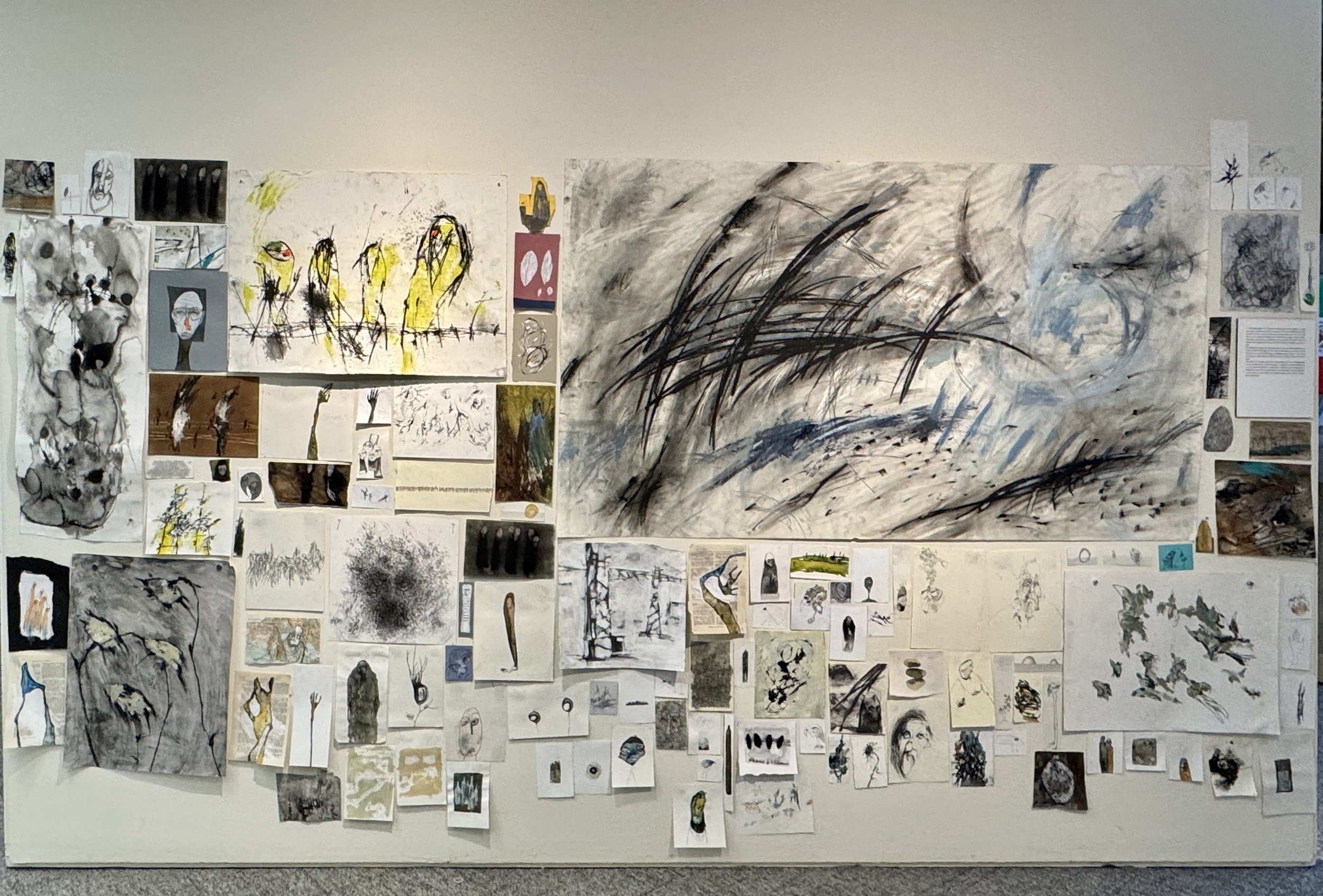
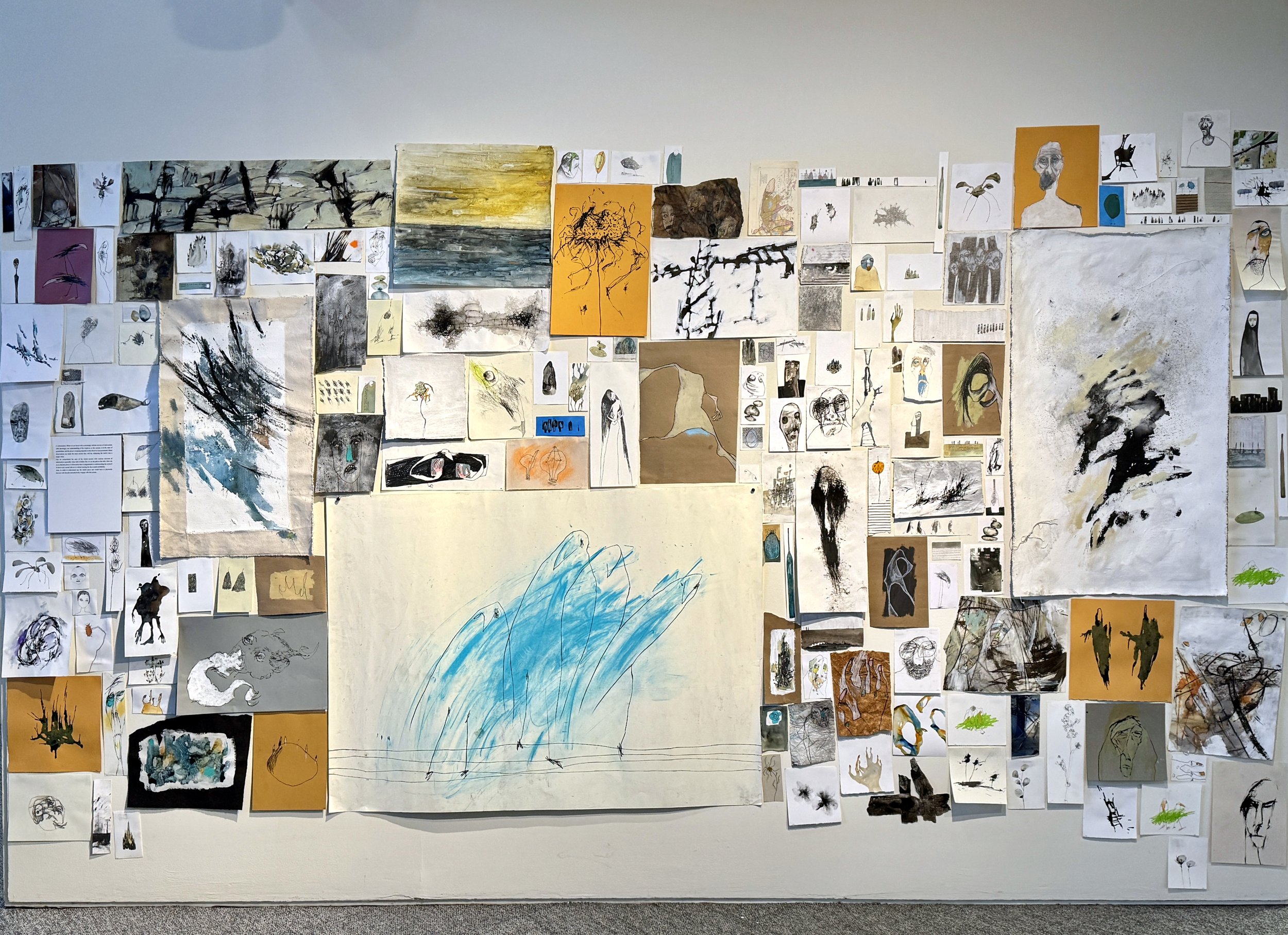
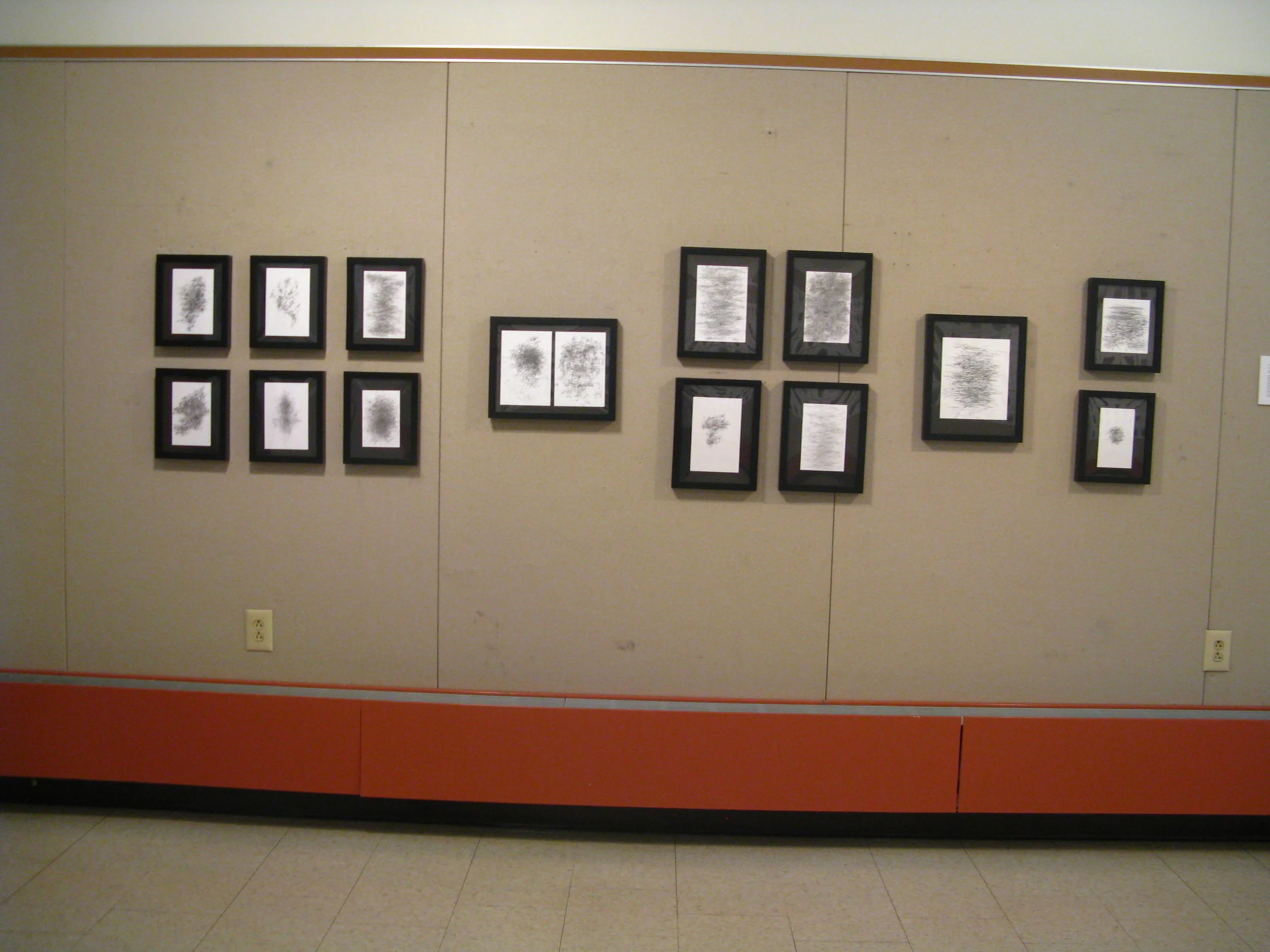
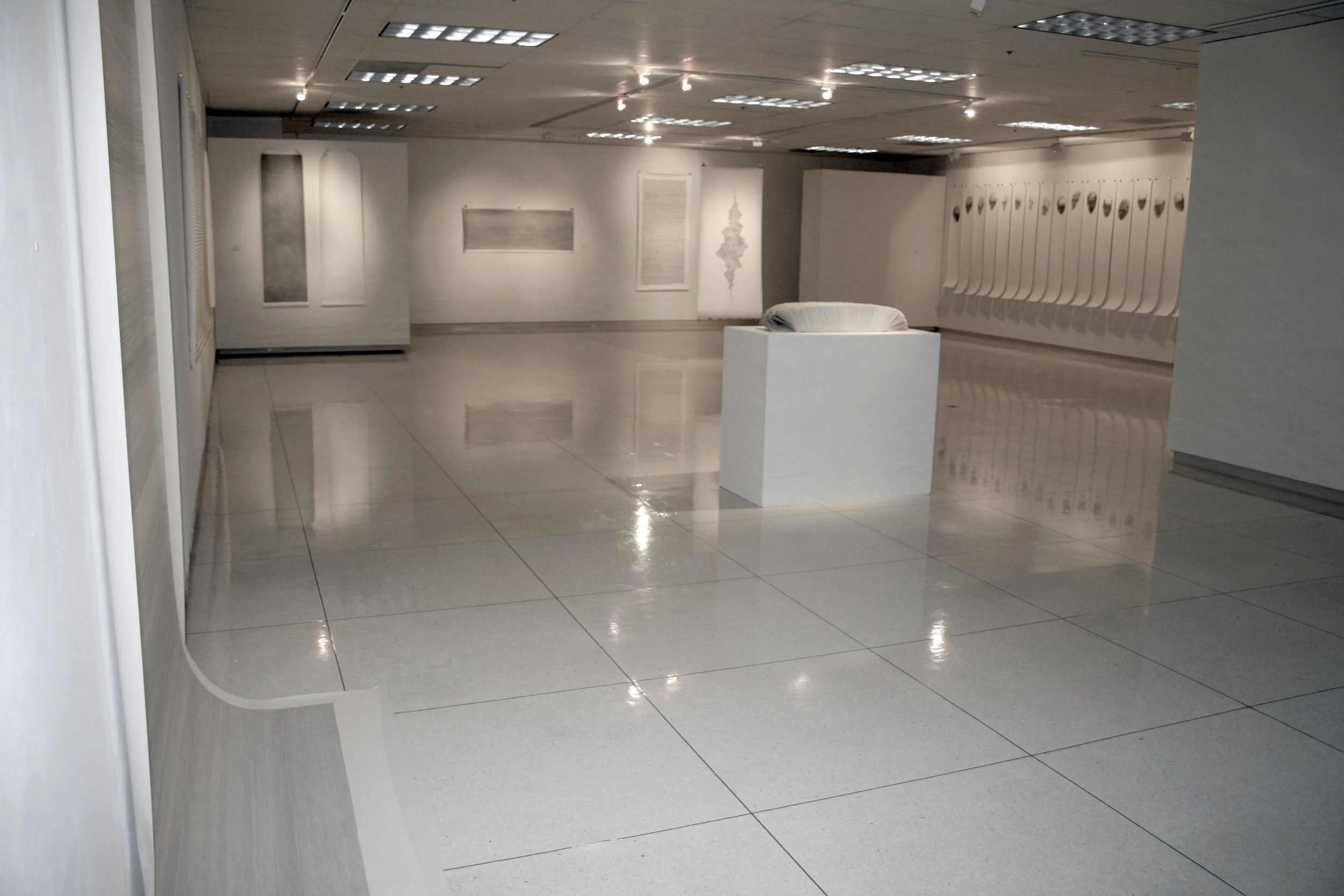
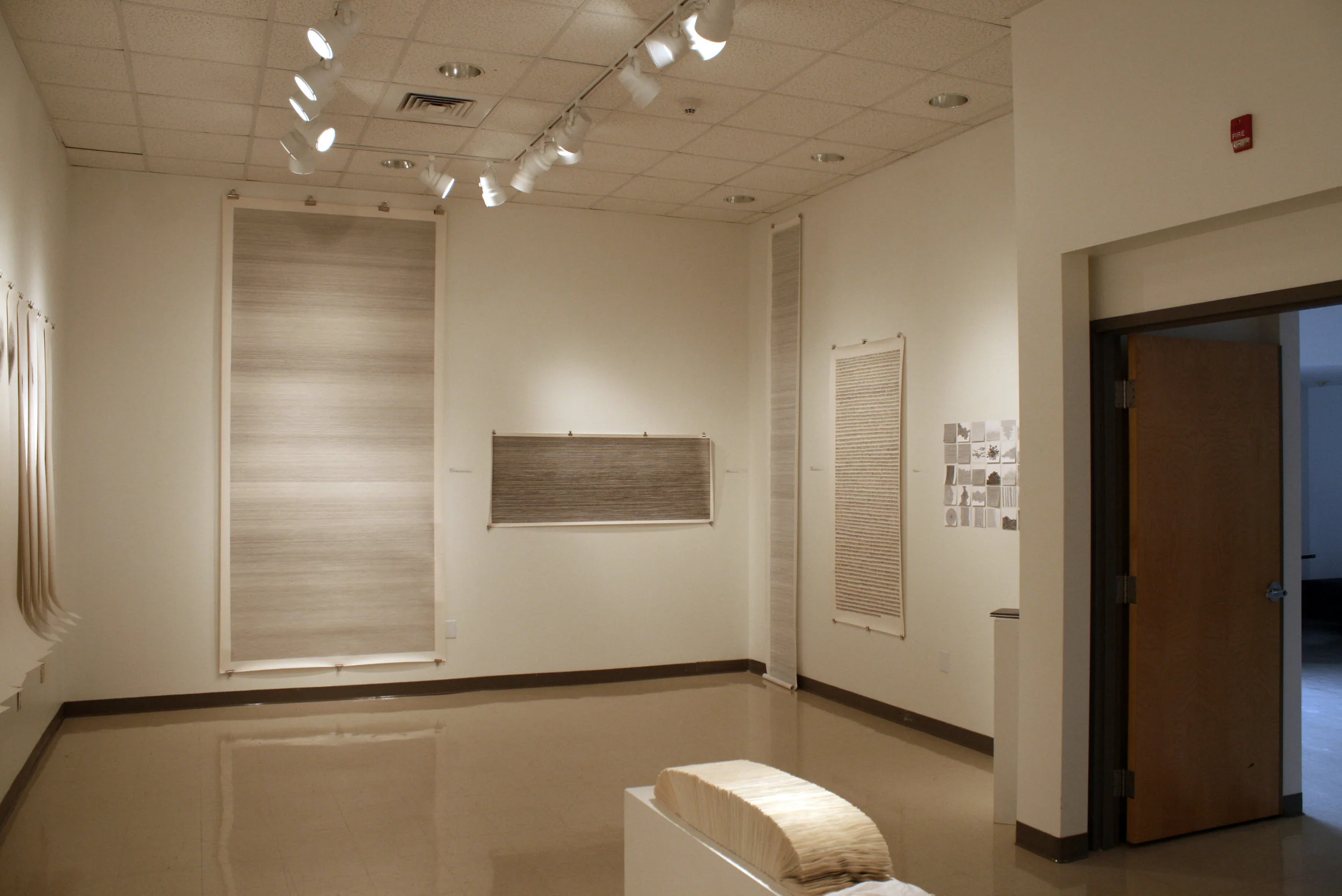
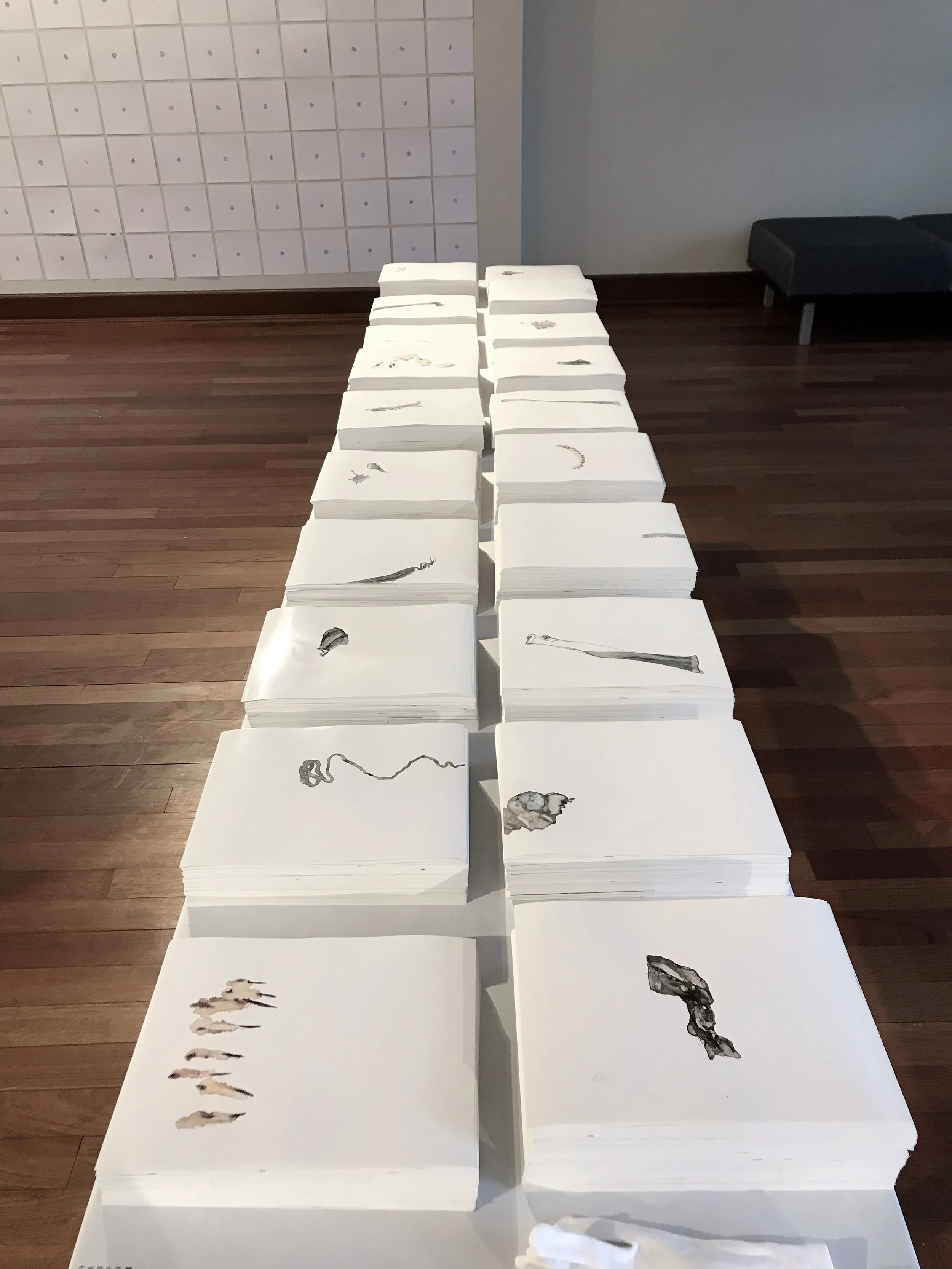
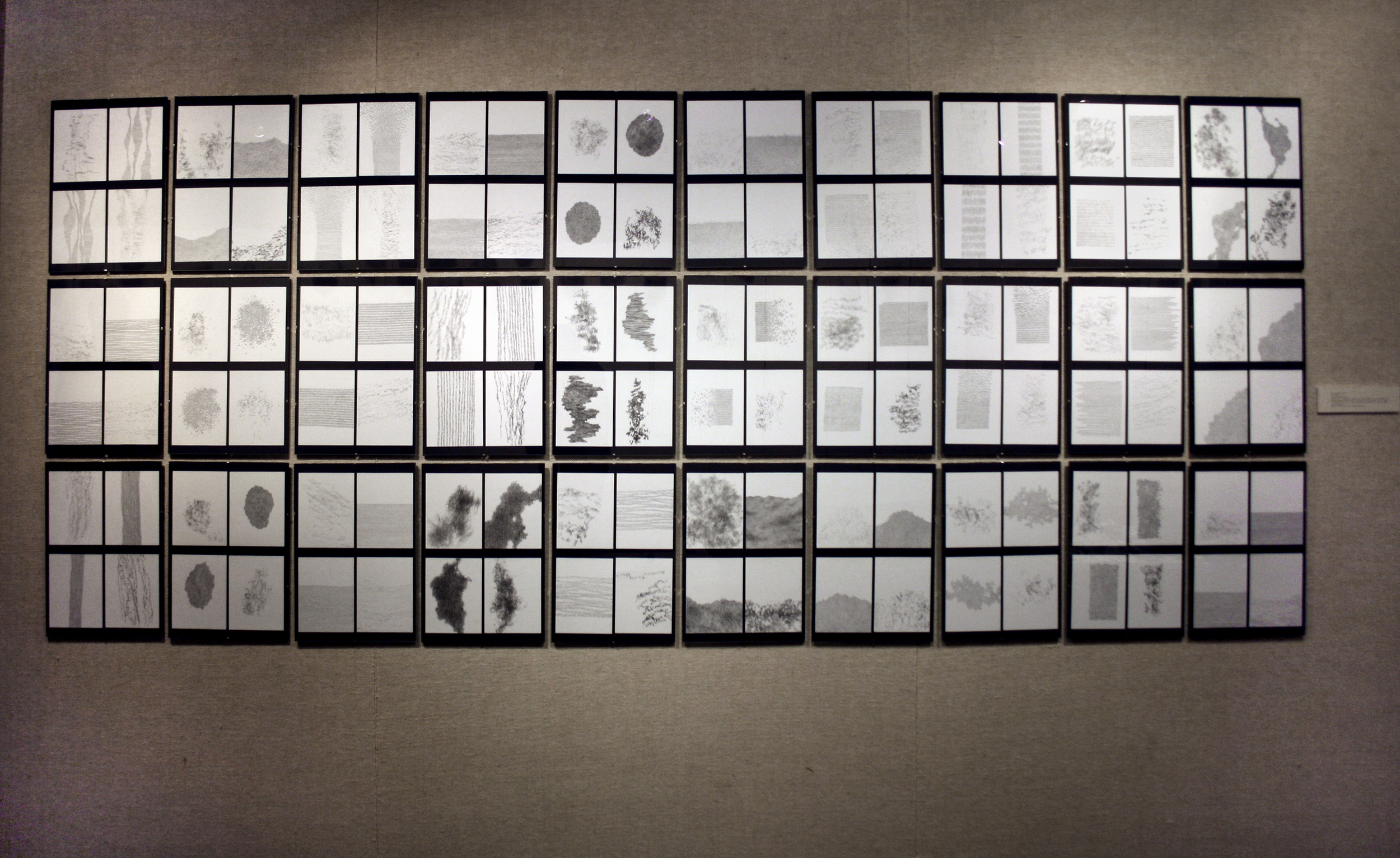
20,000 drawings are drawn without any limitation regarding format, material, and subject matter.
Each drawing is numbered in random order. Only some drawings are installed onto the available walls while others are left in a pile and rolls (big formats are rolled up). Drawings that are installed onto the walls are randomly chosen from the pile as well as the drawings with a significantly important number related to particle physics, i.e. the bottom quark mass is 4.183 GeV/c^2 so the 4183rd drawing is installed onto the wall.
1. Many Worlds: Conjuring 20,000 of anything, data points, words, drawings, or any other information is an ambitious challenge. Each drawing carries uniquely created information. Within each of 20,000 informational units there are numerous other informational statements (individual drawing decisions) propagating drastically the amount of information. Complex systems with a large amount of information, visible and invisible, result in multiple interpretations depending on the context. Depending on the observer's interaction and context the Artpiece can be split into multiple interpretations, hence the title reference to the Hugh Everett III many worlds interpretation. Each of the statements collapse the Artpiece’s meaning into a single state, losing the information about its superposition. Viewers being exposed to a particular statement will interpret the piece that way. How much is our view of the universe influenced by the previous interpretations?
2.
Visible and invisible: As a whole, the Artpiece's information quantity is so large and complex, 20K drawings, that no one person will ever be capable of perceiving its totality but only its parts; an image here and image there; one at the time, much like our micro and macro universe can be observed only in parts. Virtual particles, dark matter, dark excitons, neutrinos, etc. alter and make the world the way it is through their interactions yet they are invisible just like the hidden drawings in a pile.
We see the partial image of the whole and base our focus and confirmed opinions on it (Isaac Newton is/was right till Albert Anstein looked and saw the other relevant information); we see the partial image and develop a theory based on what we see in the moment. What would the world look like if we could see the invisible all at once?
The Artpiece in its totality cannot be seen but breaking it down to its fundamental components that are part of All, can provide a comprehensive understanding of all even the parts we can not see or we don't know about, but only if enough samples are looked at; much like the particle physics is the foundation for all including that which we cannot see but it took many versions of particle theory before we got to the standard model.
3.
Information: When we are faced with a seemingly infinite amount of information (20k drawings), our understanding of the Artpiece, or the system, is in the state of possibilities, and the piece’s meaning depends on the observer (measurement). More observations are made the more similar they will be, collapsing the matrix into a single value.
Can we comprehend the state of the whole system with copious amounts of information especially when info is hidden like it is in the pile or the rolls. How are we to find the piece or information that is judgemental to understanding the system? Is there such crucial info or is it about looking for the overall probability.
Also, in order to understand /see the whole piece one would have to physically interact with the pile and physically engage with the system.
4.
Life: Drawings are an informational collection of personal memories, visual stimuli, observations, and thoughts. We have impossible goals, labour intensive, ambitious, and we don’t know if the goal can ever be reached. Collectively the approach is the same. We make impossibly ambitious machines and devote years and generations worth of labour intensive work. All in the name of understanding something.
Additionally, all drawings are numbered on the front and are for sale. Every time someone buys the drawing an extra one is made to replace the one that was sold, adding to the number of drawings that are actually drawn for this piece. Others add to the complexity of life making it harder and adding the amount of labour. However, through this brief interaction the Artpiece is permanently altered because the new replacement drawings are different and the buyer becomes entangled with the Artpiece. Through the interactions the system is altered and is materialized in its current state.
Like Sisyphus infinitely labouring within Plato’s cave we try to make sense and reason for and among shadows, for the insatiable urge to understand the world around us.
5. For every scientific theory and every published scientific paper, which has its interpretation of the world supported by the facts and data information, there are always multiple other ones with opposing but equally compelling data and facts on the same subject. In Art multiple, or all interpretations/ theories are equally valid and equally fragmented, possible and impossible. All interpretations make a piece because the piece, just like anything in the universe, is in a state of superposition. We may write 20K papers, one for each drawing, with perfectly accurate data points and facts, and some may agree while others grossly disagree in their interpretations, but only because they are analyzing a small part of the whole. The state of an Artpiece requires all the interpretations to be considered regardless of the impossibility of human consciousness to comprehend it.
If the Artpiece is in superposition it would require a consciousness in superposition in order to be comprehended and not collapse it into a definite state of opinions. Perhaps in order to understand the Universe our consciousness/observations should be in a state of superposition opposed to defining the parts. Q-numbers instead of classic-numbers.
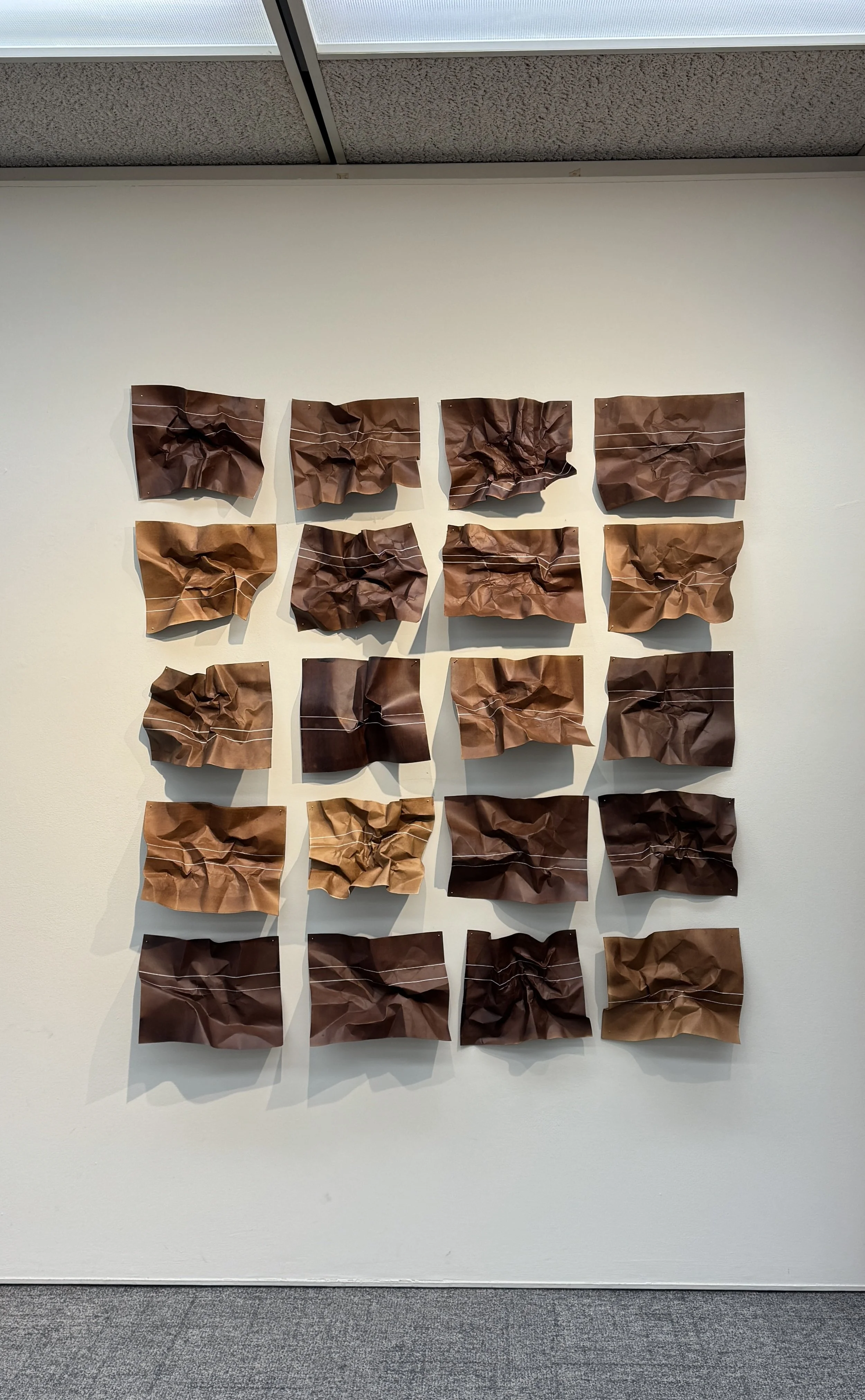
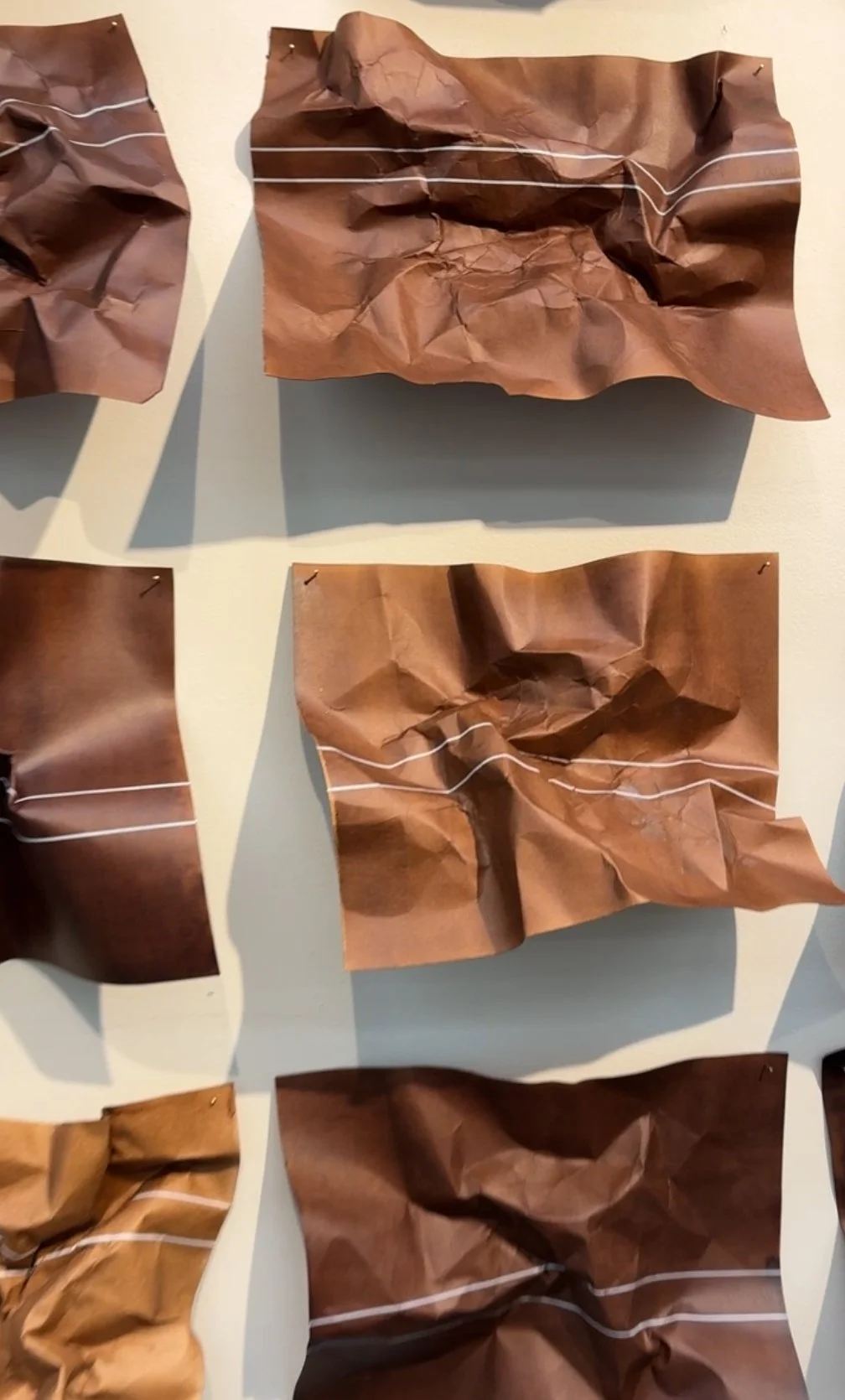
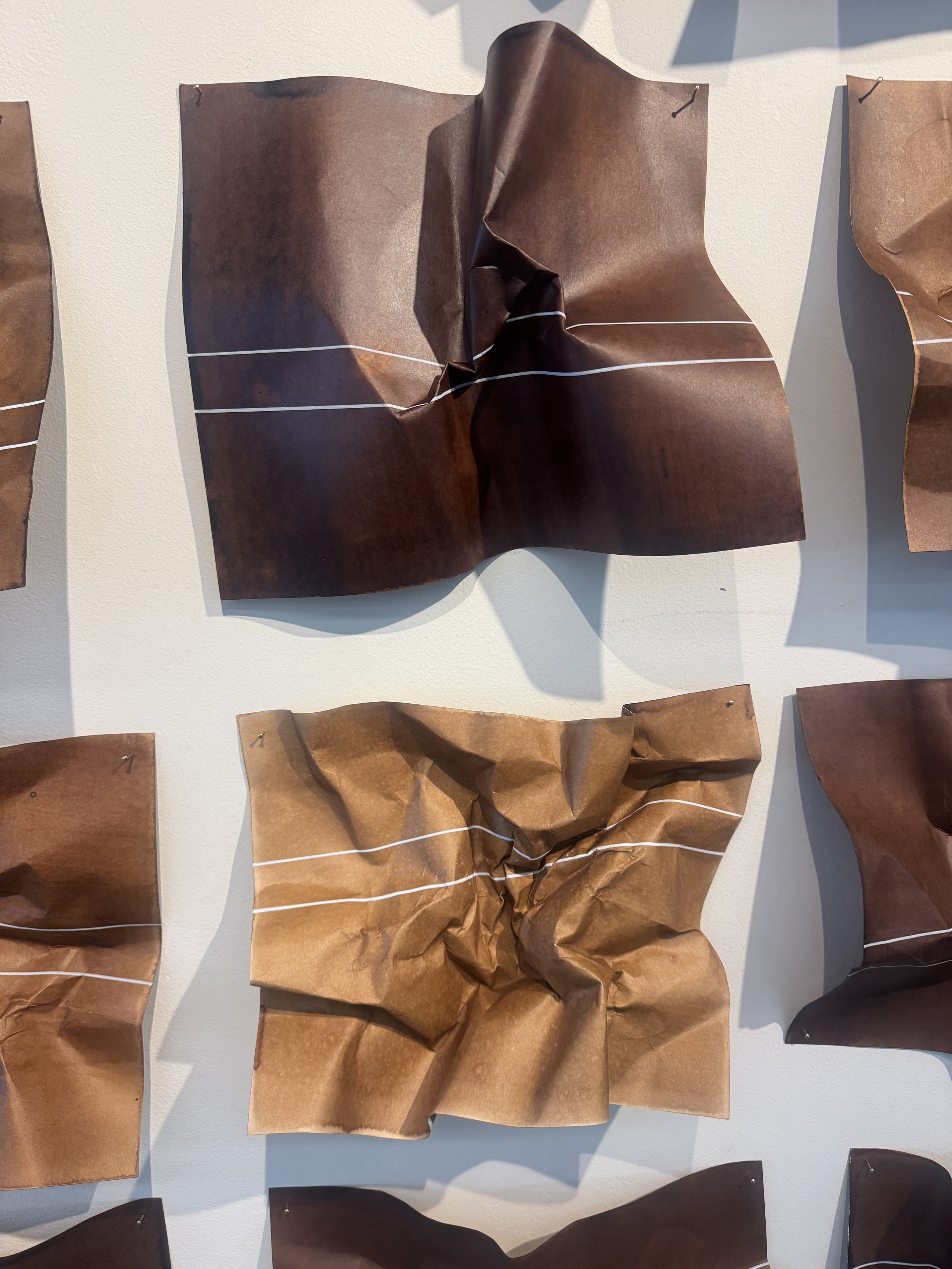
Each of 20 10” x 14”
Paper, wood stain, white marker
Paper is uniformly covered with the woodstain. After drawing two straight white lines with a ruler and a marker, paper is crumpled.
Does a straight line appear straight? Can a true identity ever be what it is or is it defined by the state of the other identities?
Our state of being, our attempts and actions are altered by other forces, visible and invisible, by the laws of physics, society, family, etc.
Einstein’s General Relativity of curved space-time due to gravity.
Dark matter and bending of light through gravitational lensing.
Each of 16 14” x 10”
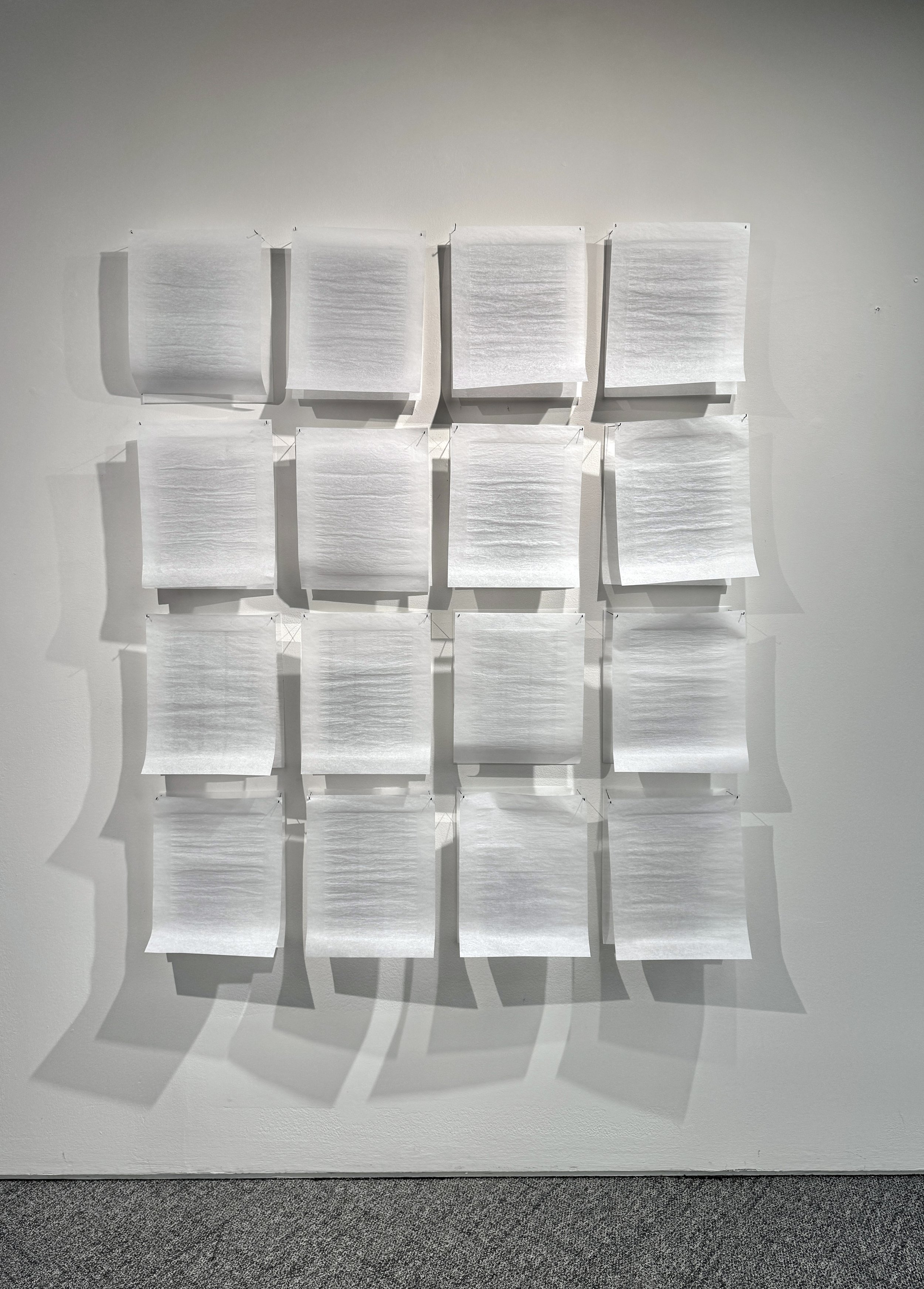
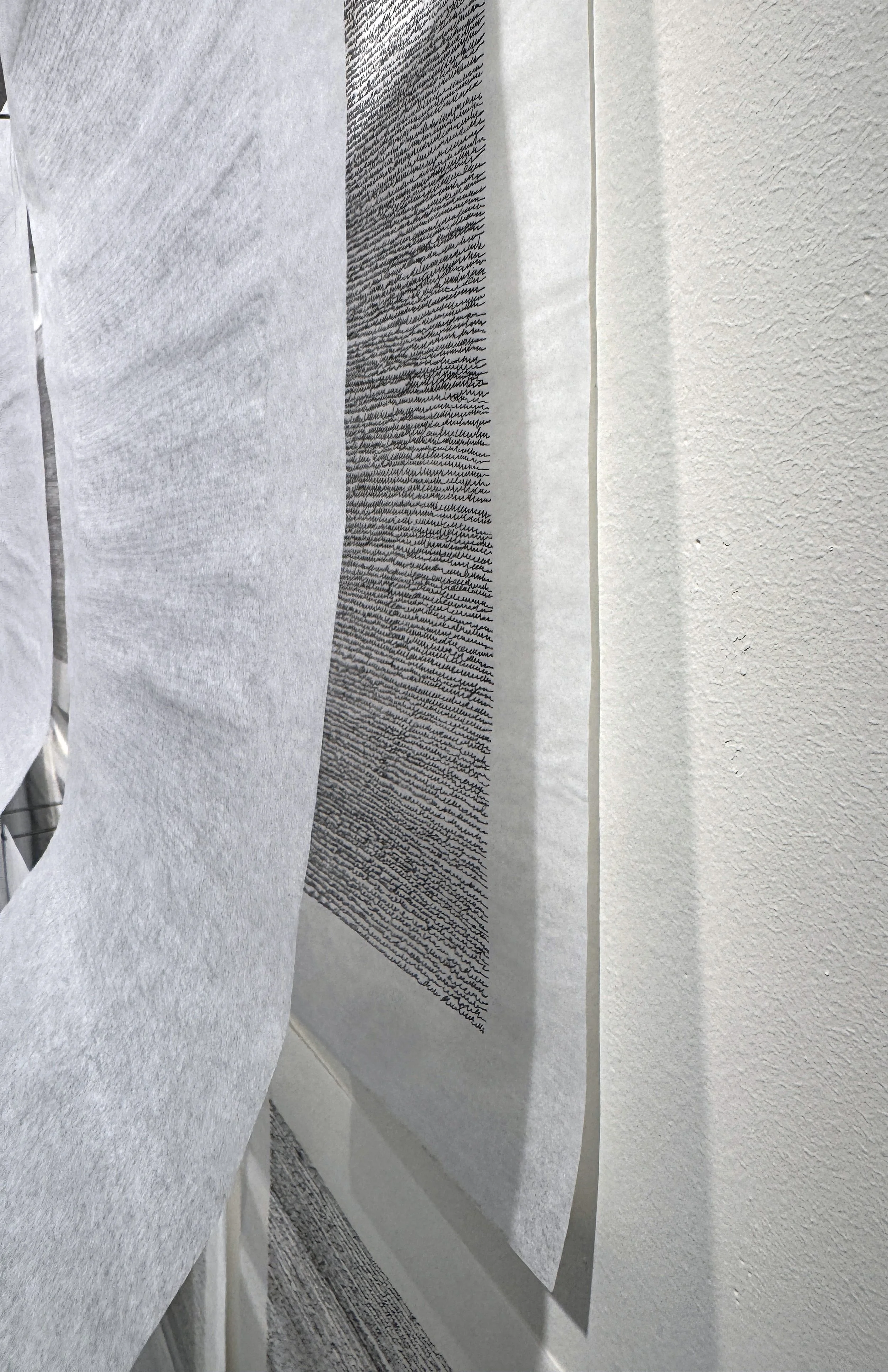
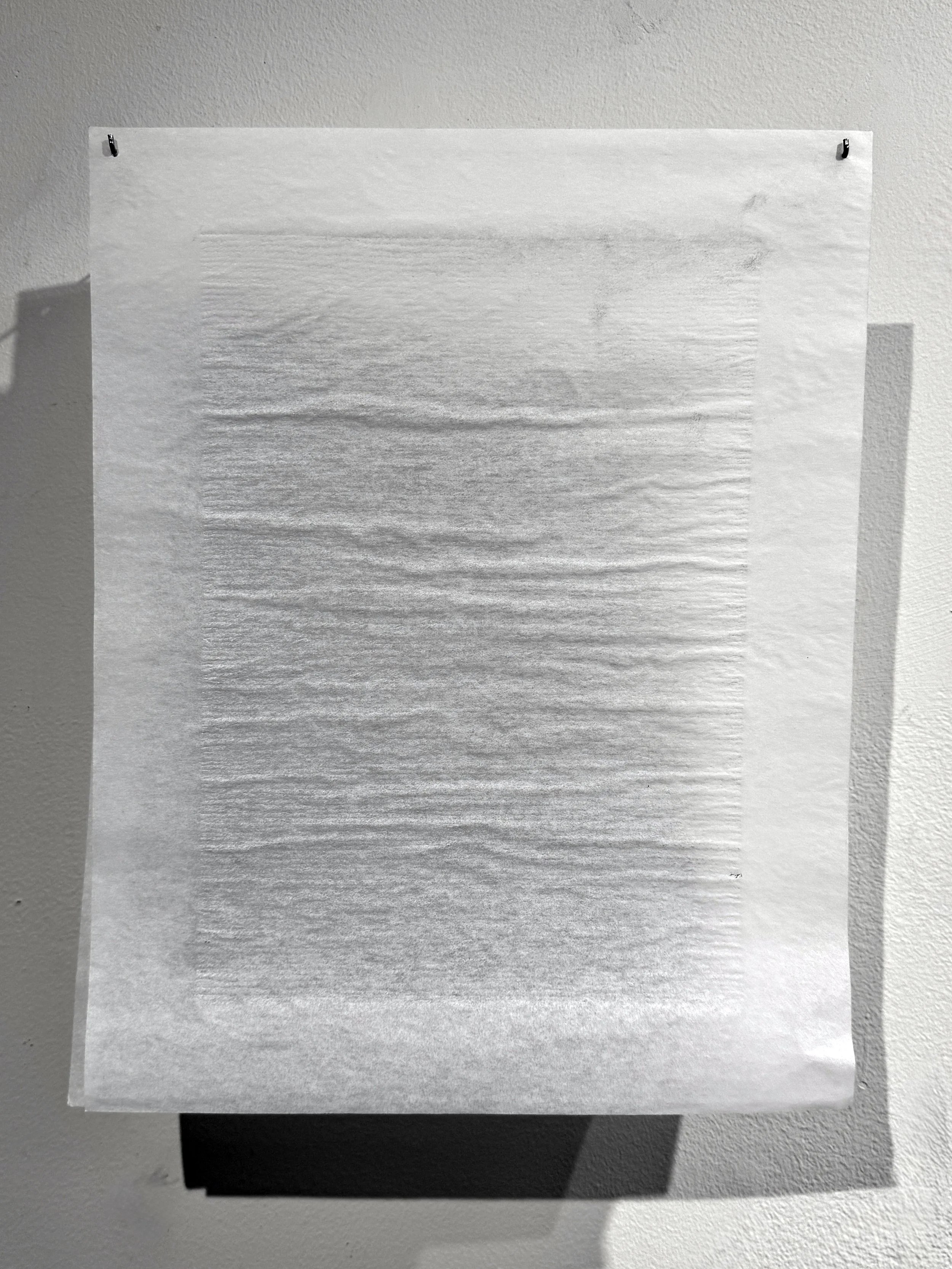
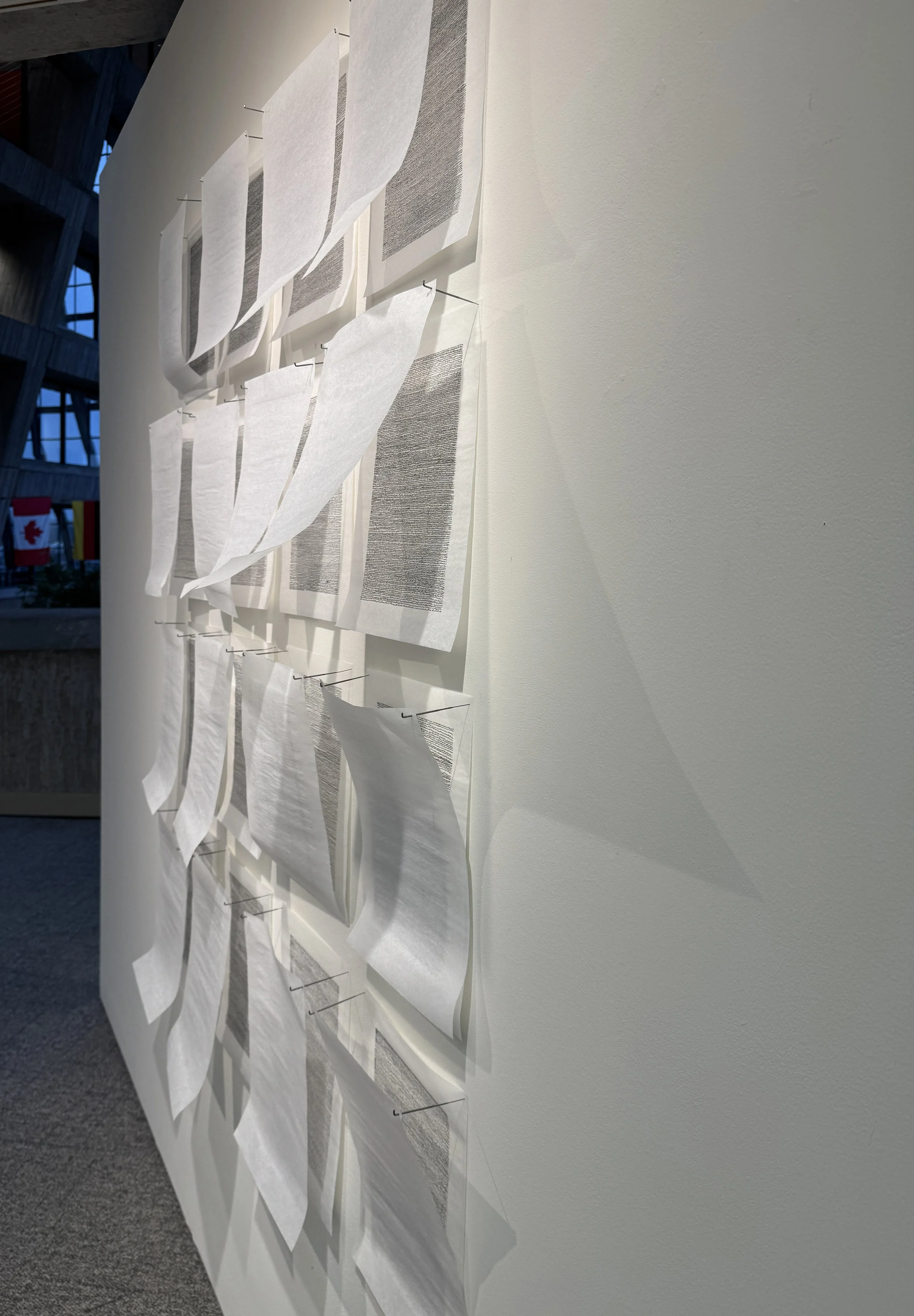
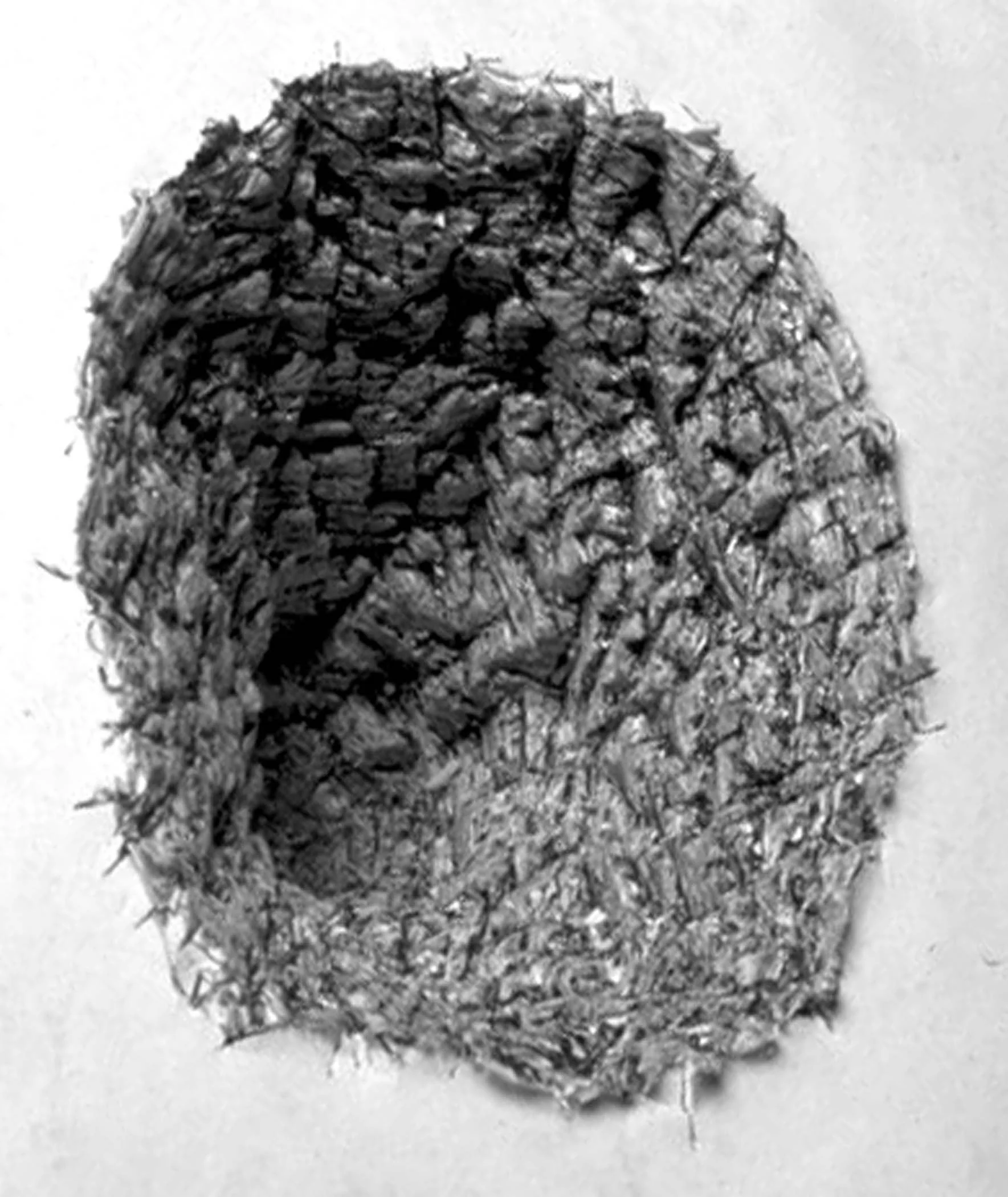
Tracing paper, carbon paper, empty mechanical pencil
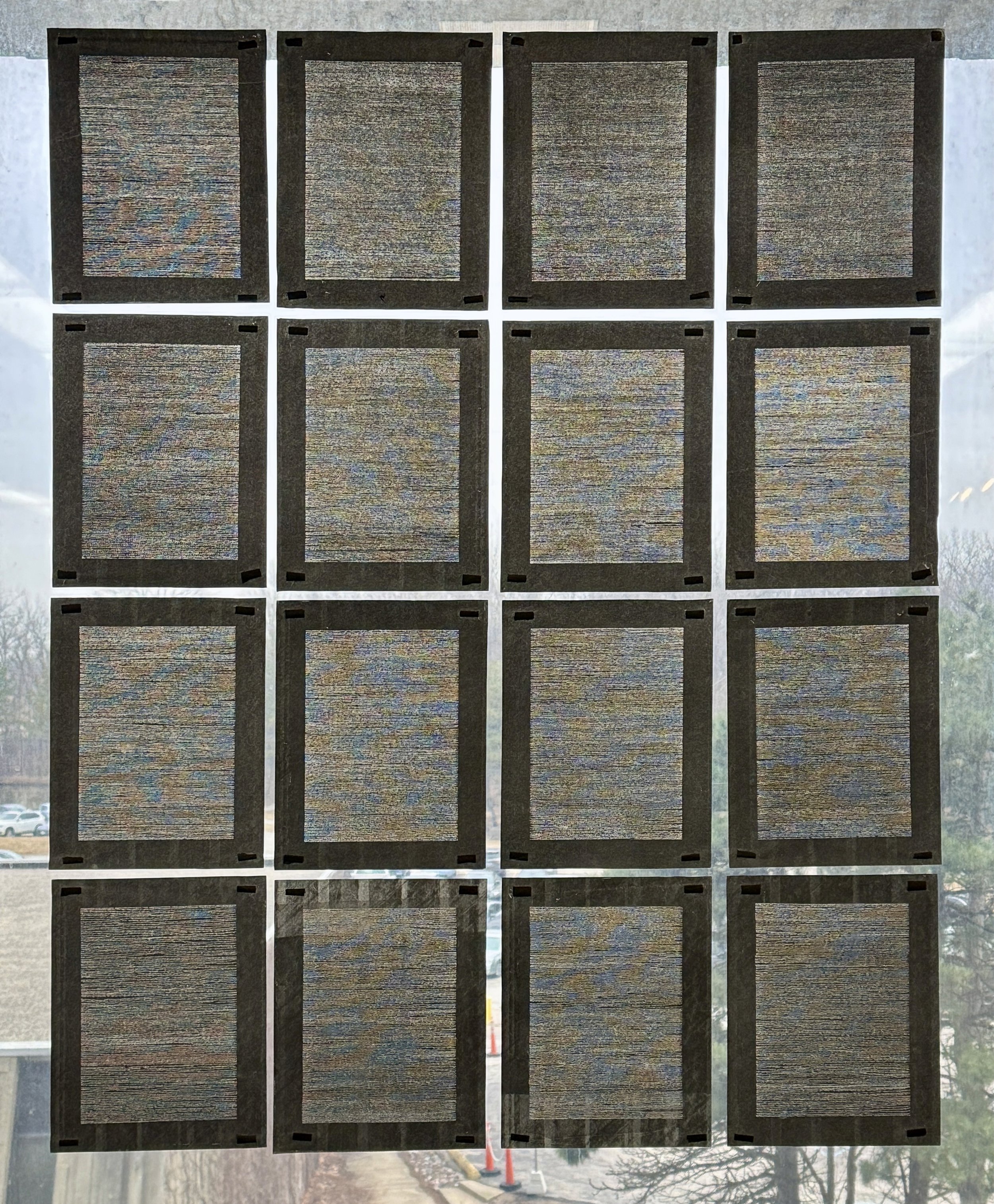
Write continuous thoughts on the two layers of tracing paper and carbon paper in between. The whole time while writing the marks are invisible and can only be viewed after the sheet is complete as the carbon paper transfers the writing marks.
Some of the very complex information is invisible but the effect of it materializes something else into existence. The examples are numerous from the Higgs field, Dark matter, neutrinos, virtual particles or quantum fields, to our daily actions and choices. Attempting to decipher the invisible information is difficult, however defining something through its effects makes the invisible tangible.
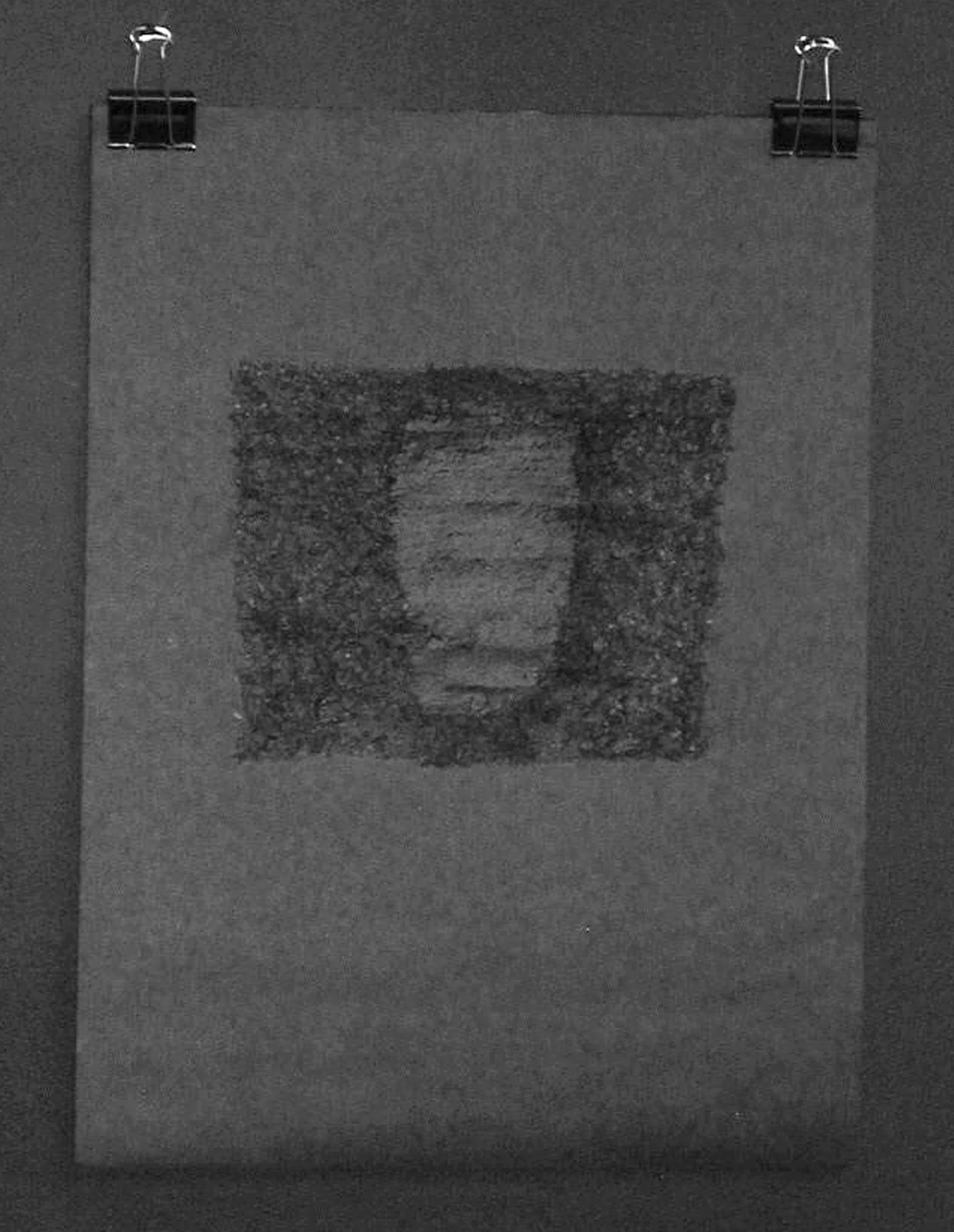
Each of 16 14” x 10”
Carbon paper
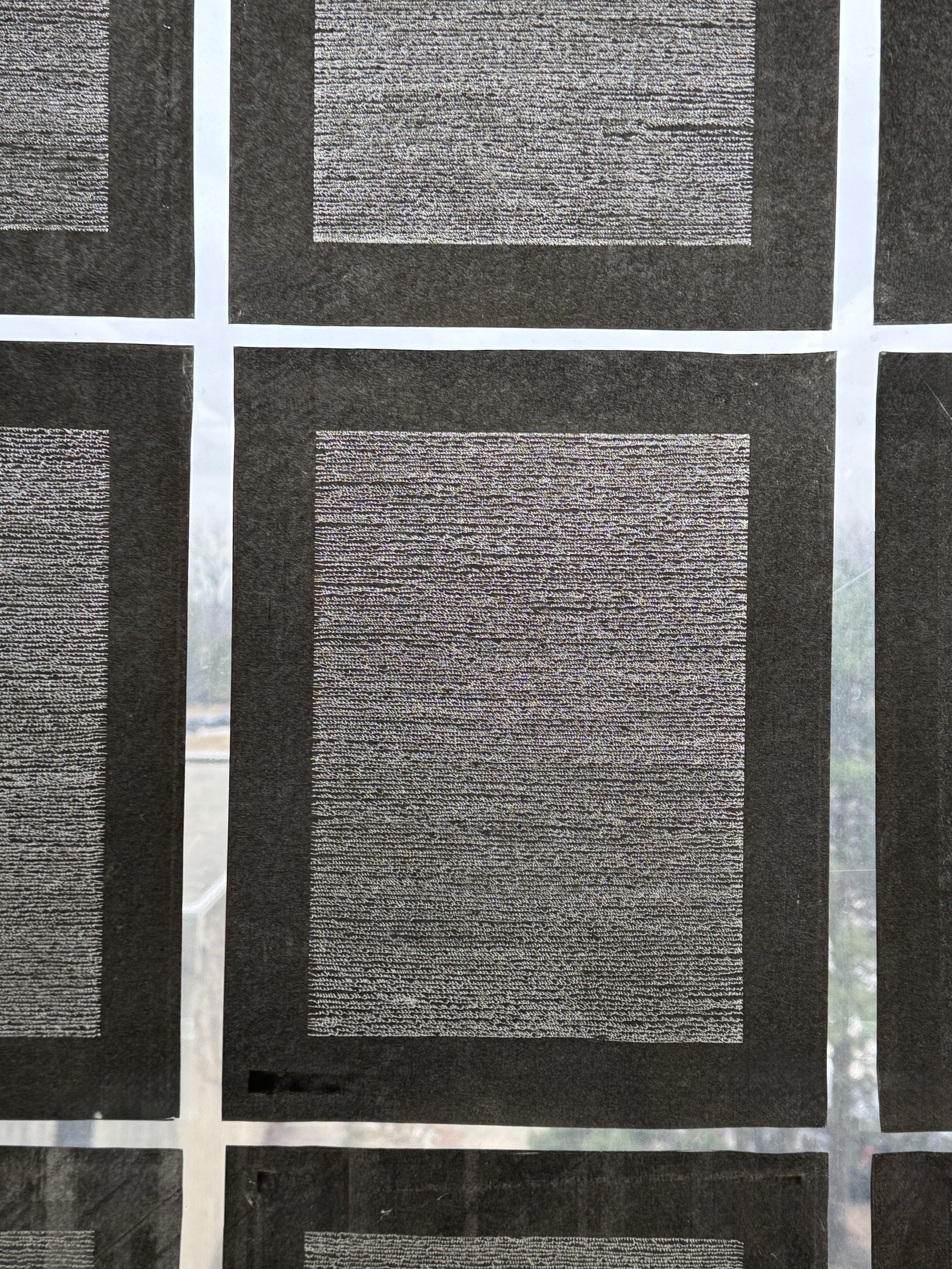
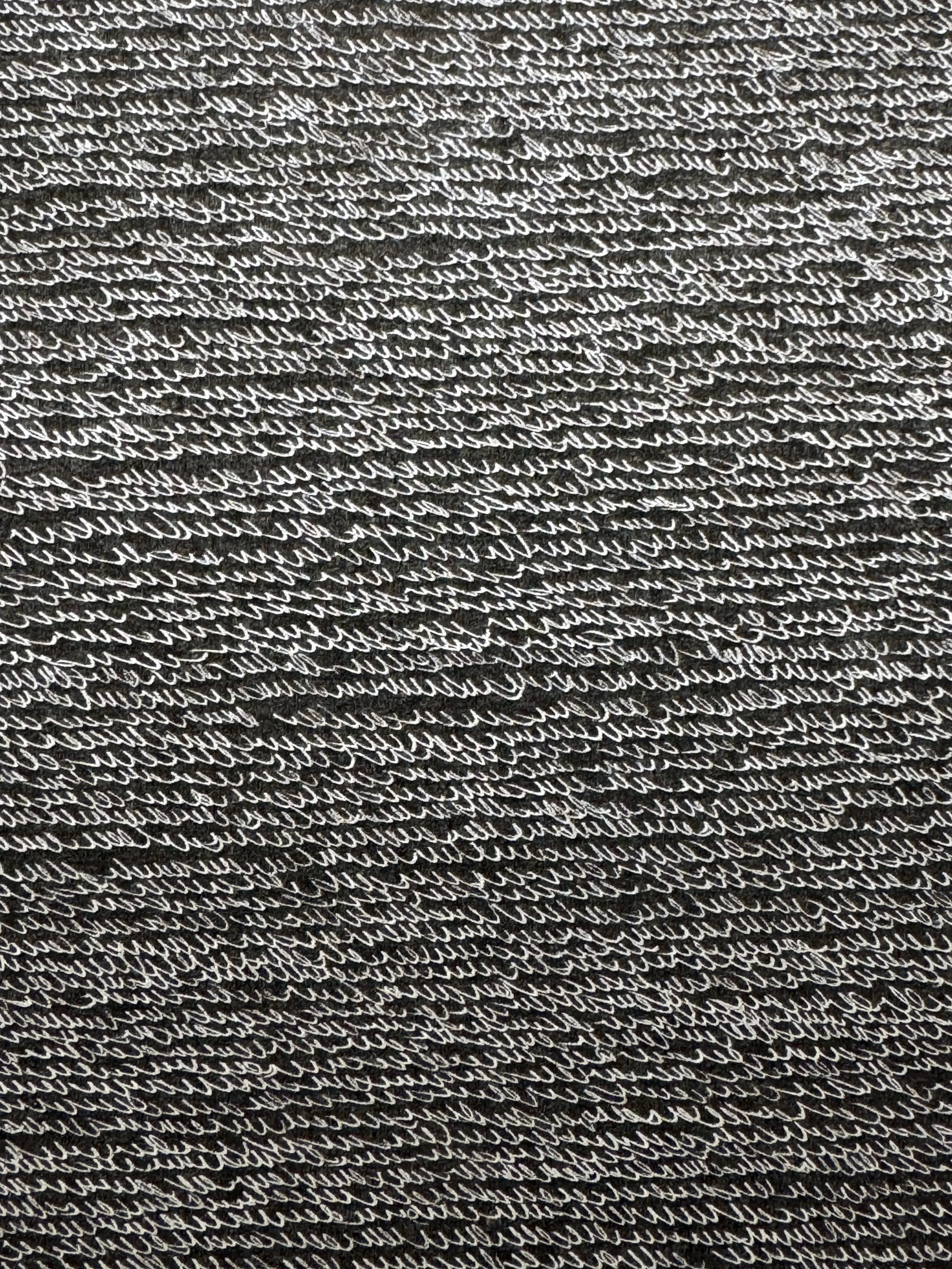
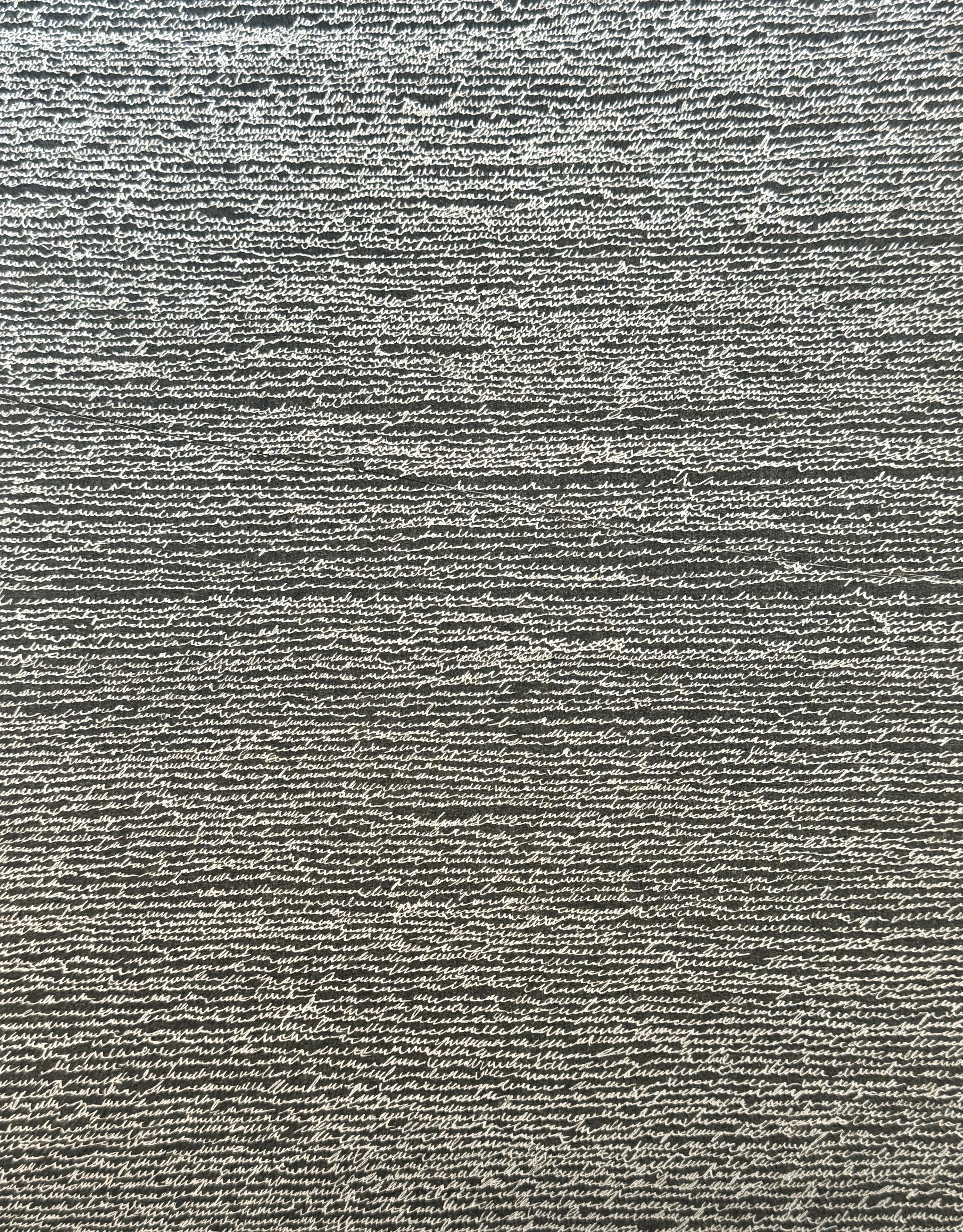
An Art process of Hidden Perceptions I consisted of writing continuous thoughts on the two layers of tracing paper and carbon paper in between. The whole time while writing the marks are invisible and can only be viewed after the sheet is complete as the carbon paper transfers the writing marks. Through the process the carbon paper initially used only as a tool, as a field through which the information will materialize, becomes its own Artpiece with its own meaning. When exposed to the light, hence installed on the window, the traces of the writing marks are clearly visible.
Through the interactions the carbon paper was altered by the forces, materializing the information but in reverse (white marks on black). From invisible forces (top layer tracing paper covered with blank pencil), to partially visible information (carbon paper visible only with the lite source going through), and finally to the clearly visible materialized information (bottom layer of the tracing paper with the carbon transfer on it).
Installation varies
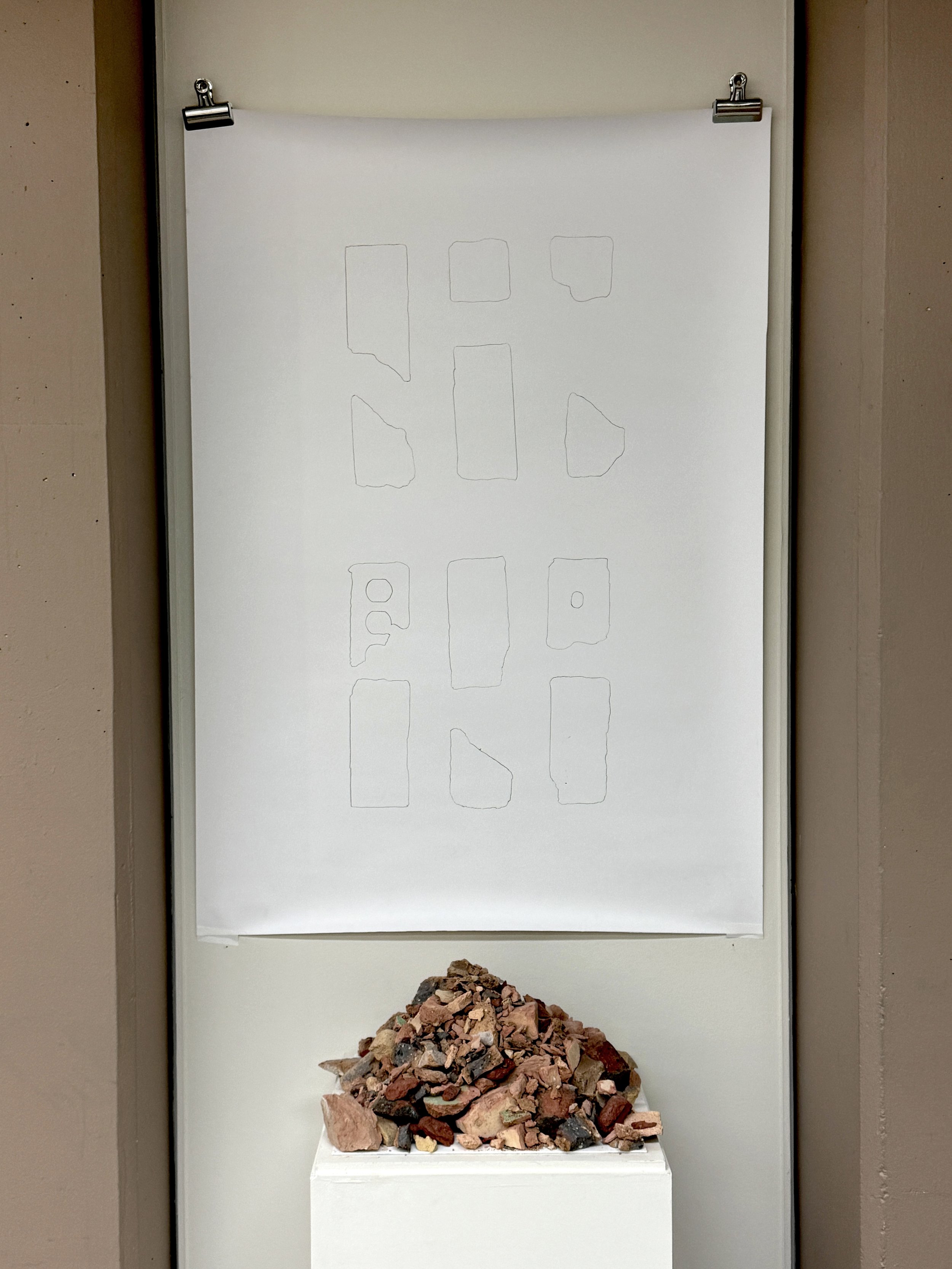
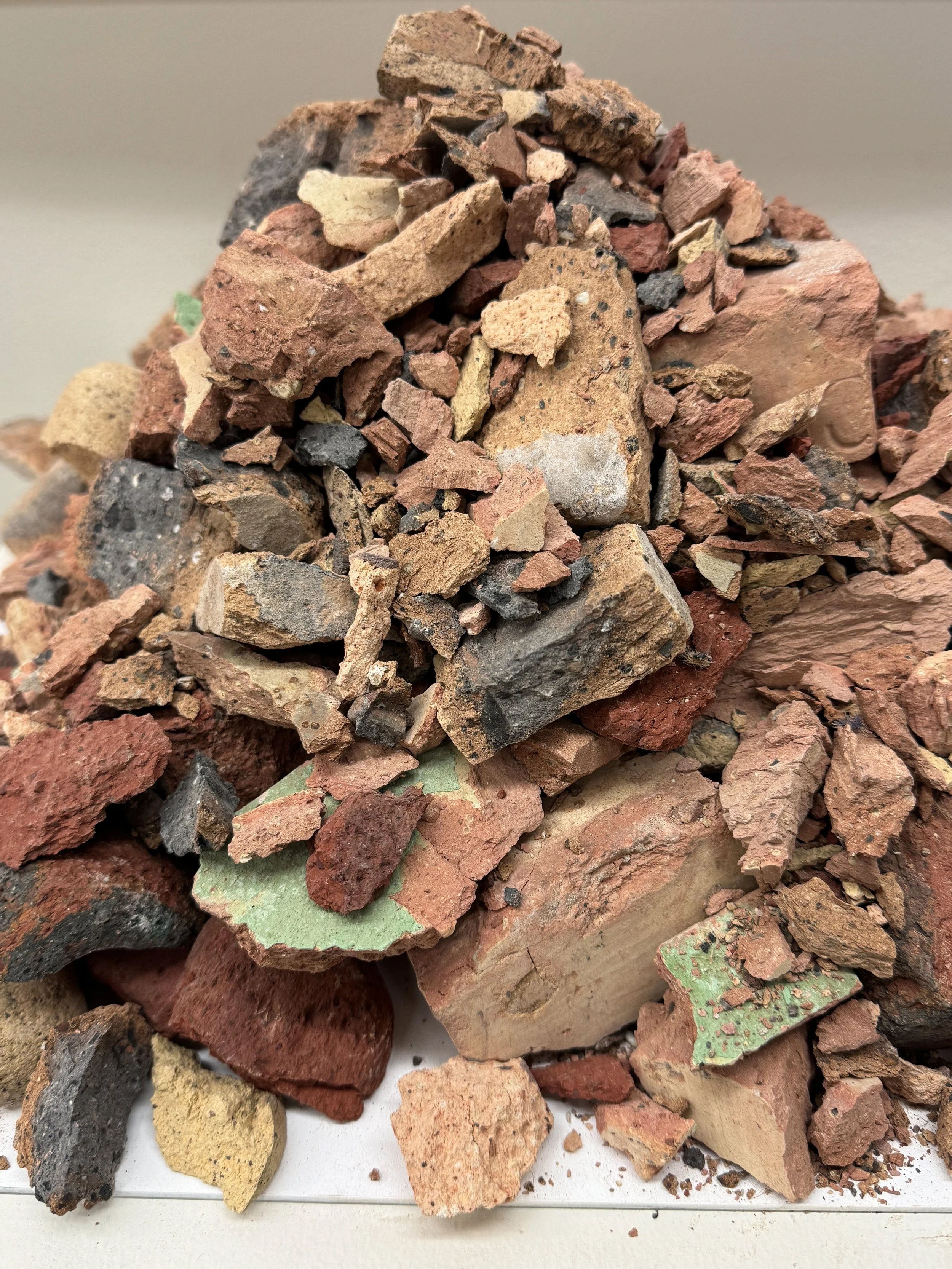
Used Bricks
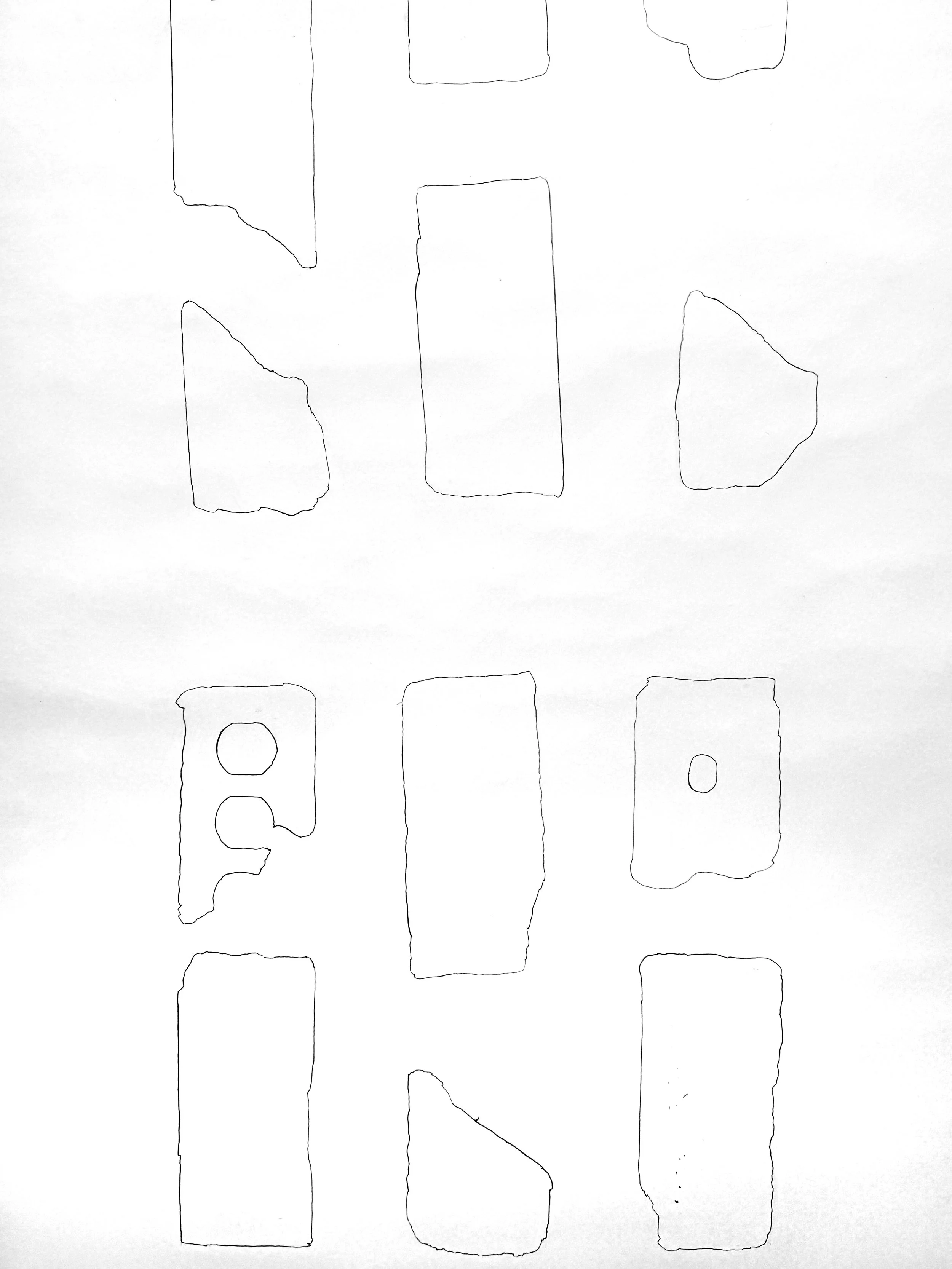
Used bricks collected from different Chicago neighborhoods. Trace them onto the wall in an arrangement resembling the standard particle model. Crash the bricks onsite and install them on the pedestal in front of the wall drawing.
Marker on paper
8.5” x 5.5” x 3.5”
Process: 1,000 page book has a total of 4% filled-in pages with the bits while the rest is blank, corresponding to the 4% of the known about the Universe, and 96% of the unknown. Filled in pages are fragmented and at the beginning of the book just like our collective knowledge of any subject is fragmented and missing. Estimate of 500,000 mark bits.
Knowledge helps us see, understand the state of our being and ultimately Be in Reality. Currently all that is known in the Universe, neutrons, protons, and electrons that make up everything we can see accounts for only about 4% of the mass and energy of the Universe. About 70% of the Universe is what is dark energy; about 26% is dark matter, and this 96% is unknown. All that humanity has ever discovered and learned accounts for 4% of the Universe. There is 96% that we know that we do not know. How much more is there that we do not know that we do not know? Is our consciousness not complex enough to see the unknown even though we are staring at the answers? Knowing the unknown is incomparably much more real than not knowing at all.
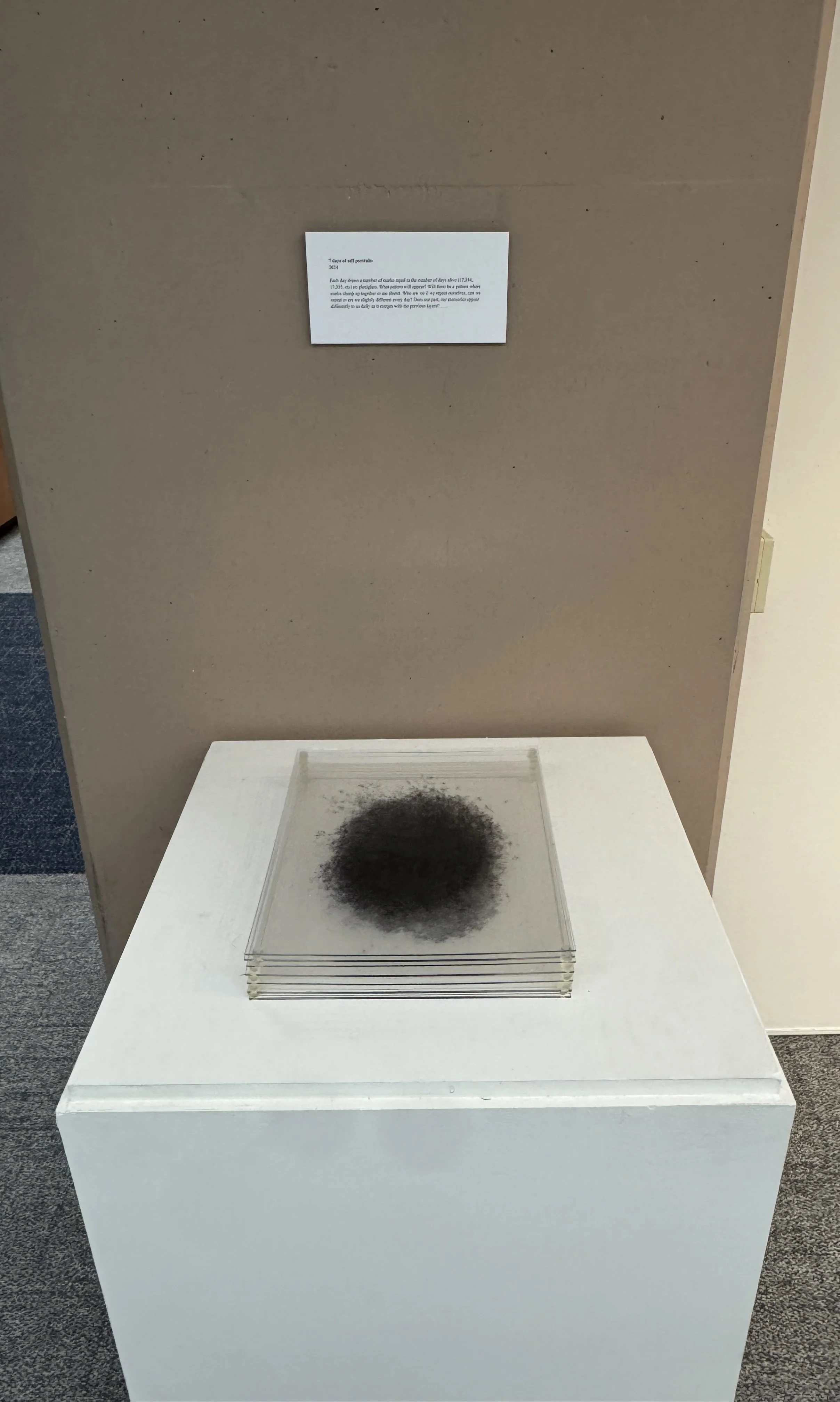
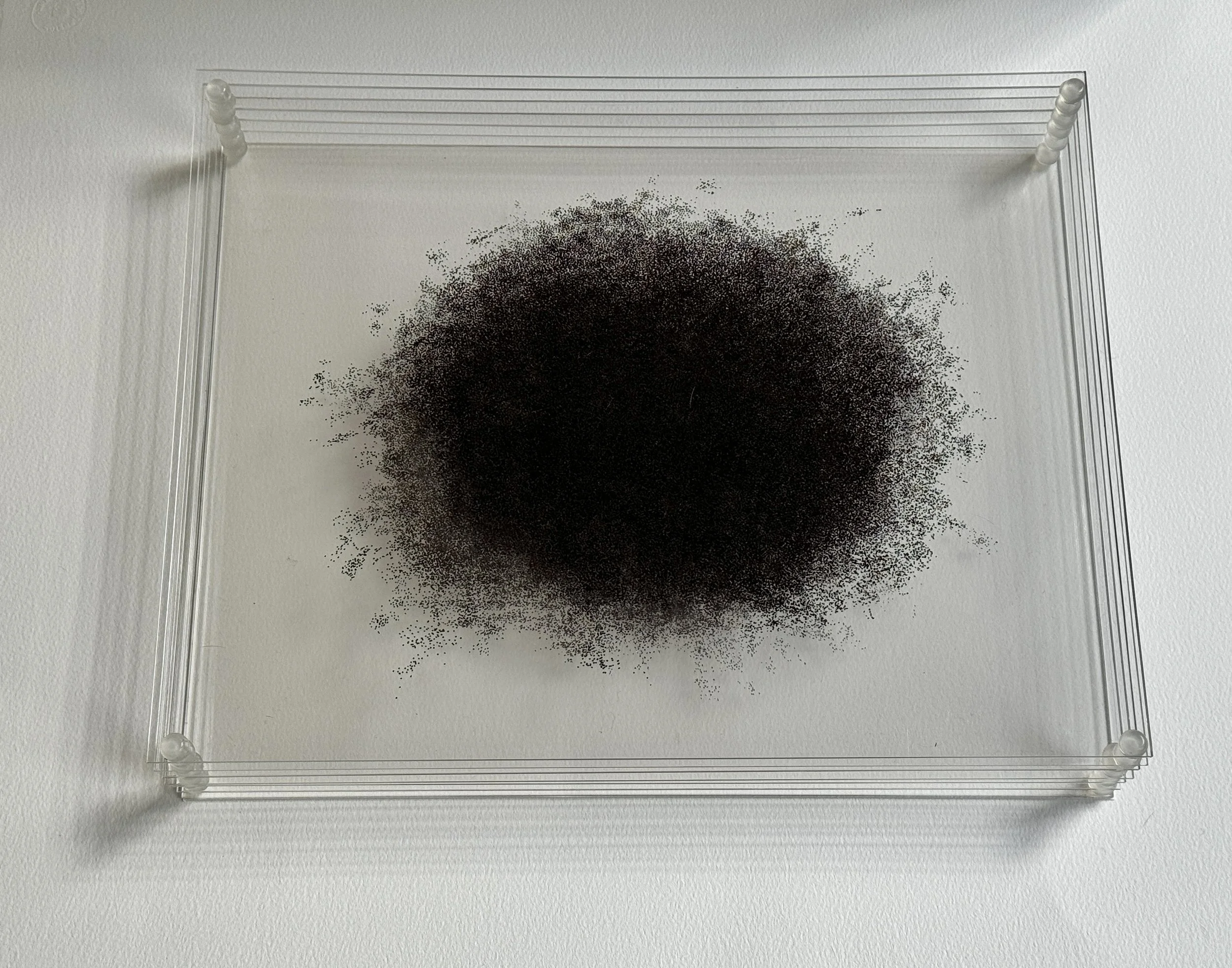
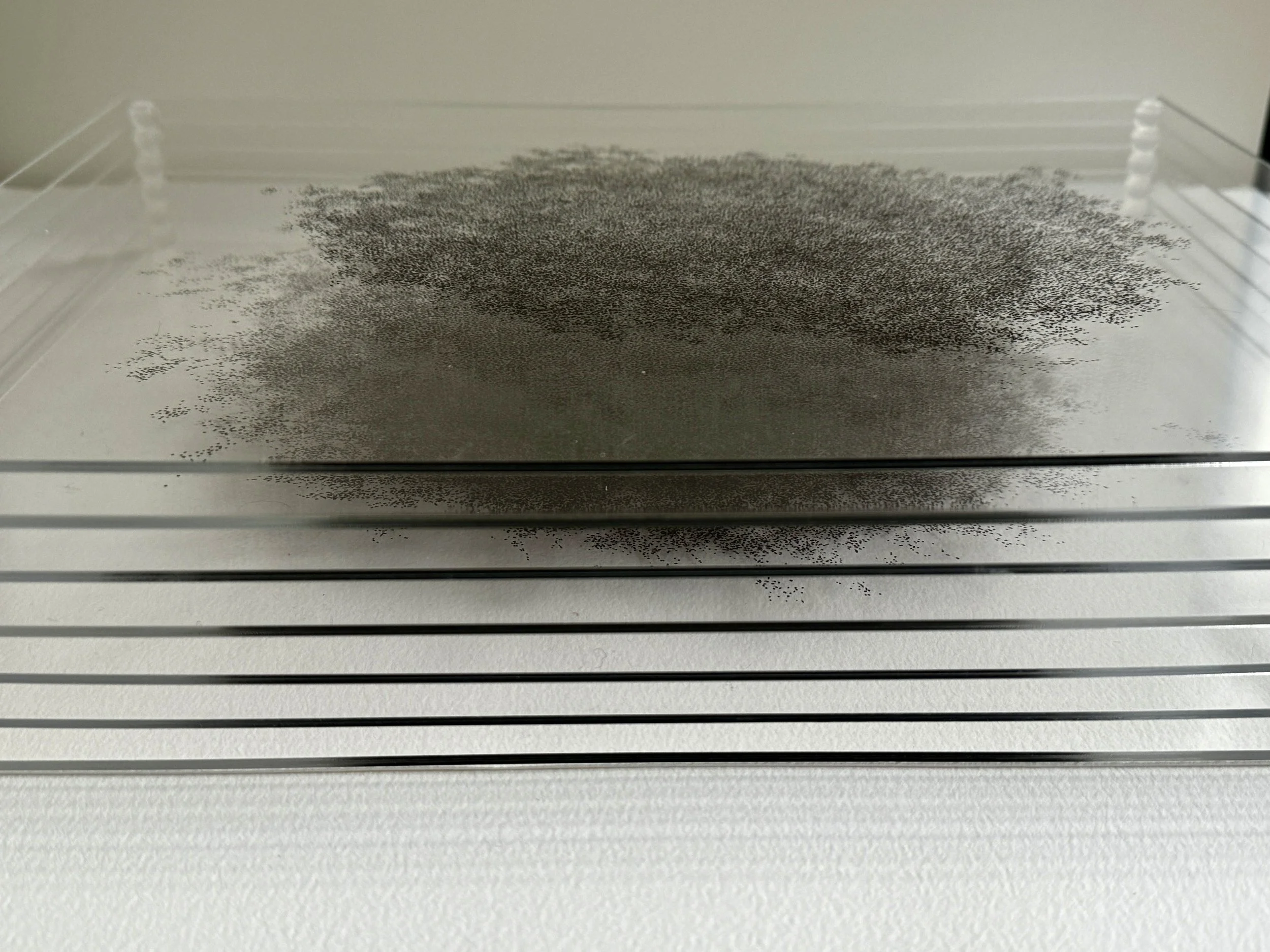
Each day draws a number of marks equal to the number of days alive (17,354, 17,355, etc) on plexiglass. What pattern will appear? Will there be a pattern where marks clump up together or are absent. Who are we if we repeat ourselves, can we repeat or are we slightly different every day? Does our past, our memories appear differently to us daily as it marges with the previous layers? ......
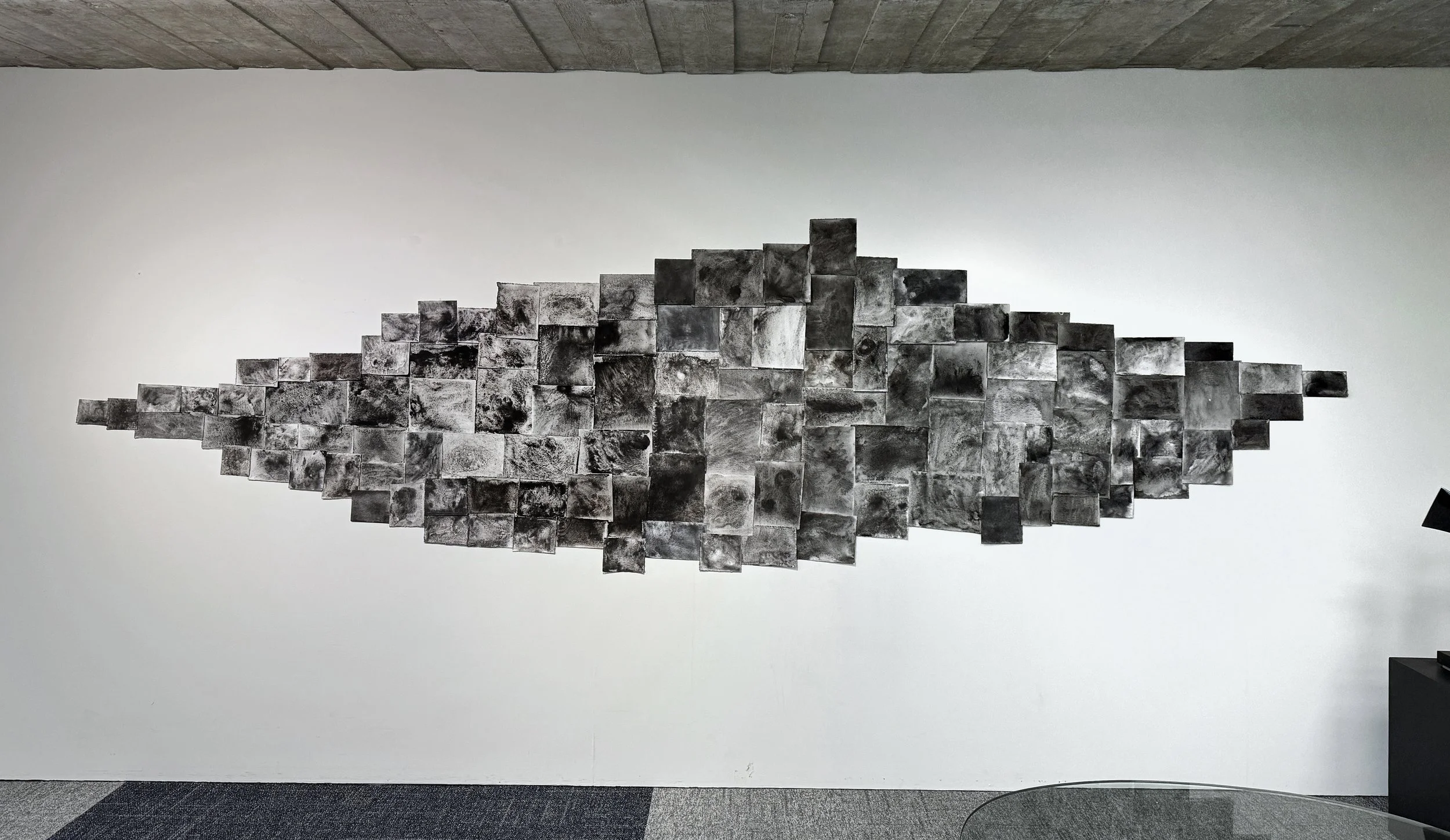
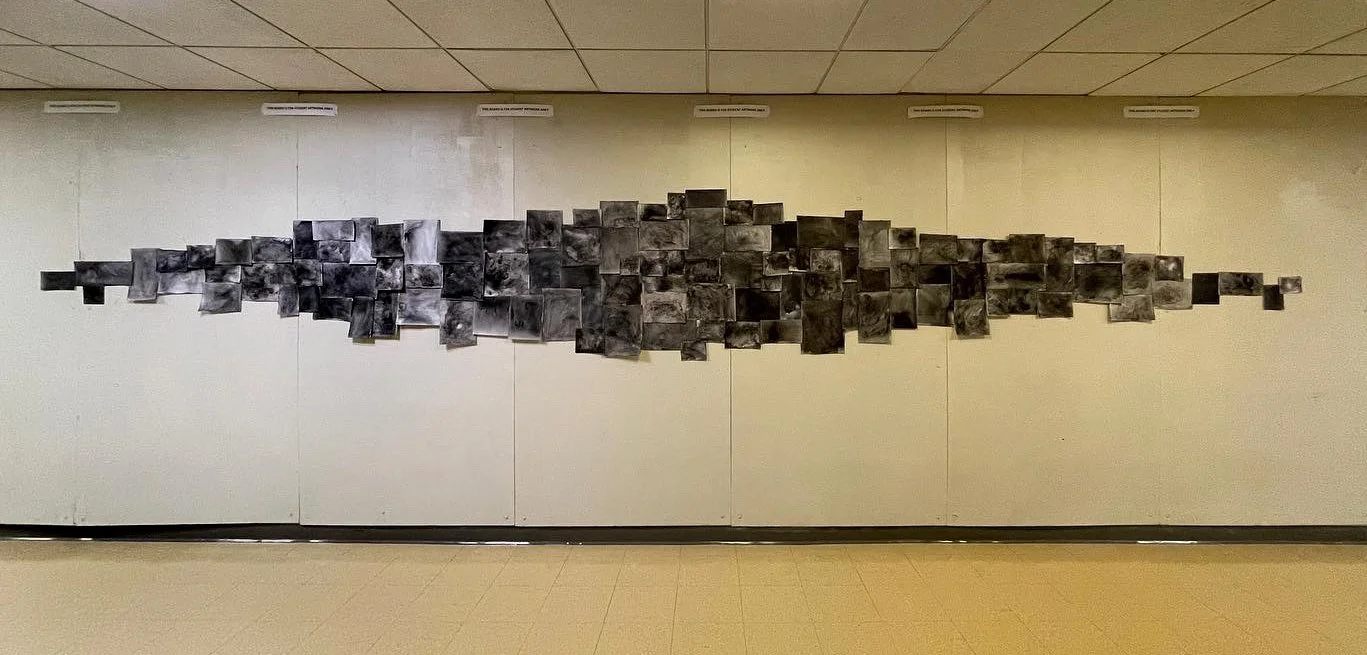
Liquid charcoal on paper
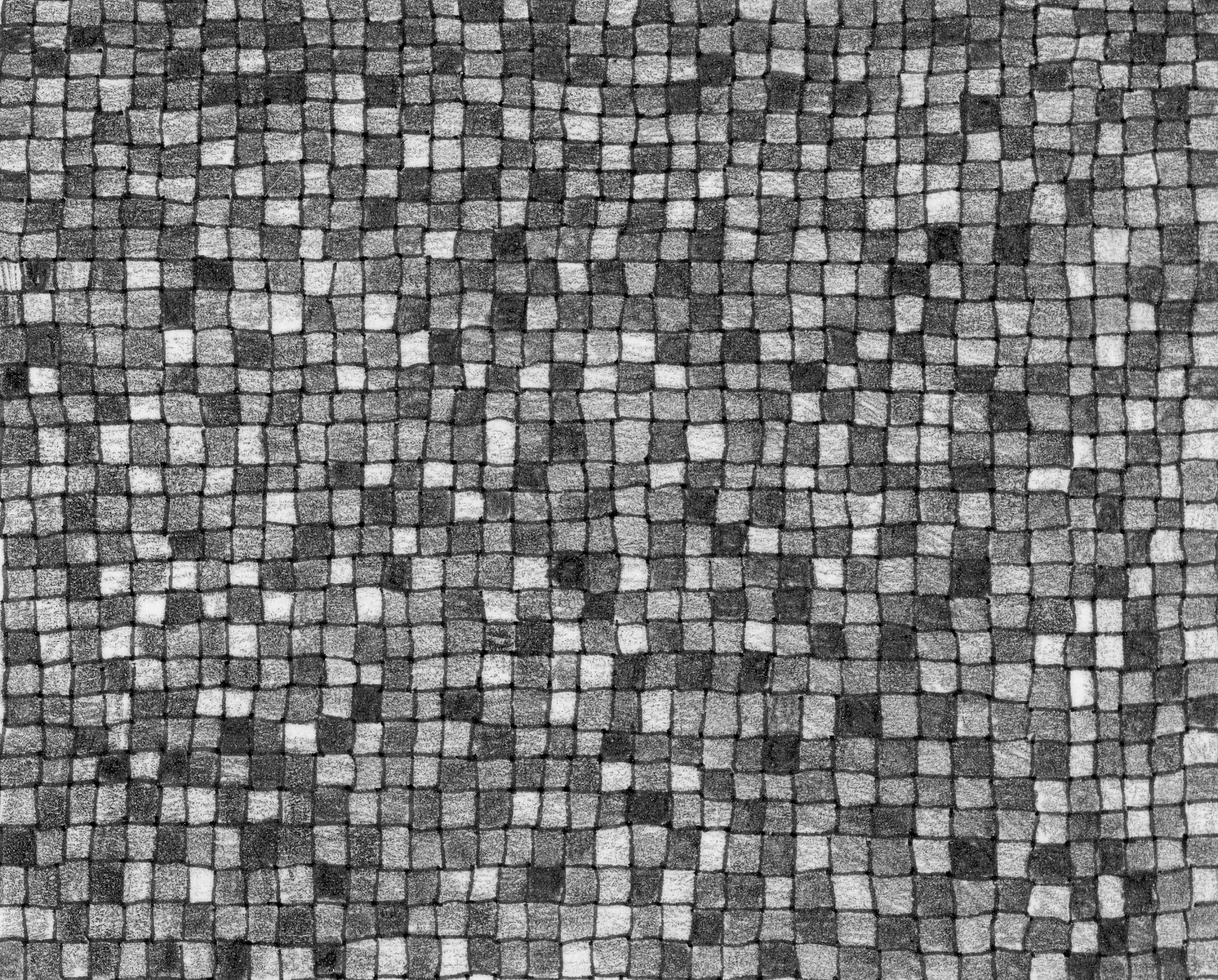
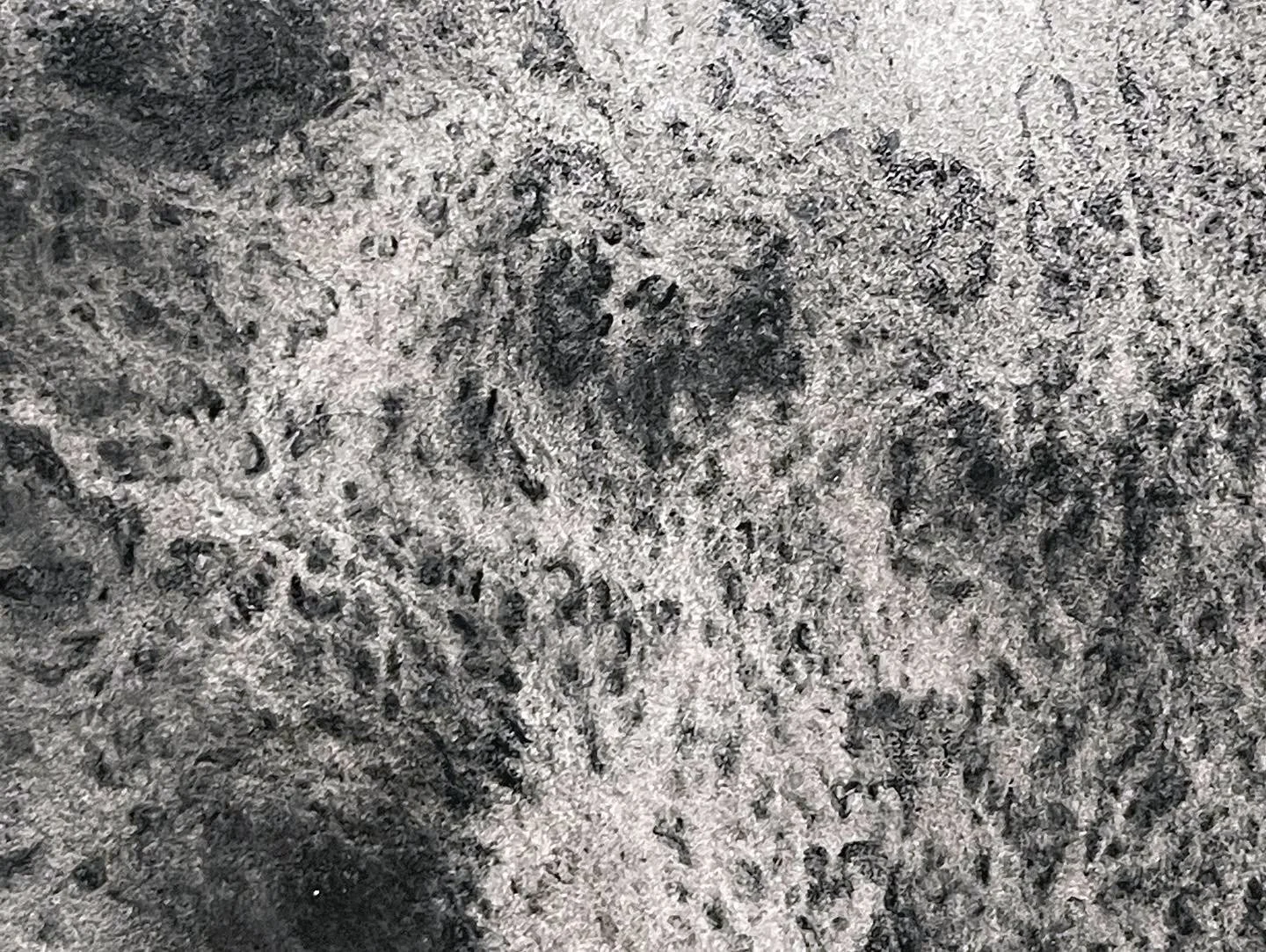
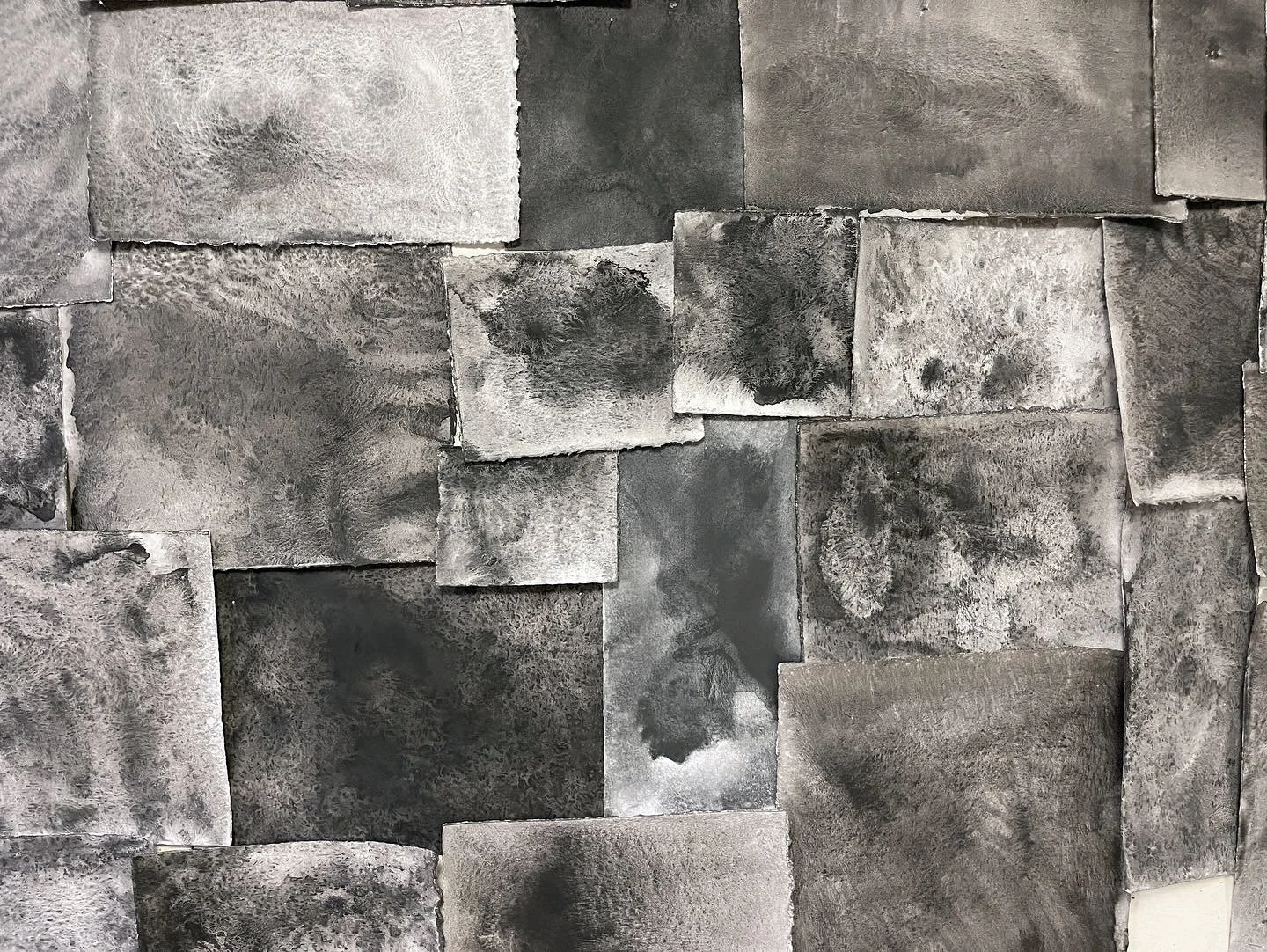
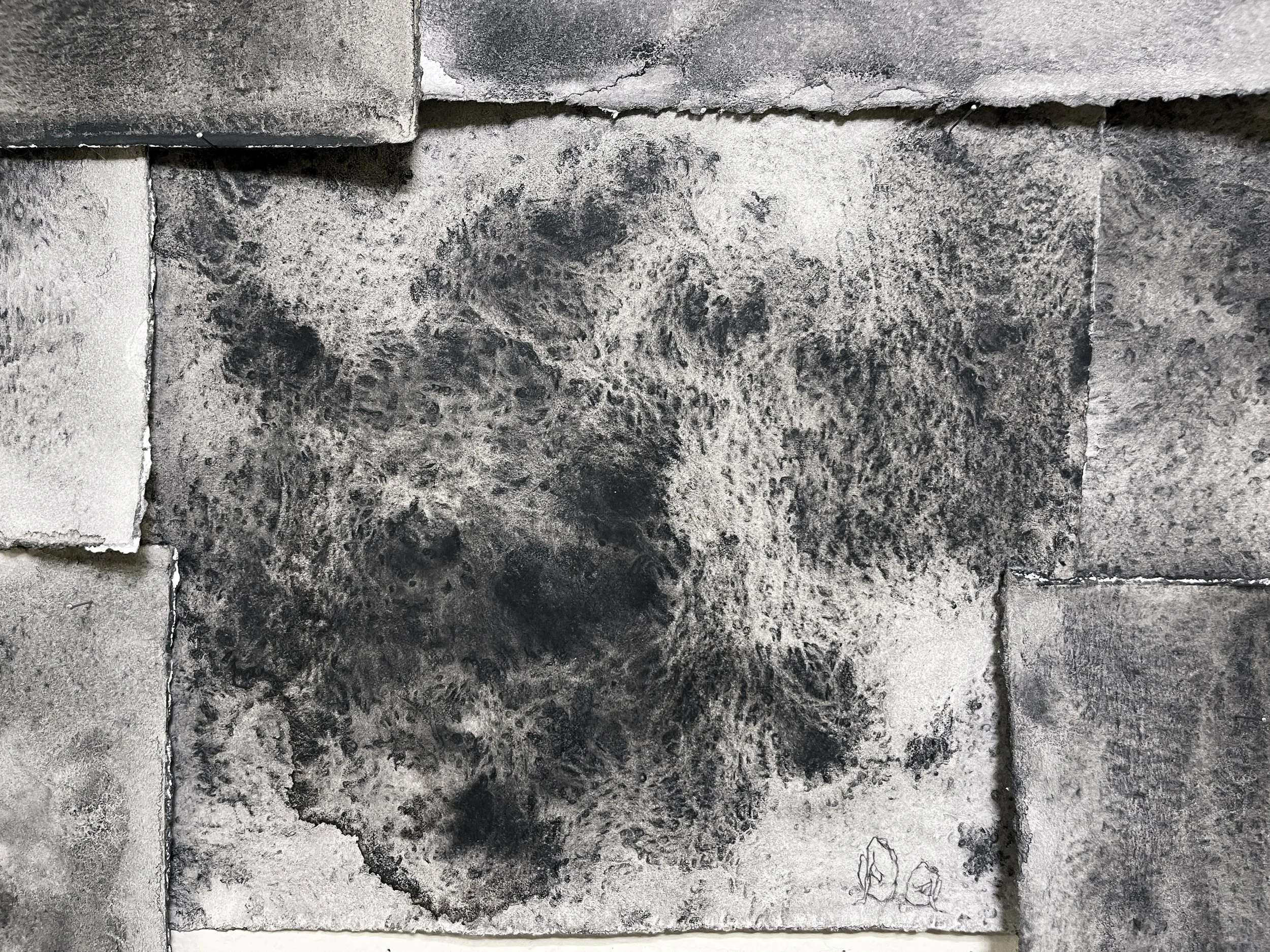
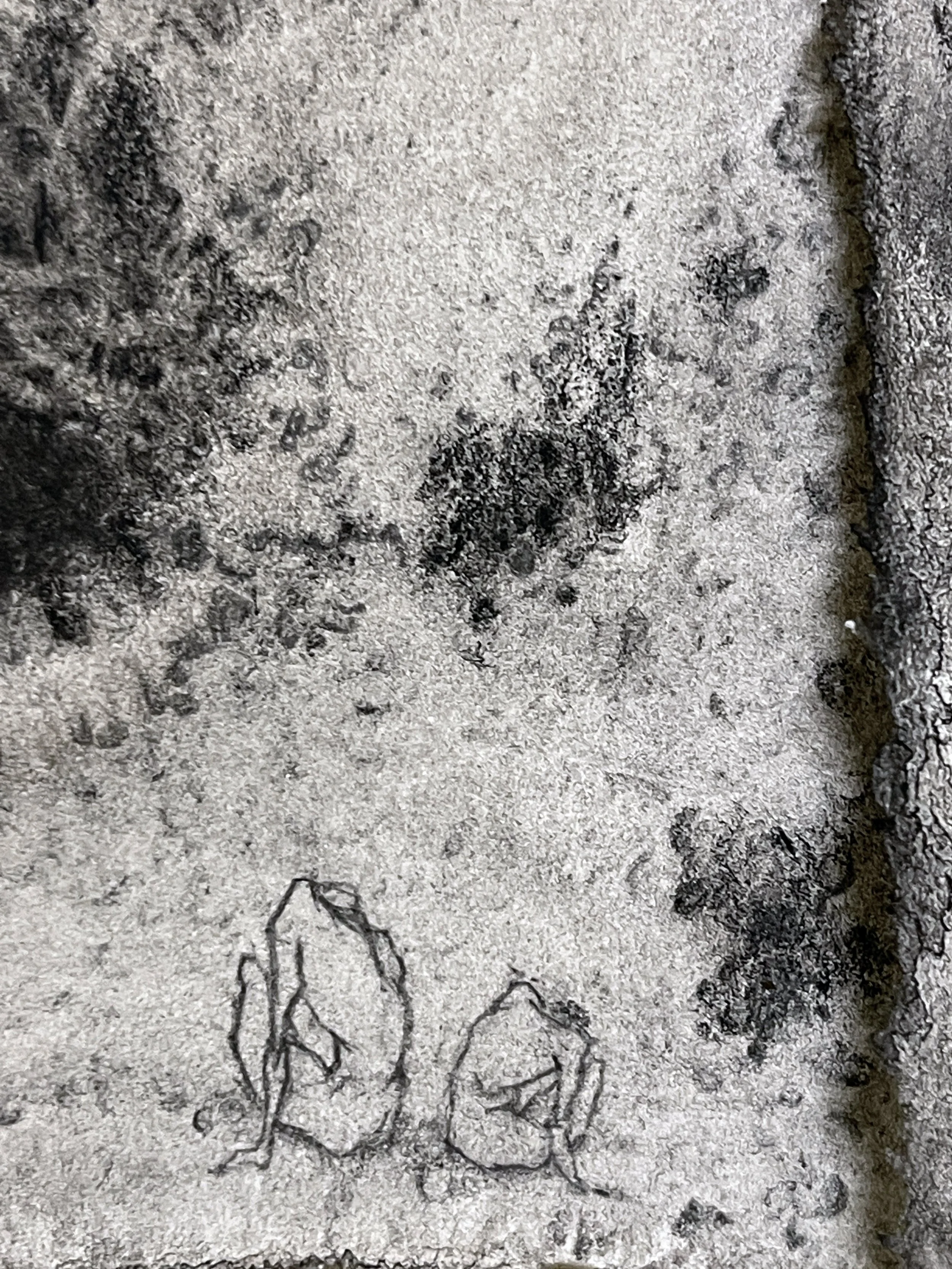
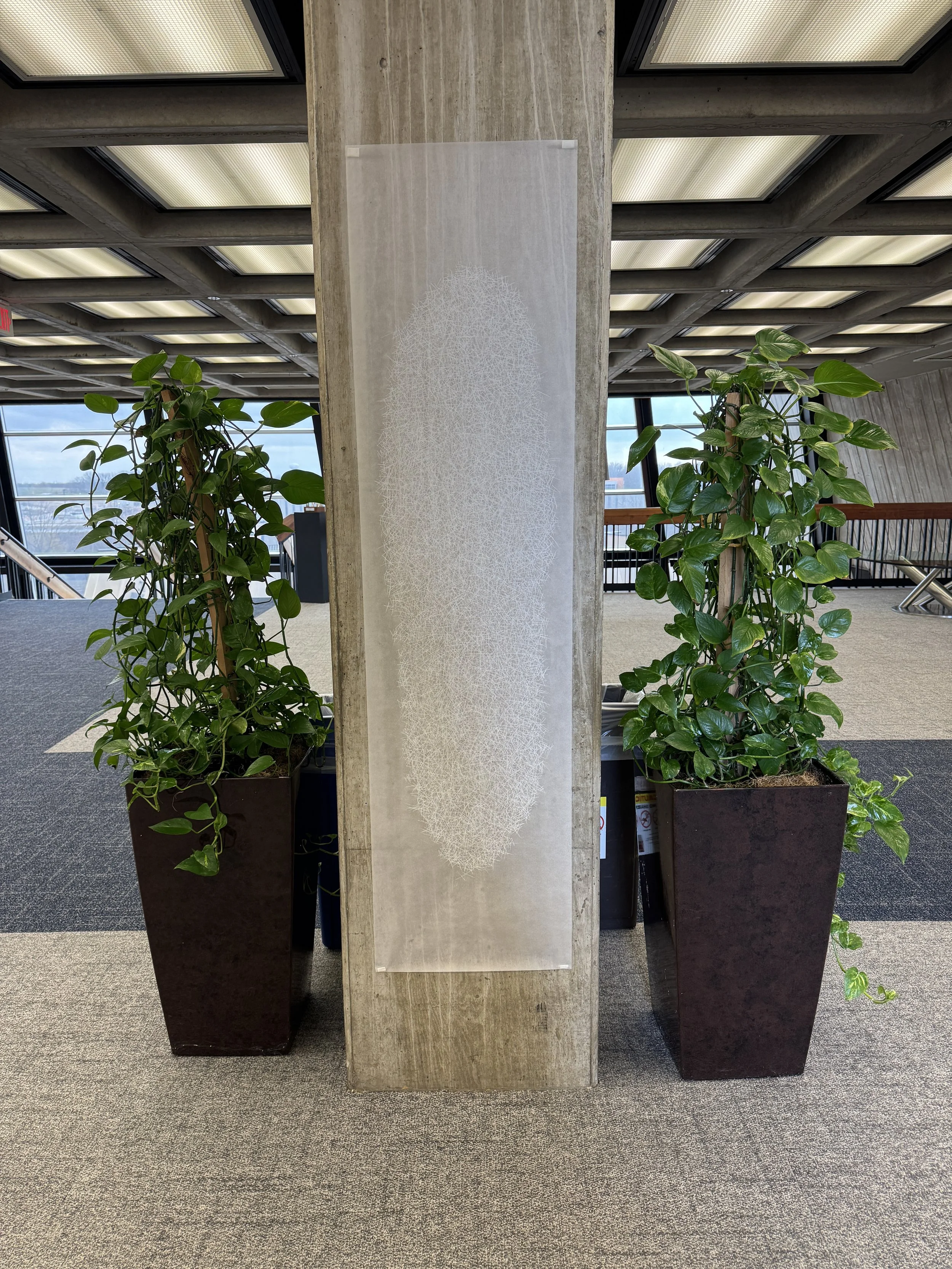
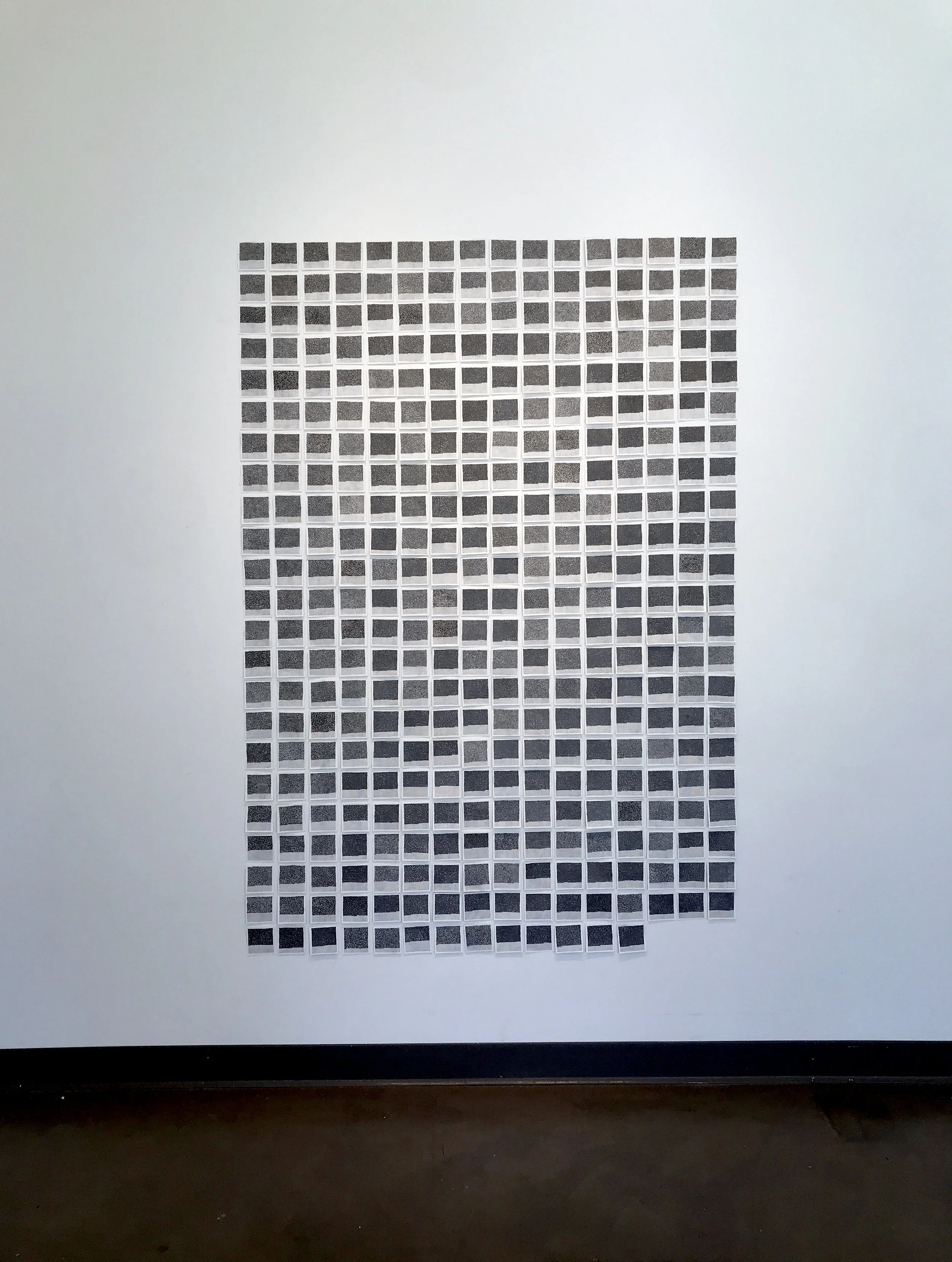
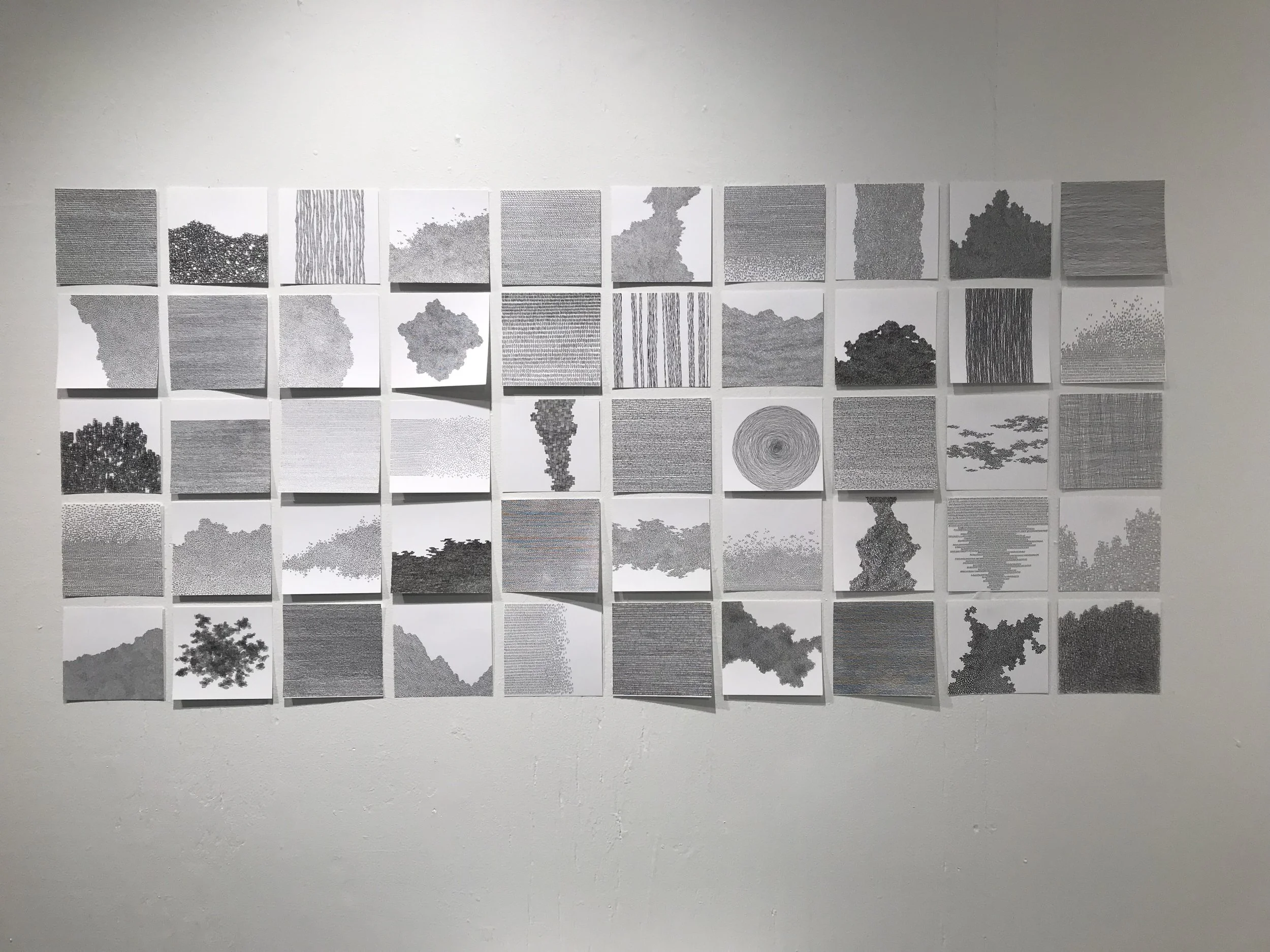
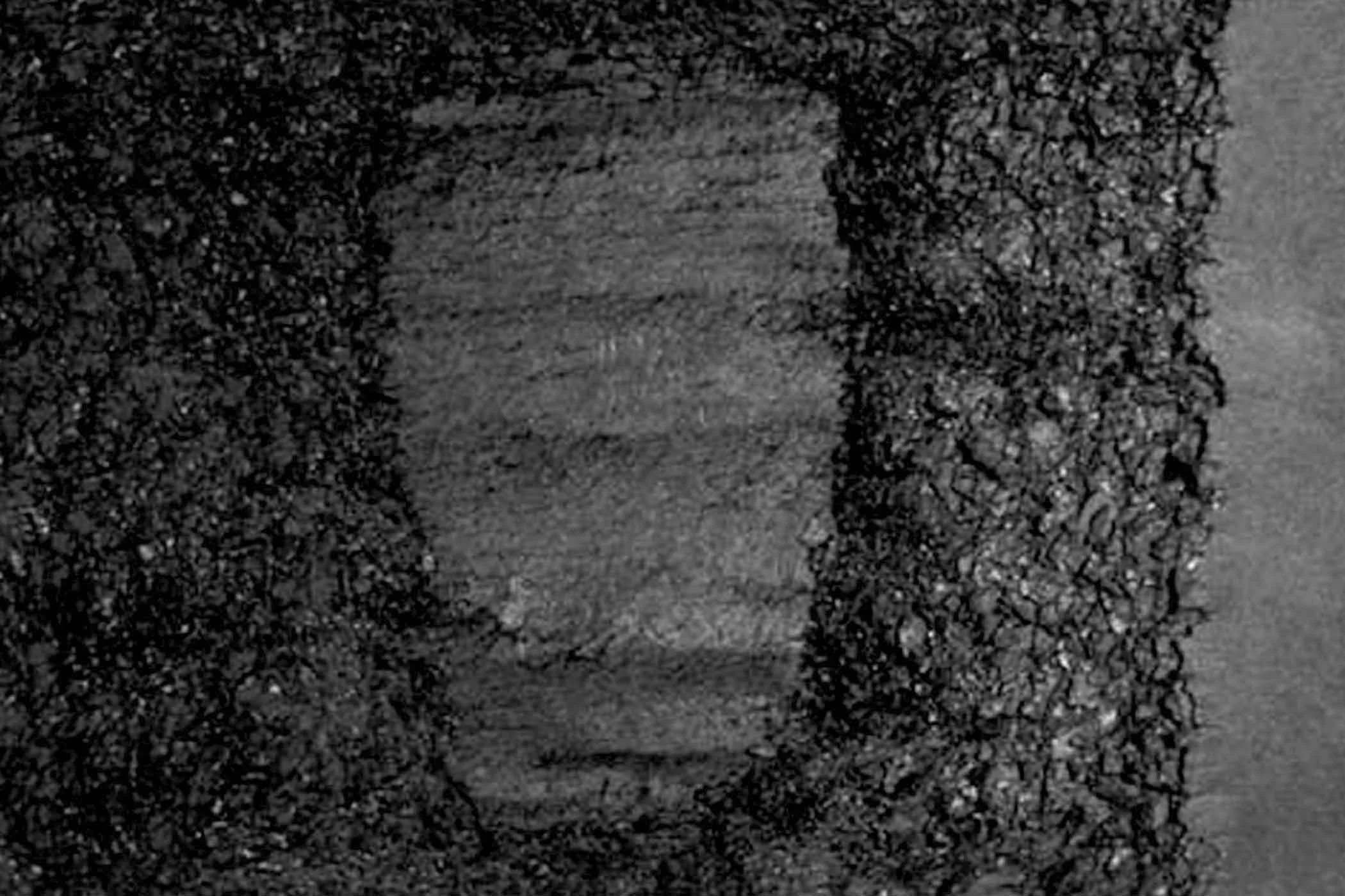
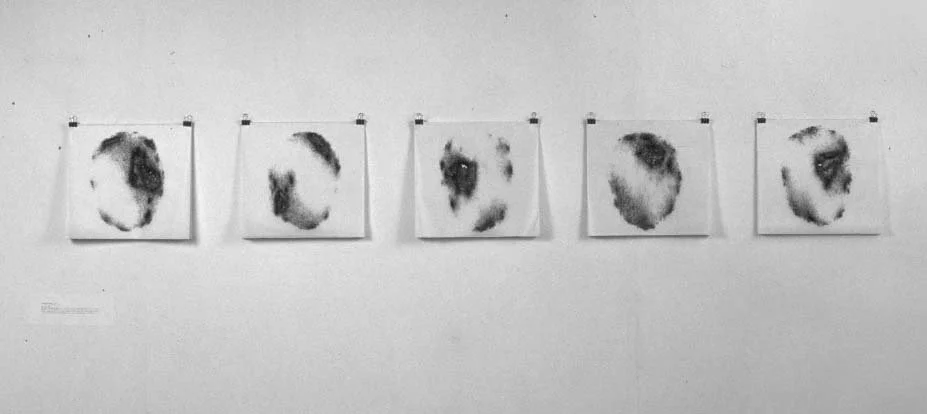
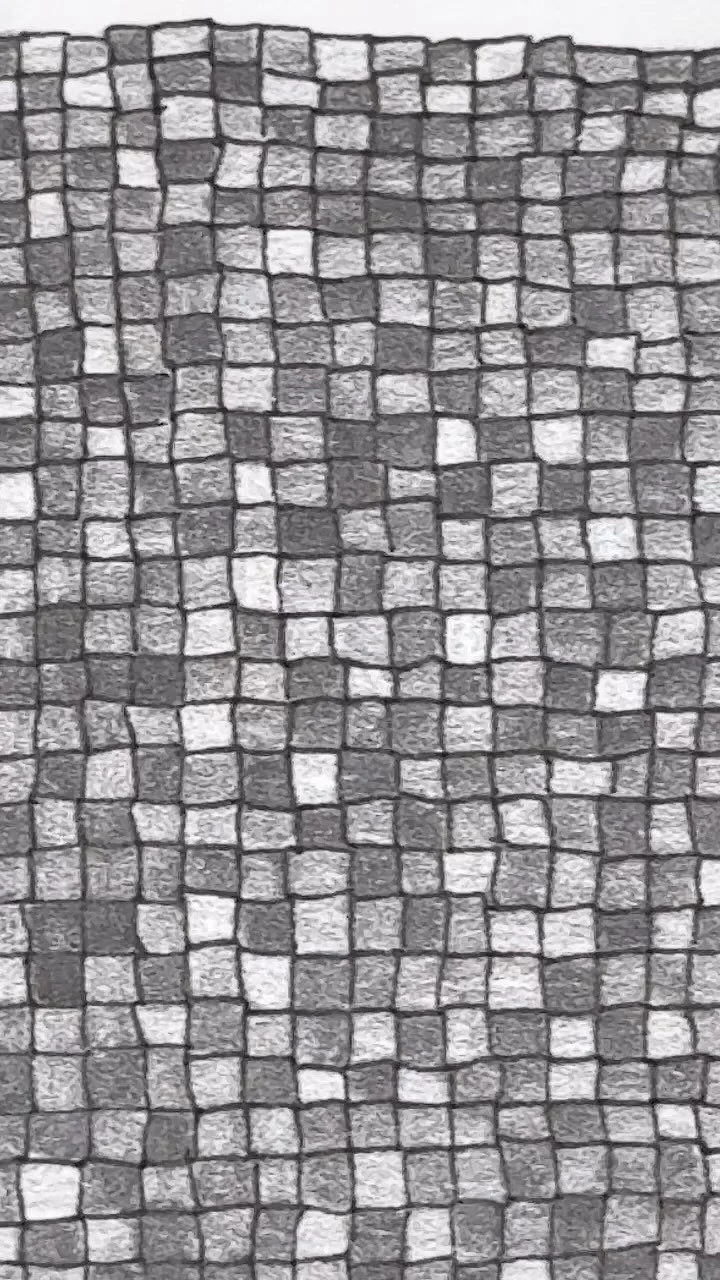
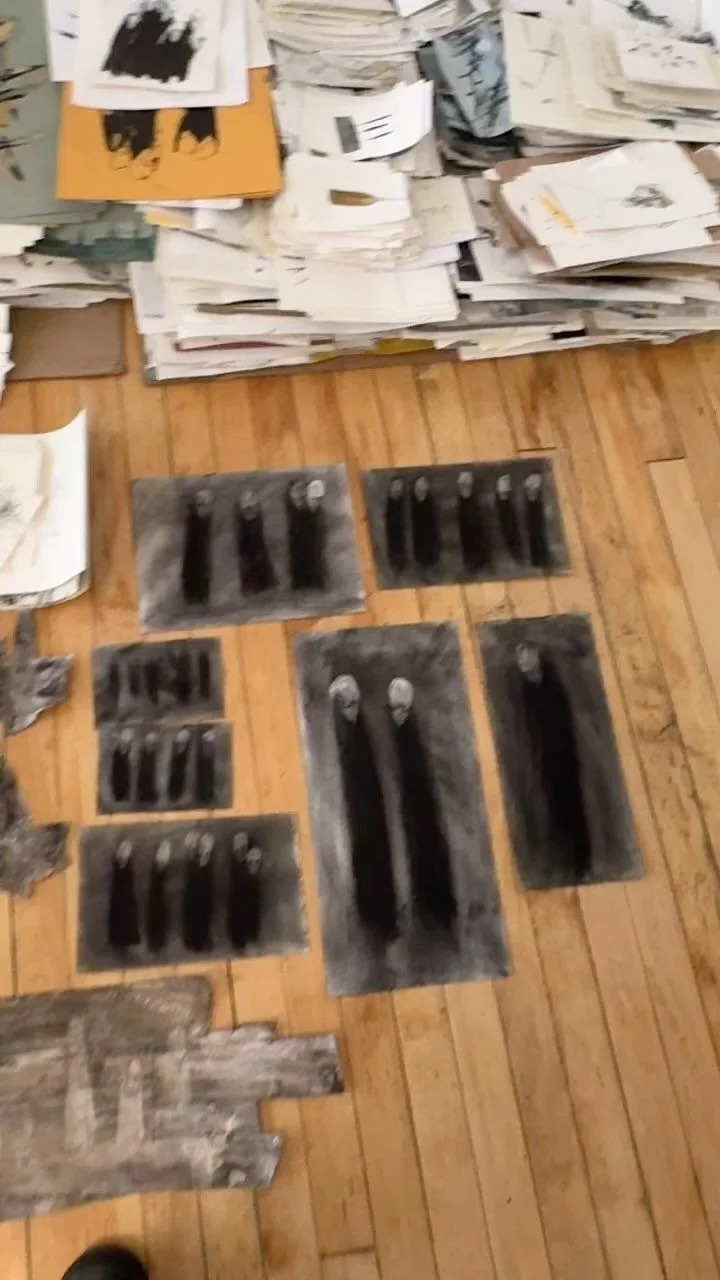
Universe is a wall size installation mosaicked by the small textured charcoal drawings. The mosaicked installation is in the shape of an oval resembling the current imagery of the Cosmic Background Radiation and Map of the visible Universe. One small drawing has two minuscule figures drawn, practically invisible, symbolizing humanity. The figures are independently looking down. There is no order to the drawing tiles, hence every time the piece is installed it is in different random order and visually different.
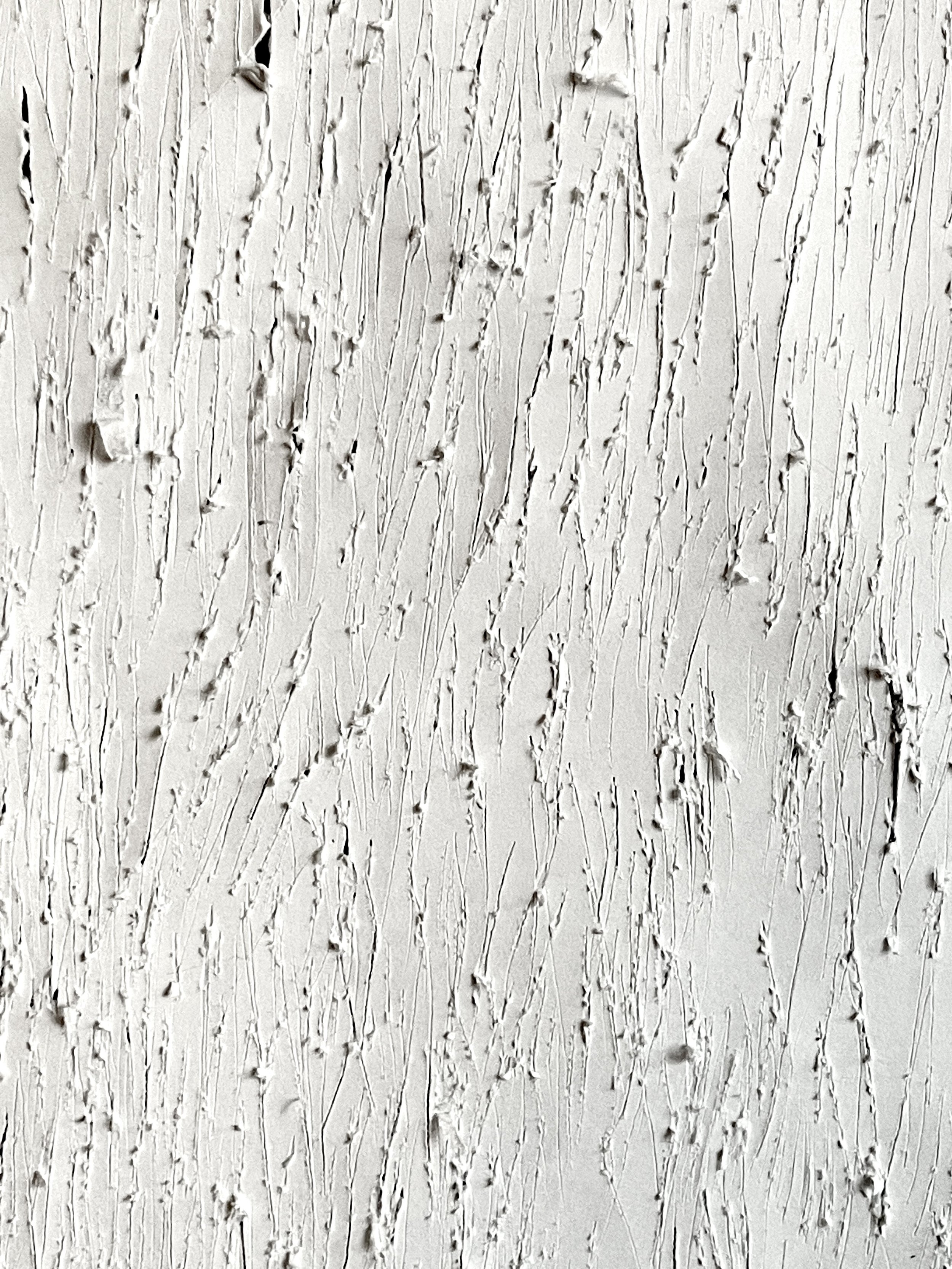
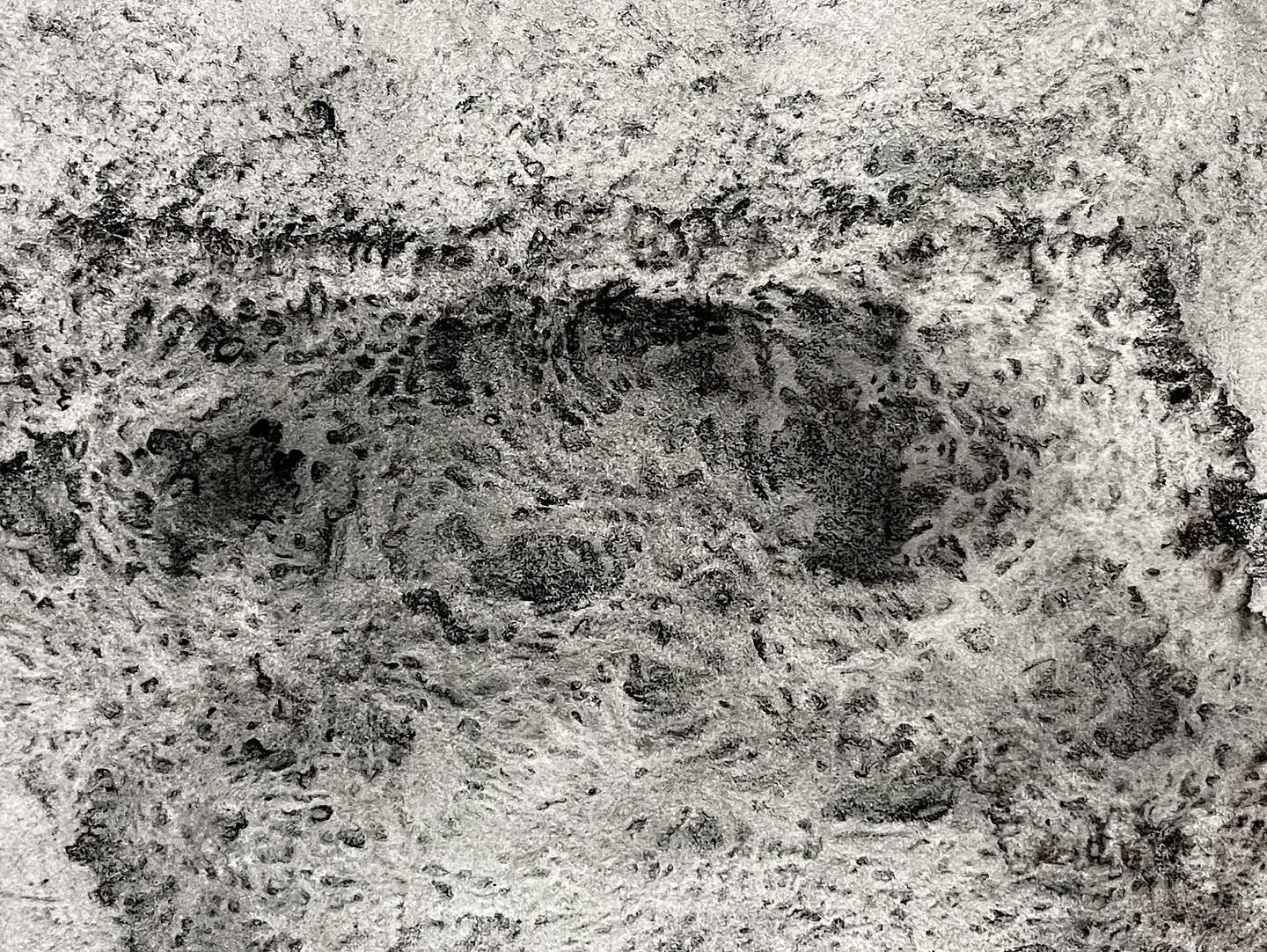
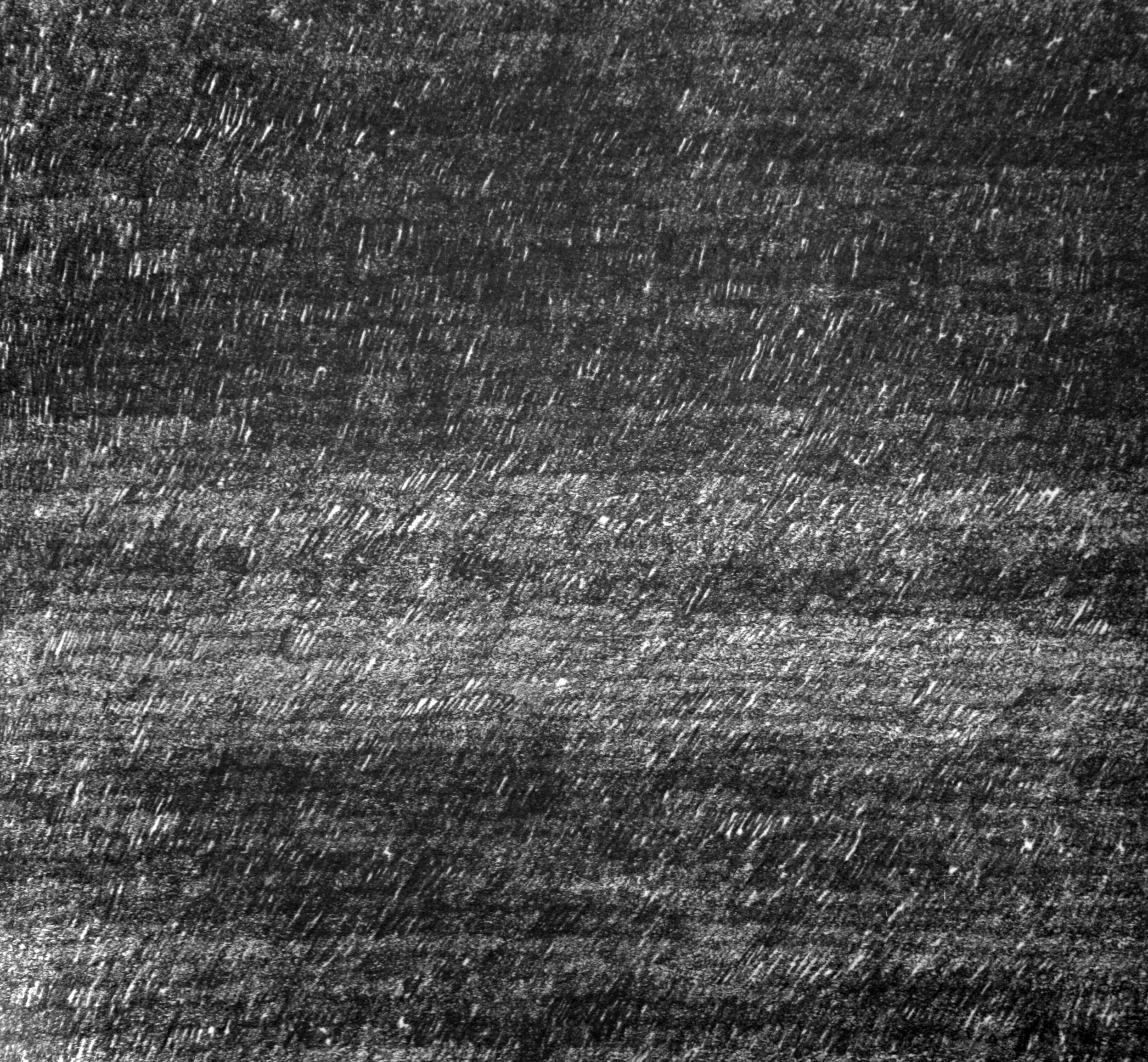
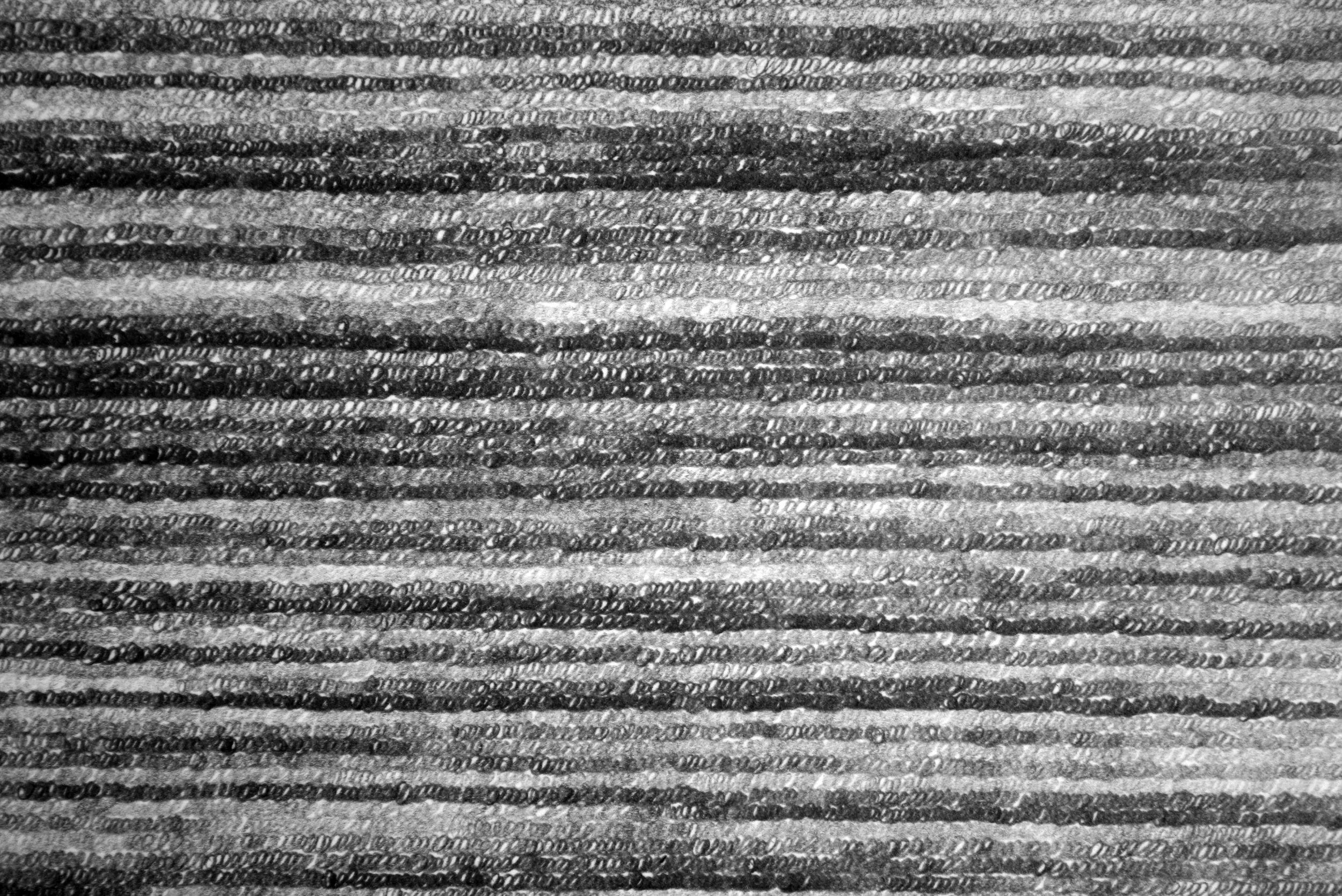
The process: Liquid charcoal and water are applied first onto the paper. Charcoal pencil is used at the end to emphasize already created textures. The charcoal creates textures by following the paper’s surface texture and water, accumulating more or less in different areas, resulting in 3D implied visual space. There is a correlation between the drawing creation process and that of the visible Universe. Superficially looking, paper and water are an invisible and insignificant part of the drawing, considering that we observe and are interested in a drawing's appearance and not the surface it is on. However, the blank paper and water are an invisible scaffolding that dictates where the charcoal will collect, consequently the appearance of the drawing at the end. The Universe is mostly made of Dark Energy (71.4%) and Dark Matter (24%), which has a strong influence on its structure and evolution, and affects the universe on the largest scales. Dark matter is invisible (it does not interact with the electromagnetic field) yet determines the structure, just like paper does. Water mysteriously forces charcoal matter to move and collect, causing it to spread/expand.
Individual pieces of the Universe are installed randomly each time the piece is installed resulting in a different configuration of the apparent Universe.
Meaning: Humans are practically infinitesimal specs, as shown with the insignificantly miniscule drawing of human figures among large-scale pieces. Figures are looking down, introspecting their own melancholy, not interacting nor looking at the vastness of the space around them. Intricate textures of the charcoal drawings symbolizes the complexity of all that the visible universe is composed of.
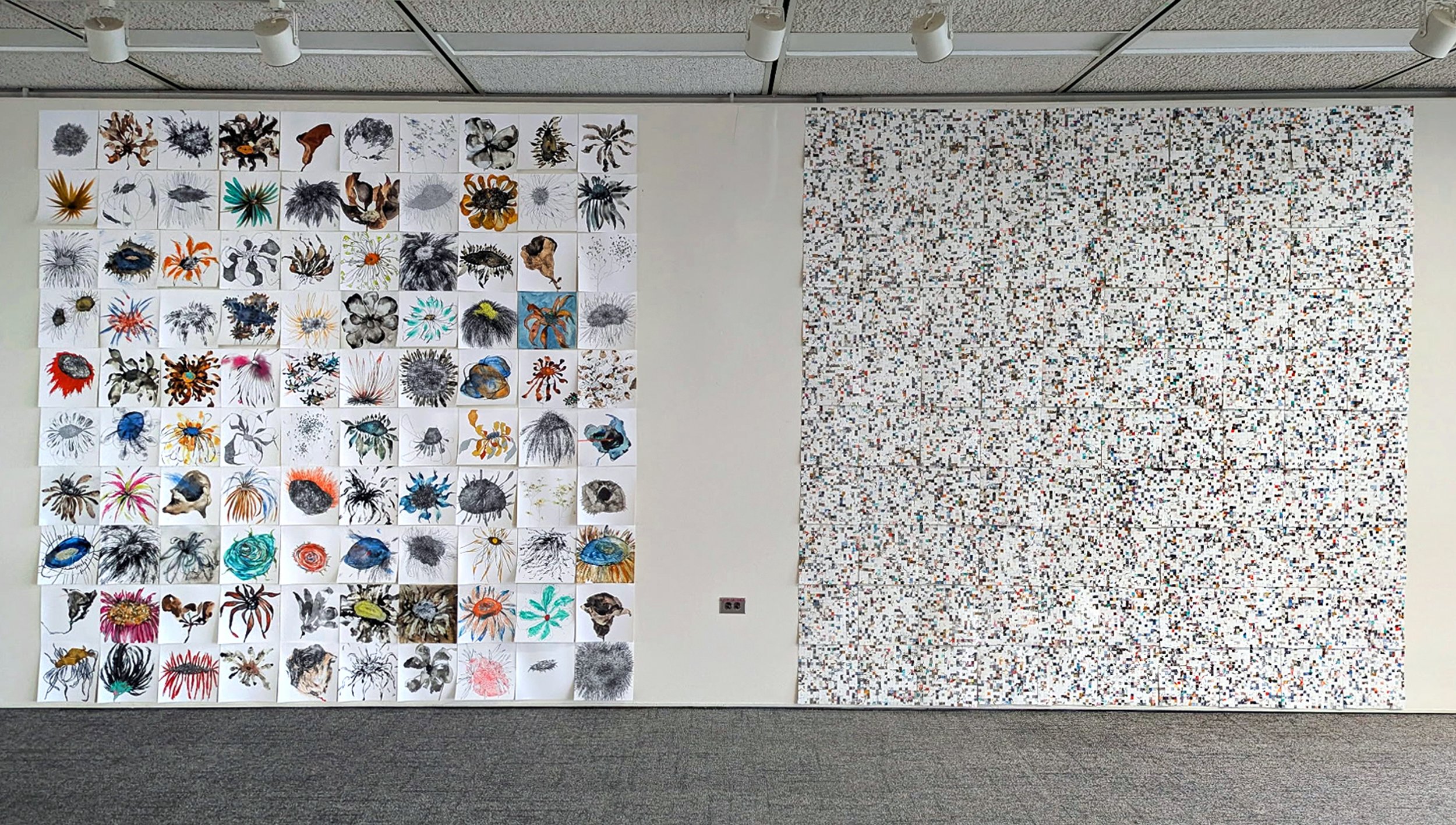
Drawing and prints each: h100” x w100”
Paper, mixed media
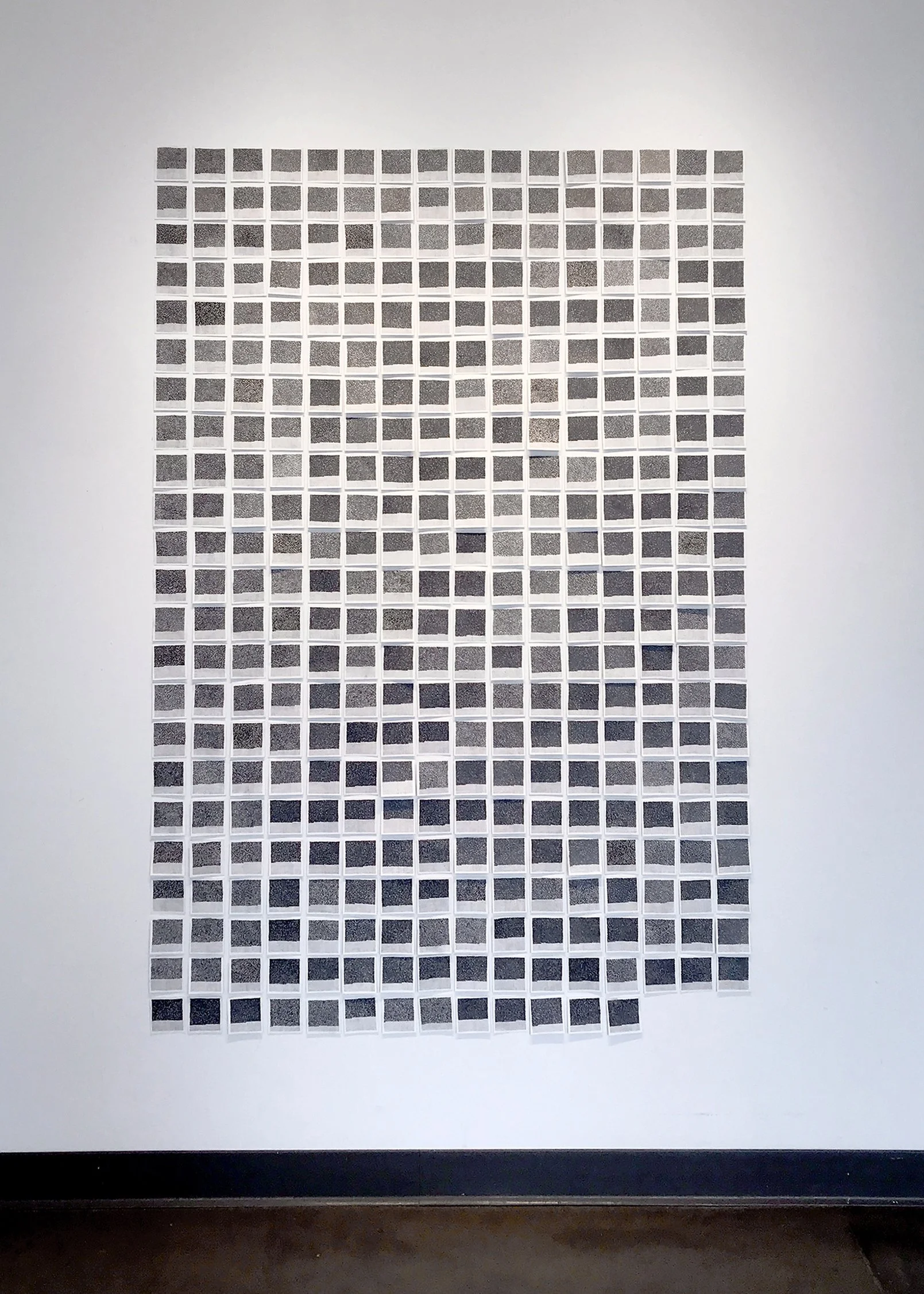
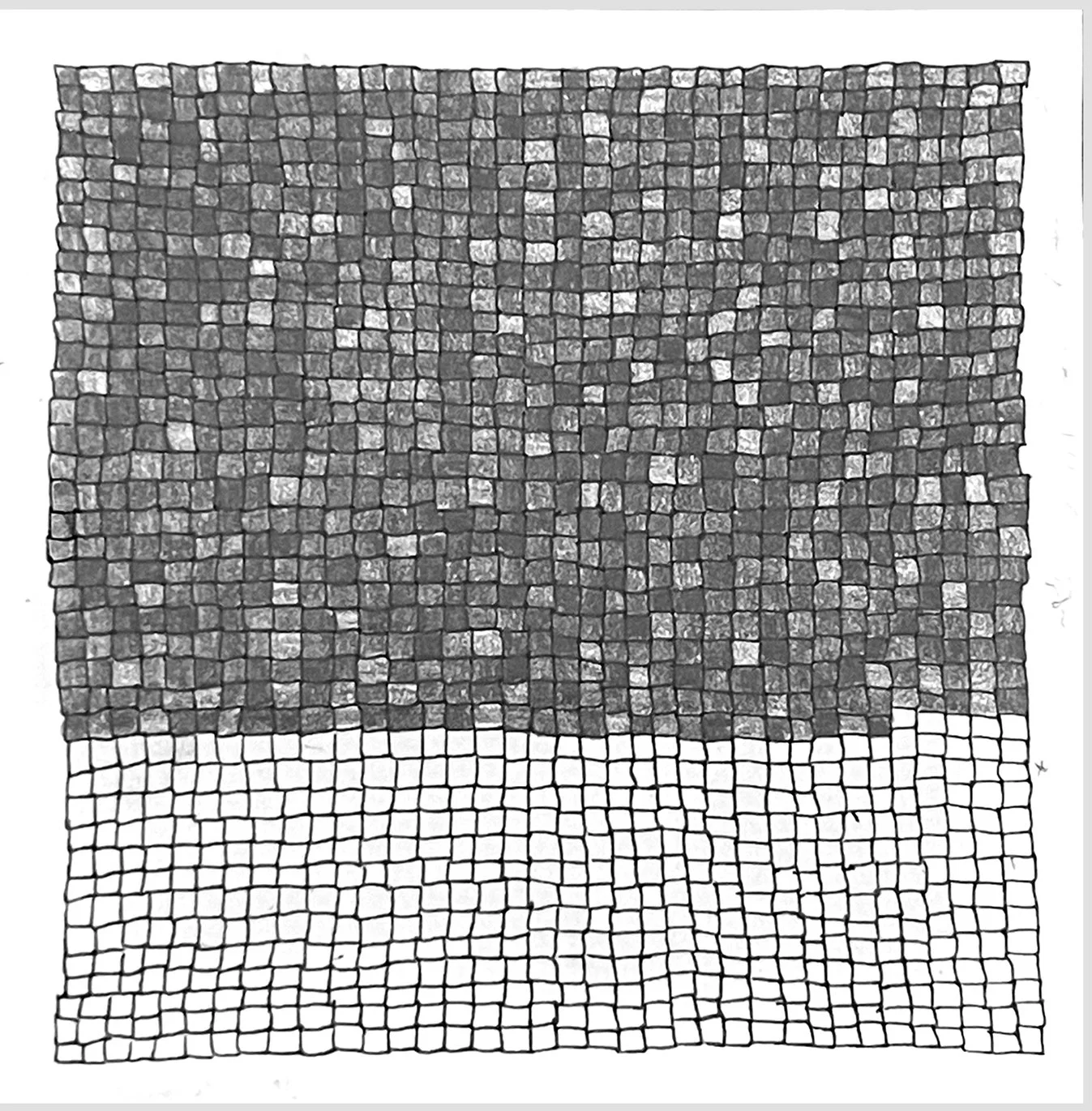
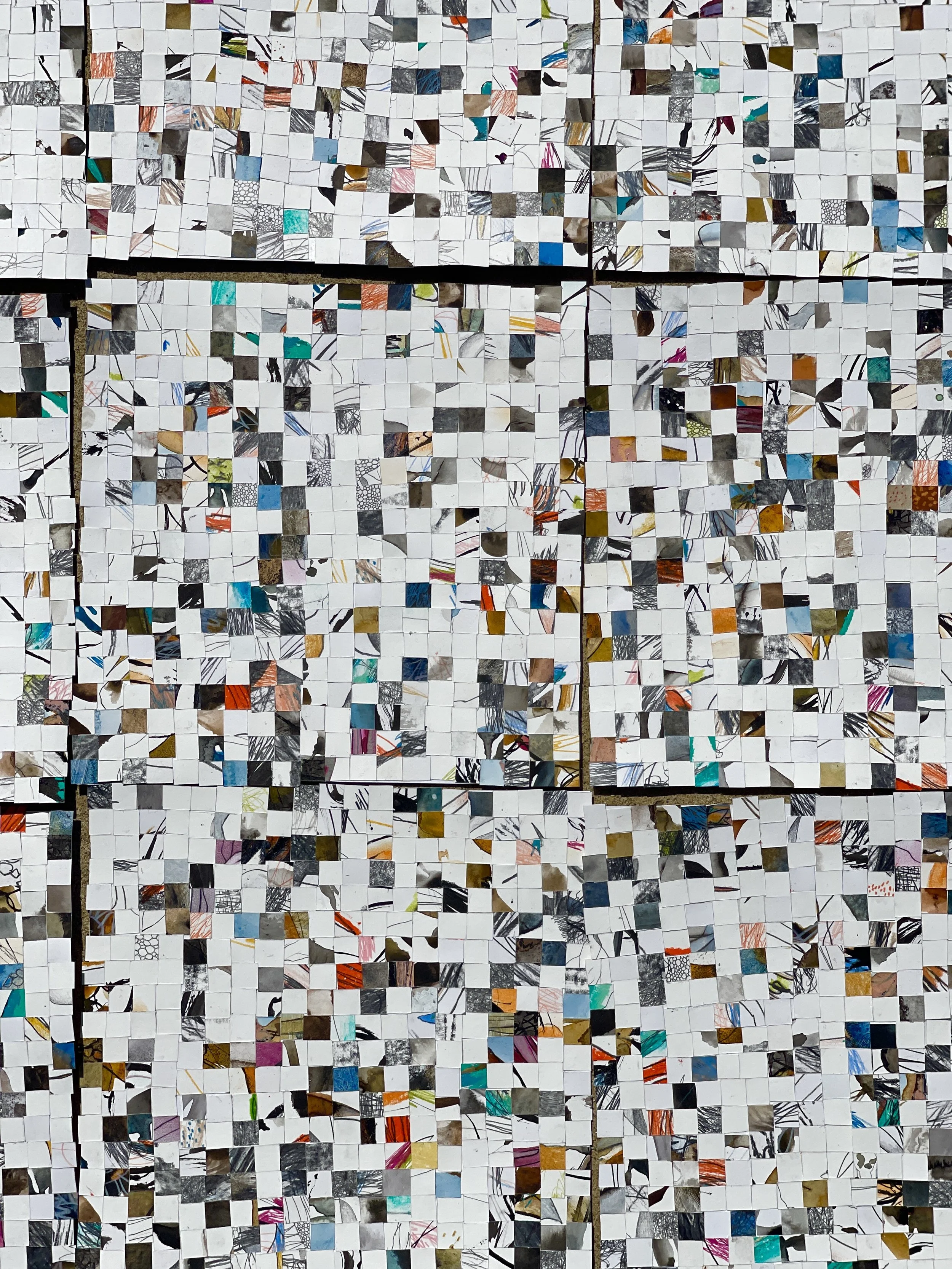
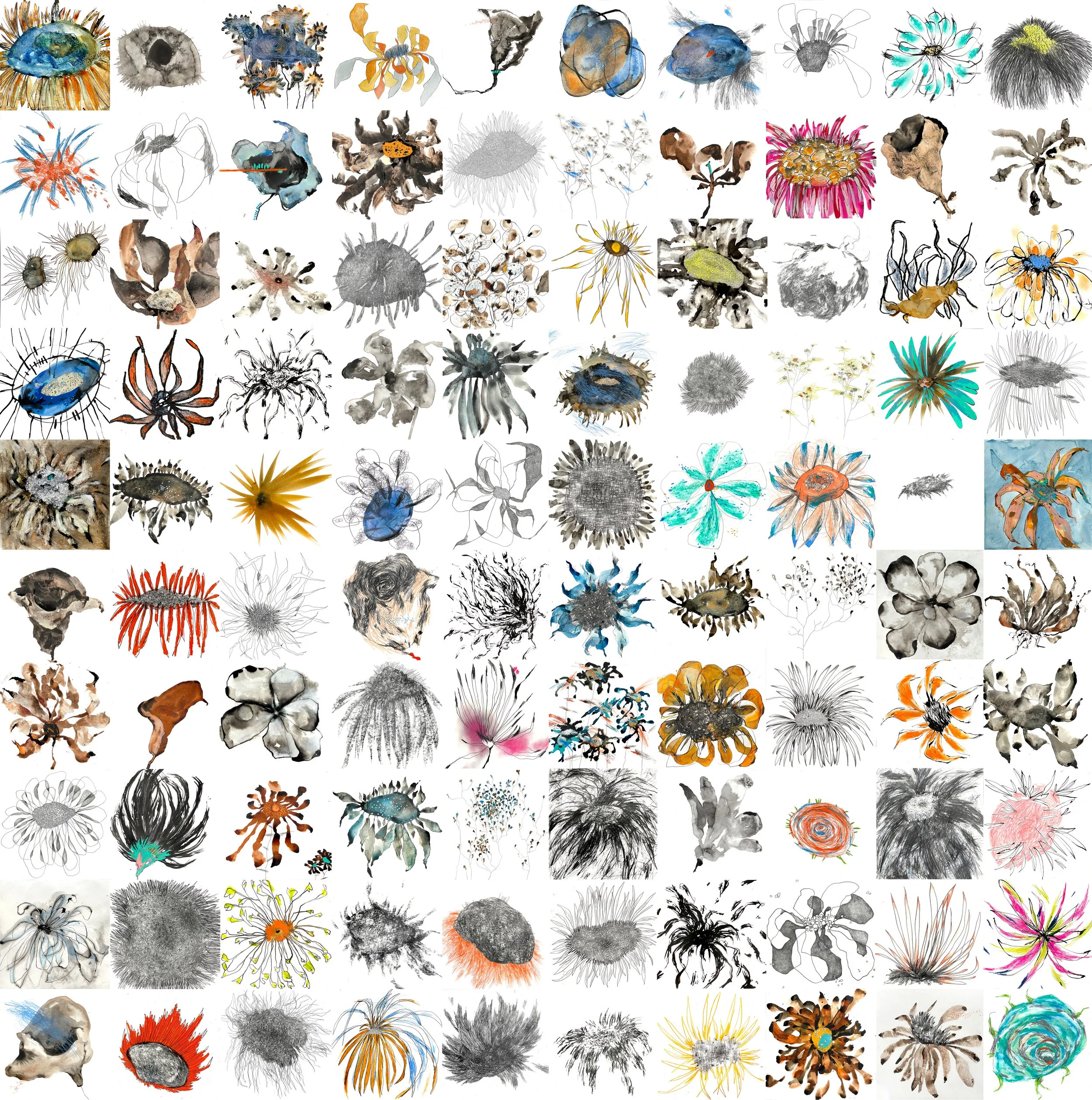
Process: After completing 100 drawings of flowers, 10” x 10” each. After the completion, all 100 drawings are photo documented and the originals are cut into 1 x 1 cm squares, a total of 40,000. Cut pieces are randomly reassembled back onto one hundred 10” x 10” pieces. The Giclee prints are printed of the original 100 flower drawings which are then installed on the wall next to the cut pieces. For 40,000 there are 2.1x10166,713 possible rearrangement possibilities (40,000 factorial which is 21 followed by the 166,712 zeros).
What is the difference between determinism versus indeterminism and how is it expressed in reality? On the most fundamental level the world is made out of randomness, uncertainty, which, through interactions, causes the deterministic reality. Are randomly assembled small drawing pieces going to create new patterns, containing all together a new meaning? Is the world no more than absolute randomness with the human mind assigning the deterministic patterns to it? Is determinism nothing more than a human way of making sense of reality?
If we have the information of the specific recognizable imagery, flowers, but presented in random bits (cut drawings and randomly reassembled) would we visually be recreating the familiar patterns, creating new patterns, or would we only see randomness? Would randomness create wave patterns and clumps of more and less material, or would it be even? What is the state of disorder, the entropy, and order? How do we perceive order versus disorder?
170” x 41”
Pen on paper
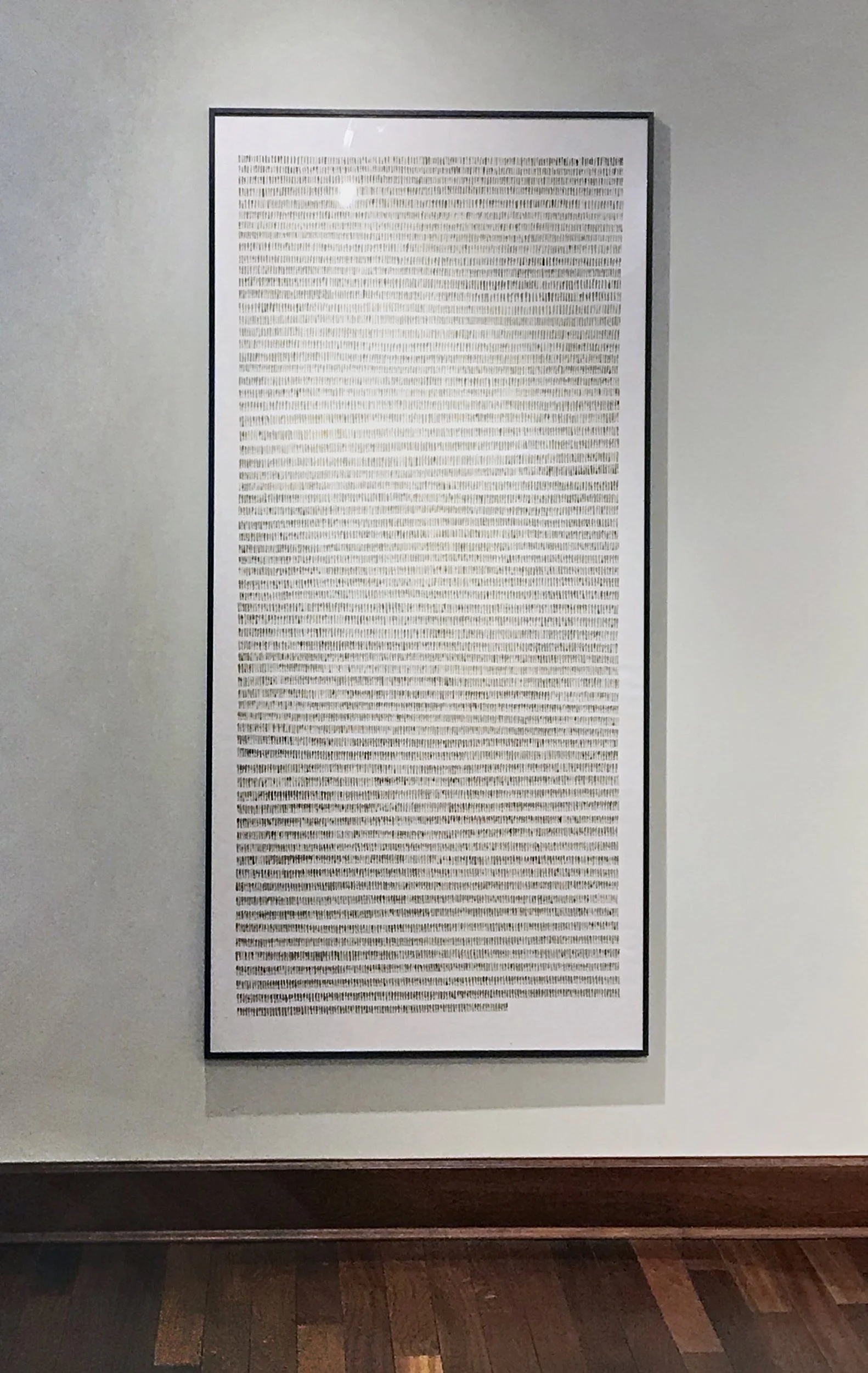
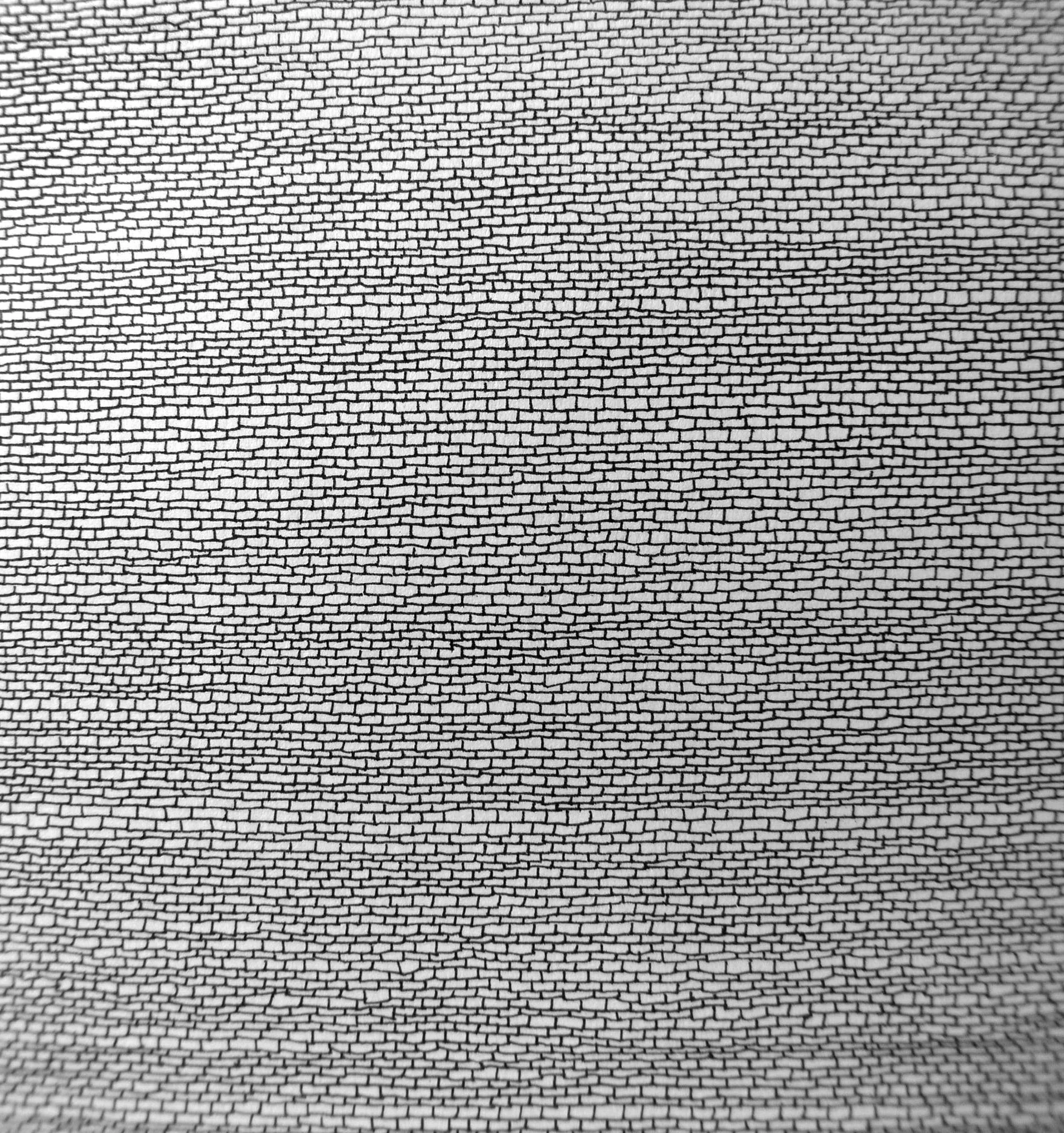
Process: Draw one million bricks.
The piece: What is One million?
John von Neumann was a Hungarian-American mathematician, physicist, computer scientist, engineer and polymath. “How can we make something of long duration from parts that are very short lived? How something that is perfect could be constructed out of imperfect components? This is the basis of living systems.”
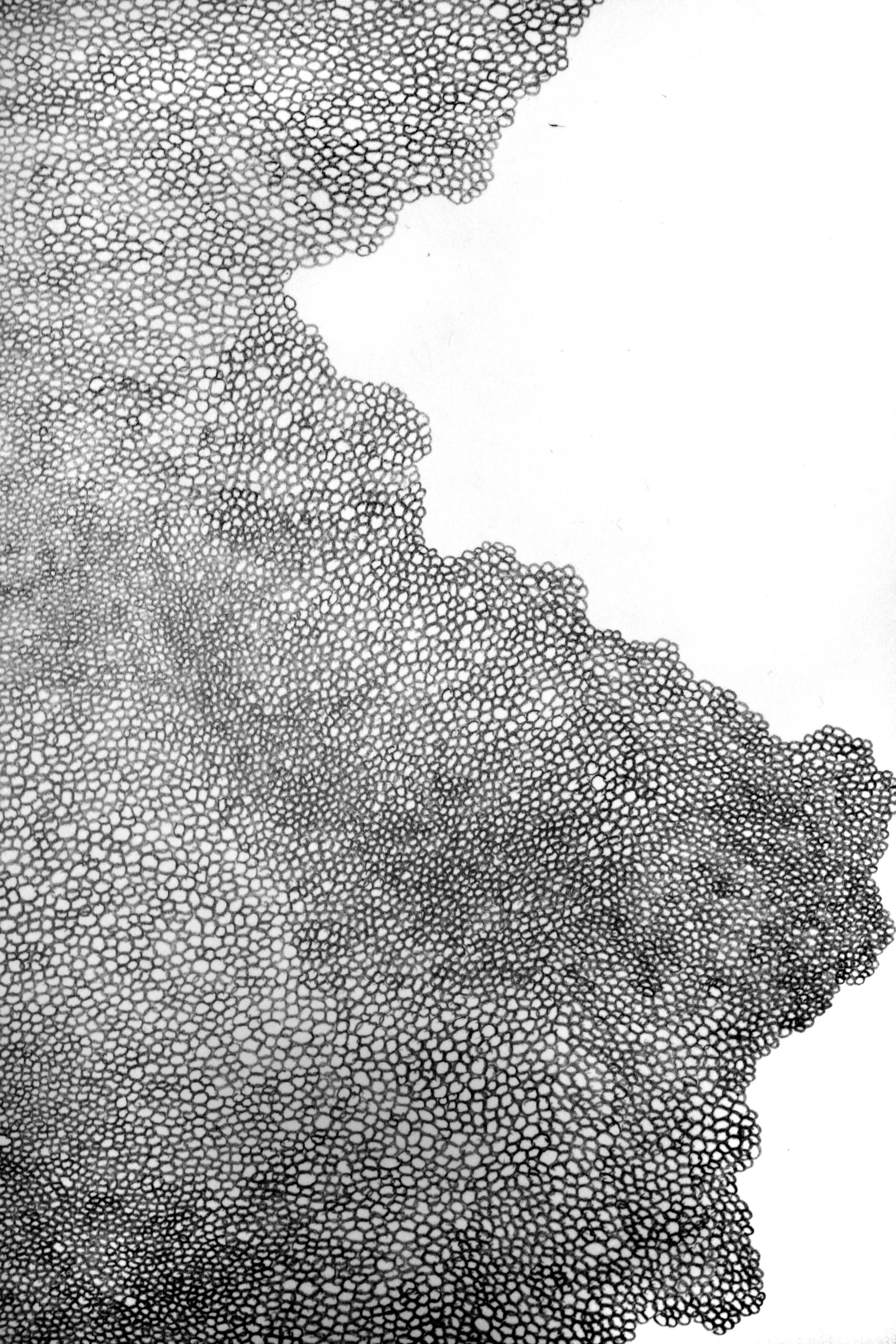
Any individual mark, in this case about 1/8”, carries its own imperfection. Any of one million marks would be invisible by itself, insignificant. Nevertheless, one million of insignificant imperfections, together as a whole, give rise to the massive wall (the part and the whole are rectangular in shape).
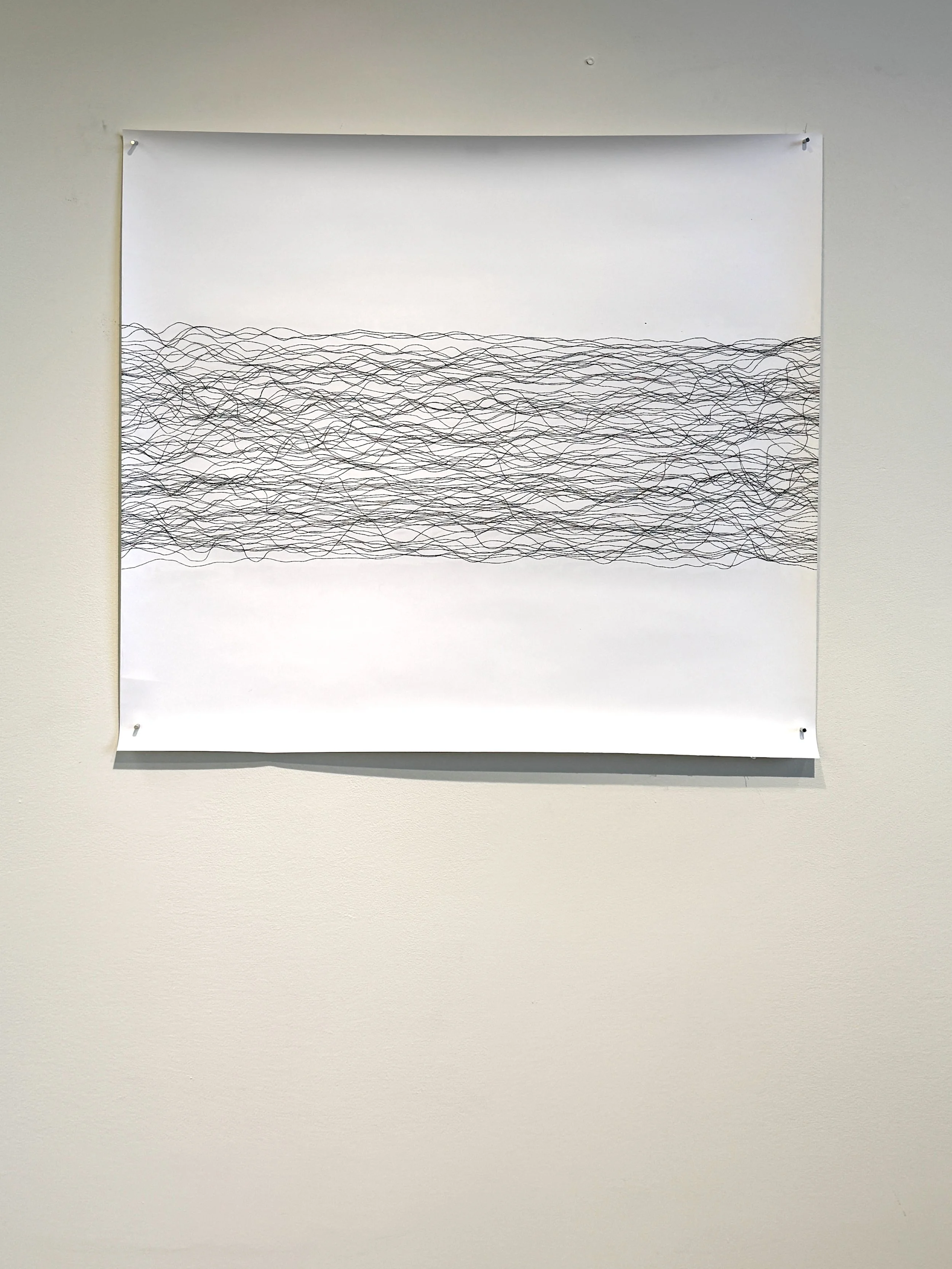
String and Marker on Paper
h40.25” x w41.25”
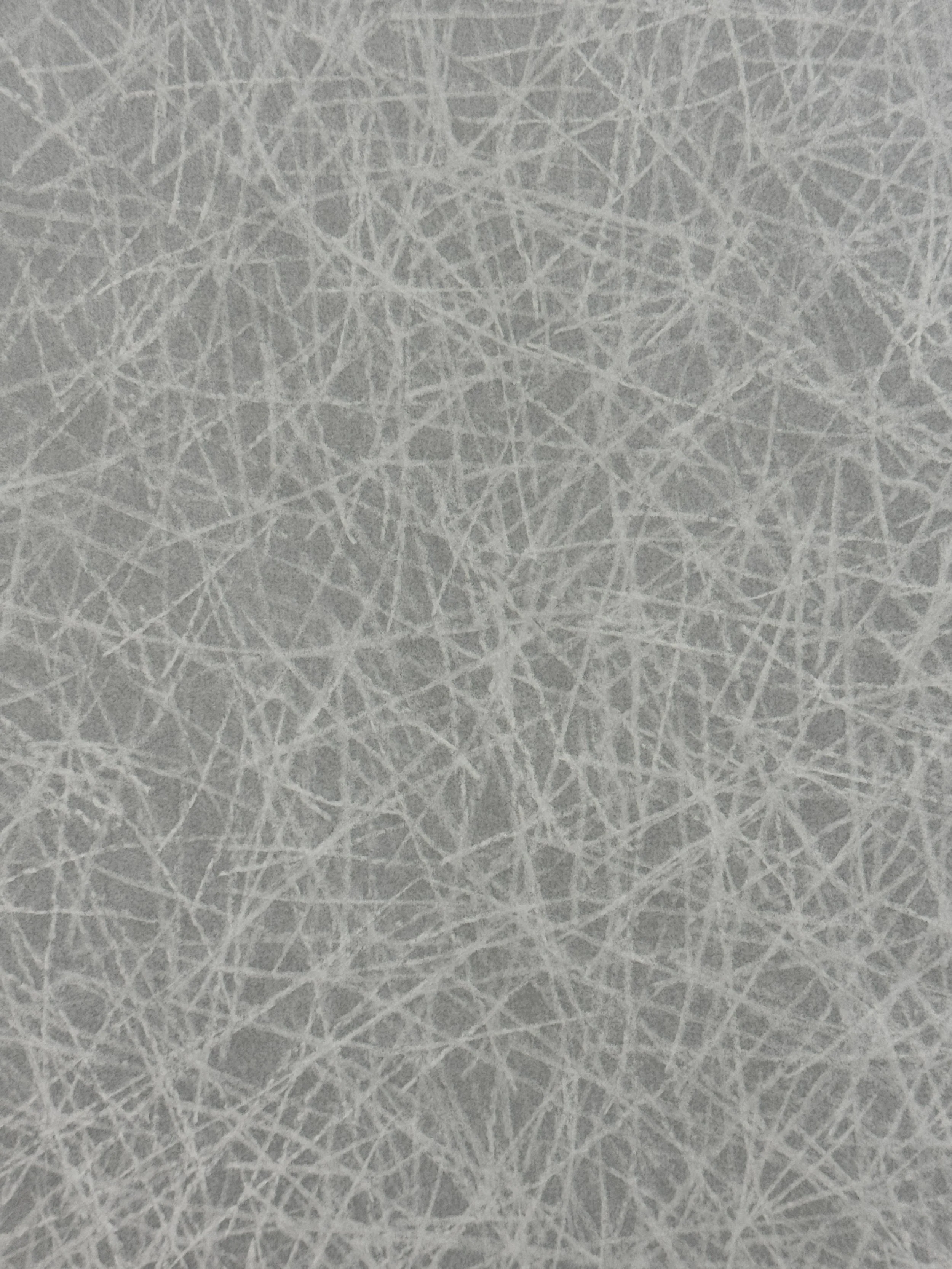
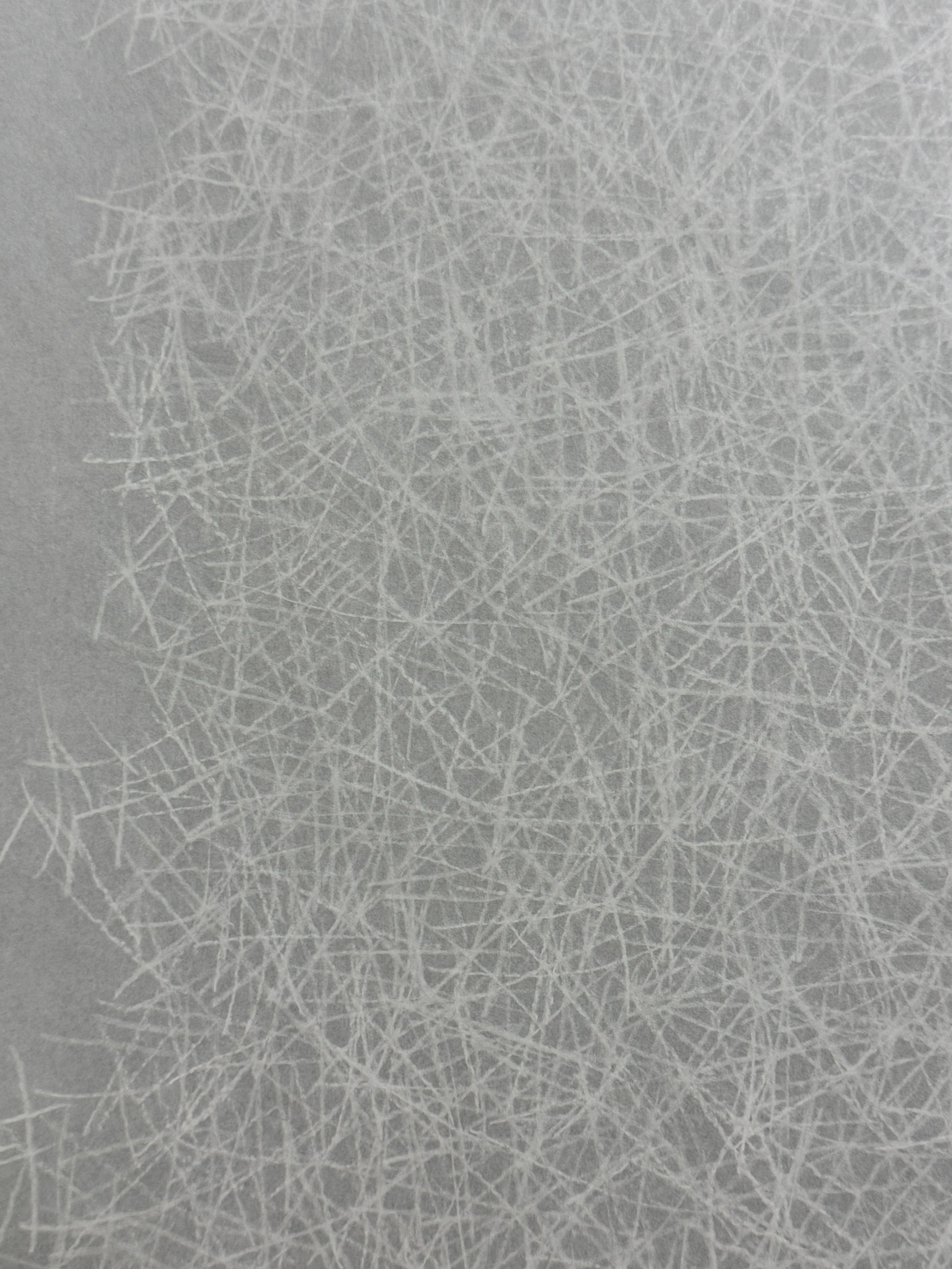
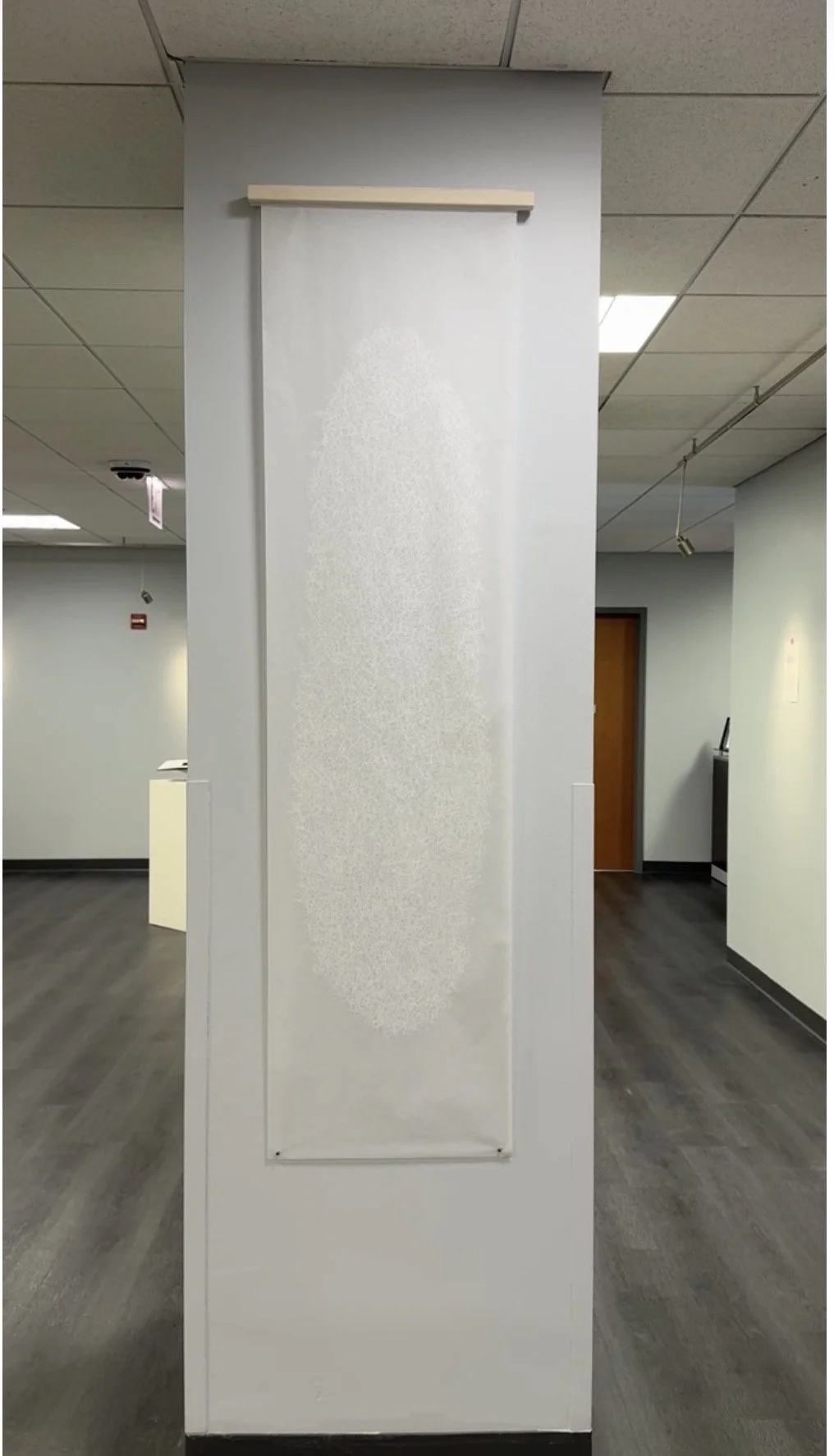
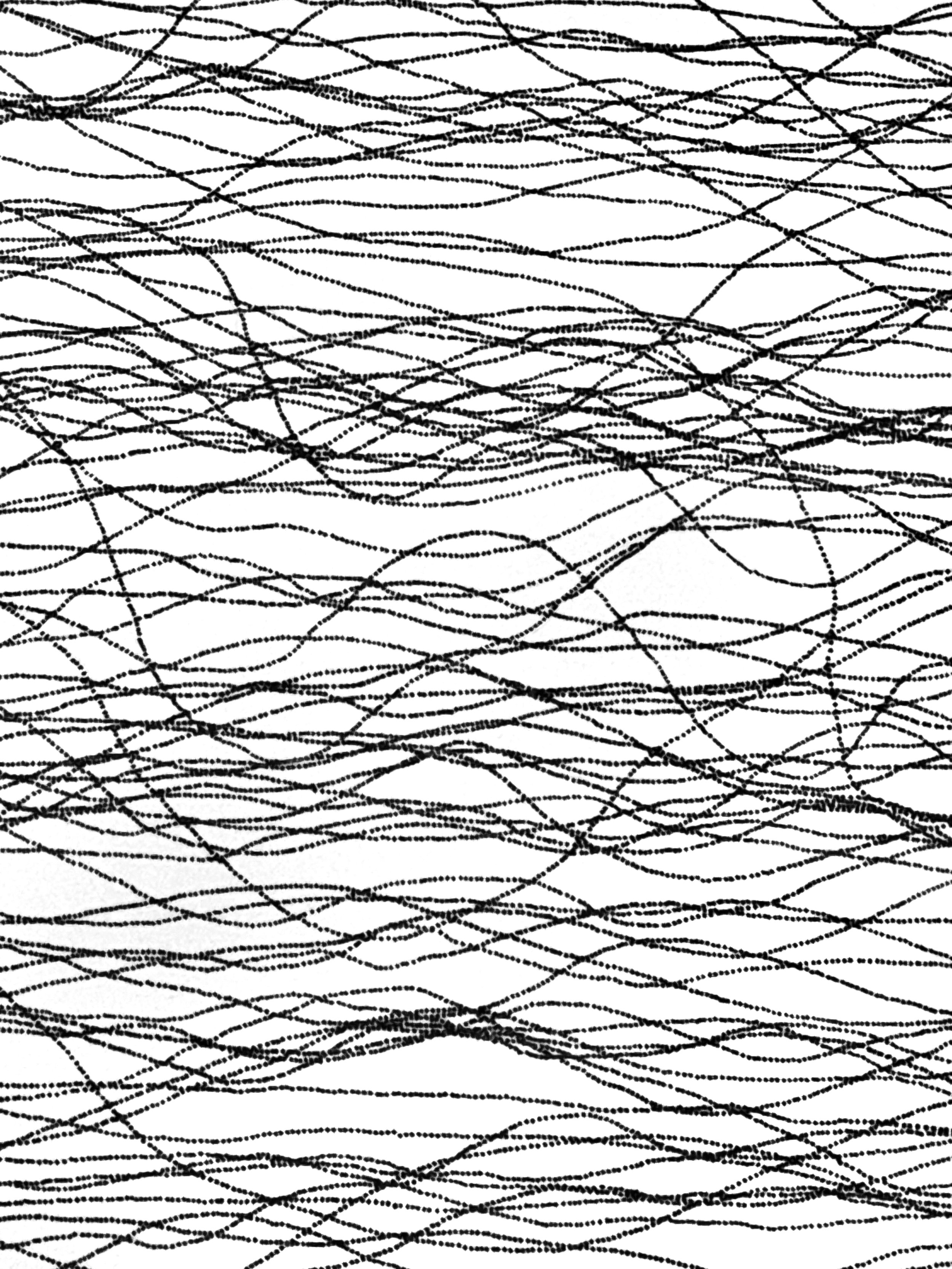
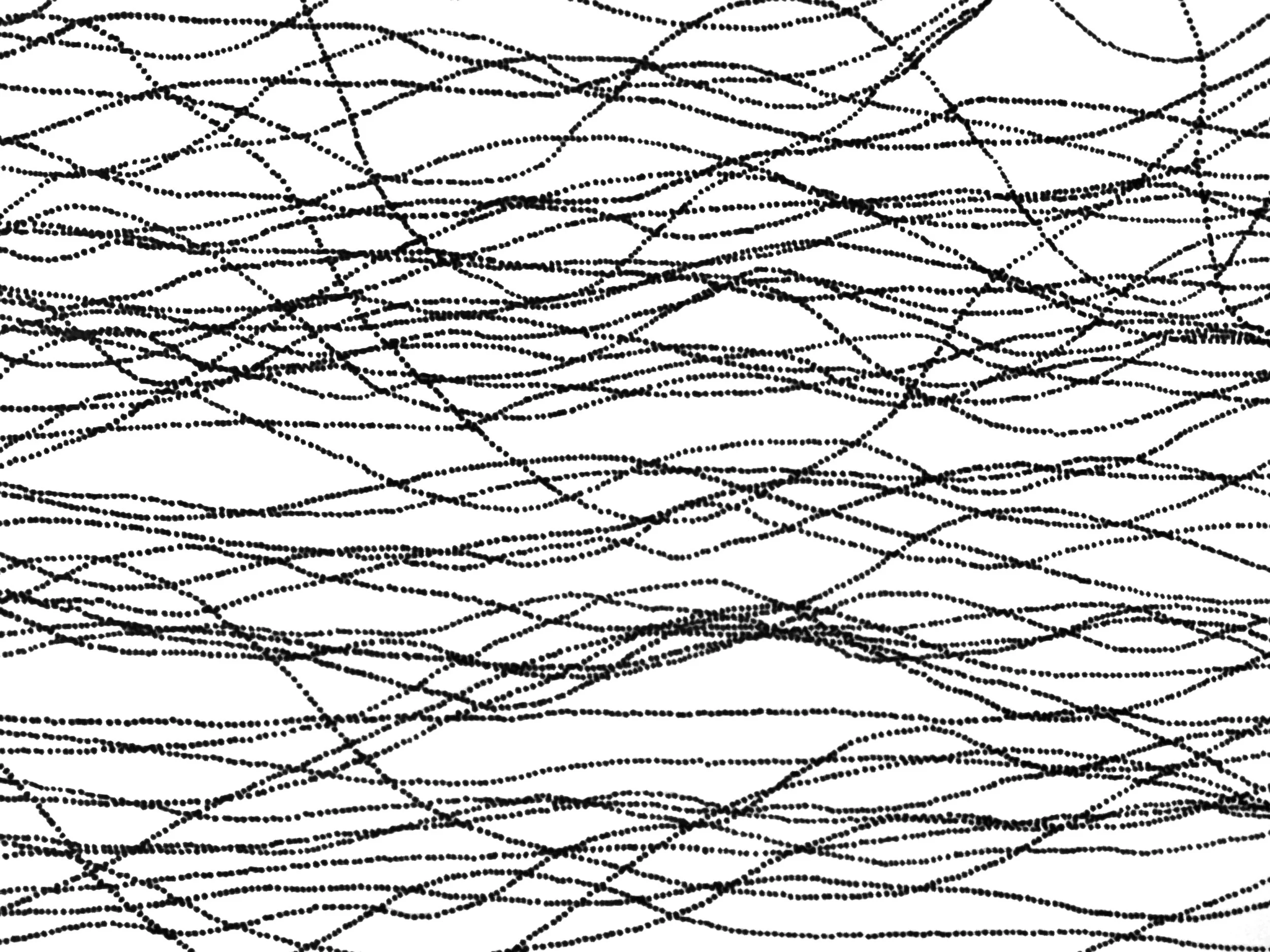
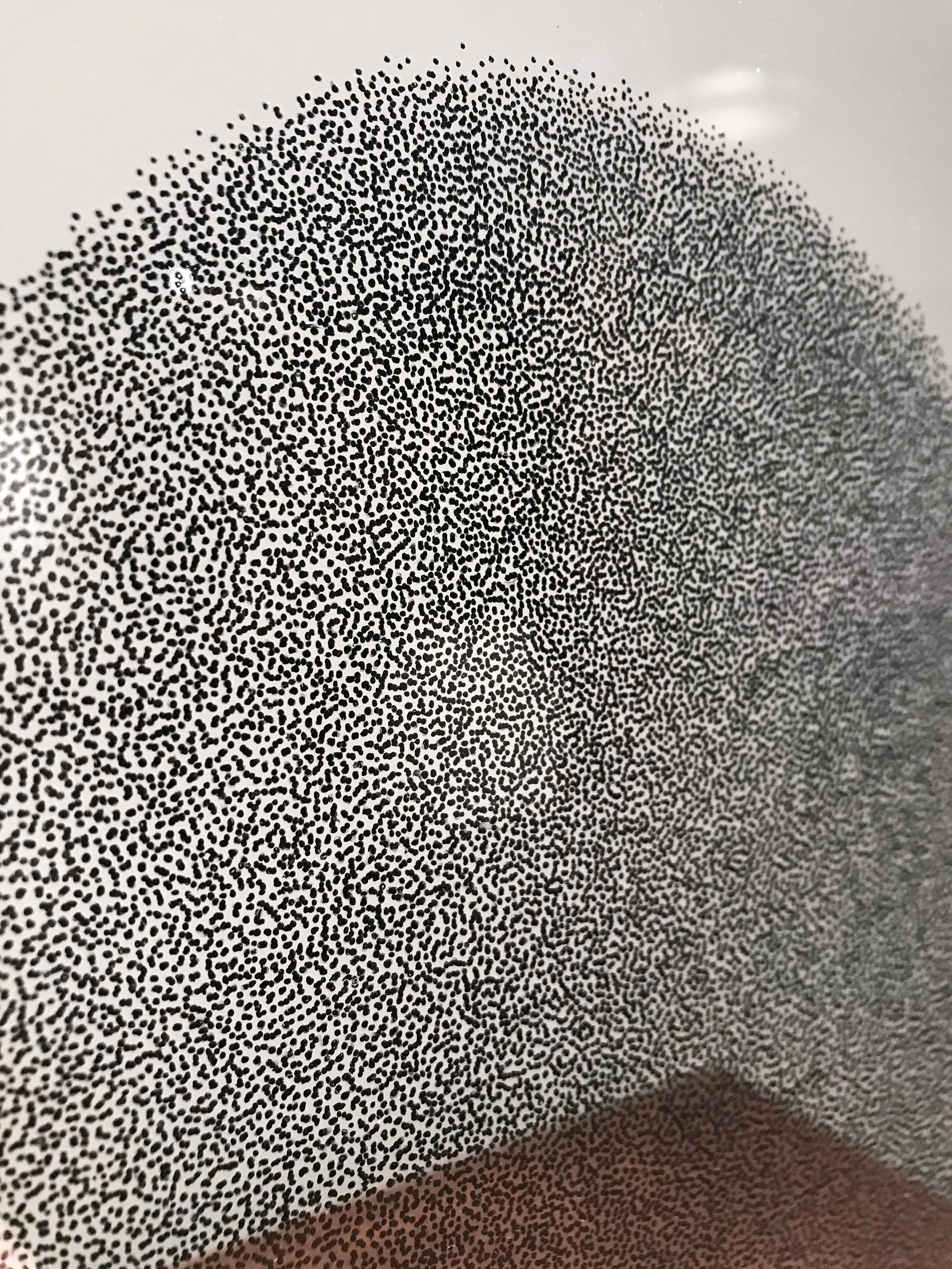
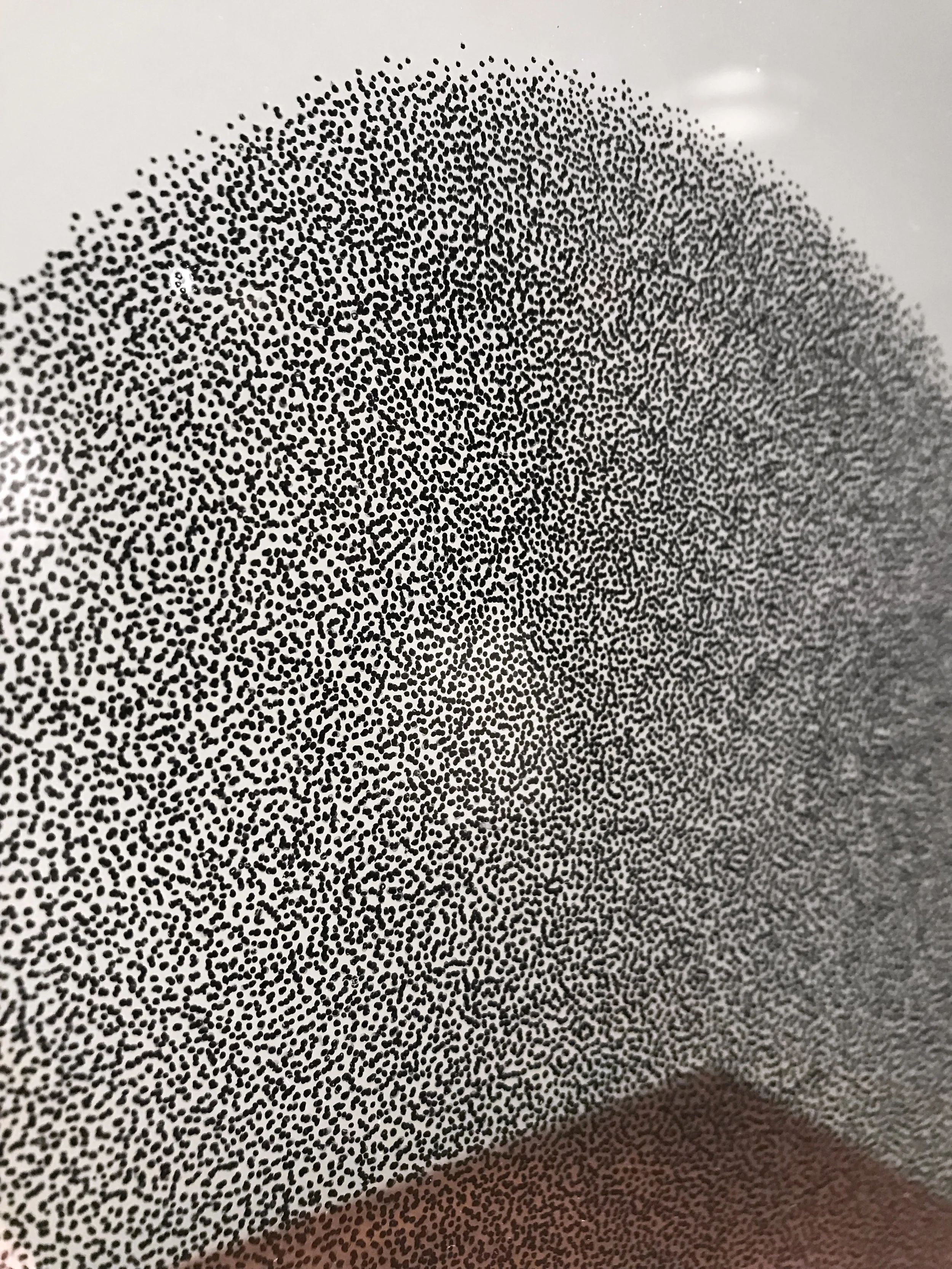
Process: String is randomly dropped 100 times onto the paper and traced with pencil. The traced line is covered with the dot marks. Approximately 90,000 marks.
Interpretation: Randomly determined waves dictate the individual marks localization. The more waves accumulate, the more interference patterns appear. From randomness to determinism. Once the interaction between string, paper and gravity happens, all the random possibilities result in an interference pattern. Observing an individual mark (particle) has a determinate, definite value, an eigenstate. Additionally, the piece’s process evokes de Broglie-Bohm theory, a deterministic interpretation of quantum mechanics where point-like particles are guided by a wave function, as well as the interference patterns of the double slit experiment.
The Art Interpretation: Individual marks follow strictly the random path. As individuals we follow strictly predetermined parts yet they are as random as any other ones. The more random paths there are, the more we cross and interfere. Essentially, we choose to live our, seemingly particular, lives yet our paths interfere leading us to the same or similar paths of beliefs, reasoning, and life choices. Randomness forms individualism which through interference results in deterministic herd-thinking/behavior.
Dual interpretation: Art does not mimic nature but is an integral part of it, that has a power to interpret and perceive correlations within and of Nature as a whole, without narrowing view to the particular parts of Nature. A good physicist does the same. Art and Science interfere resulting in the same path of trying to understand the Universe.
45”x45”
Paper
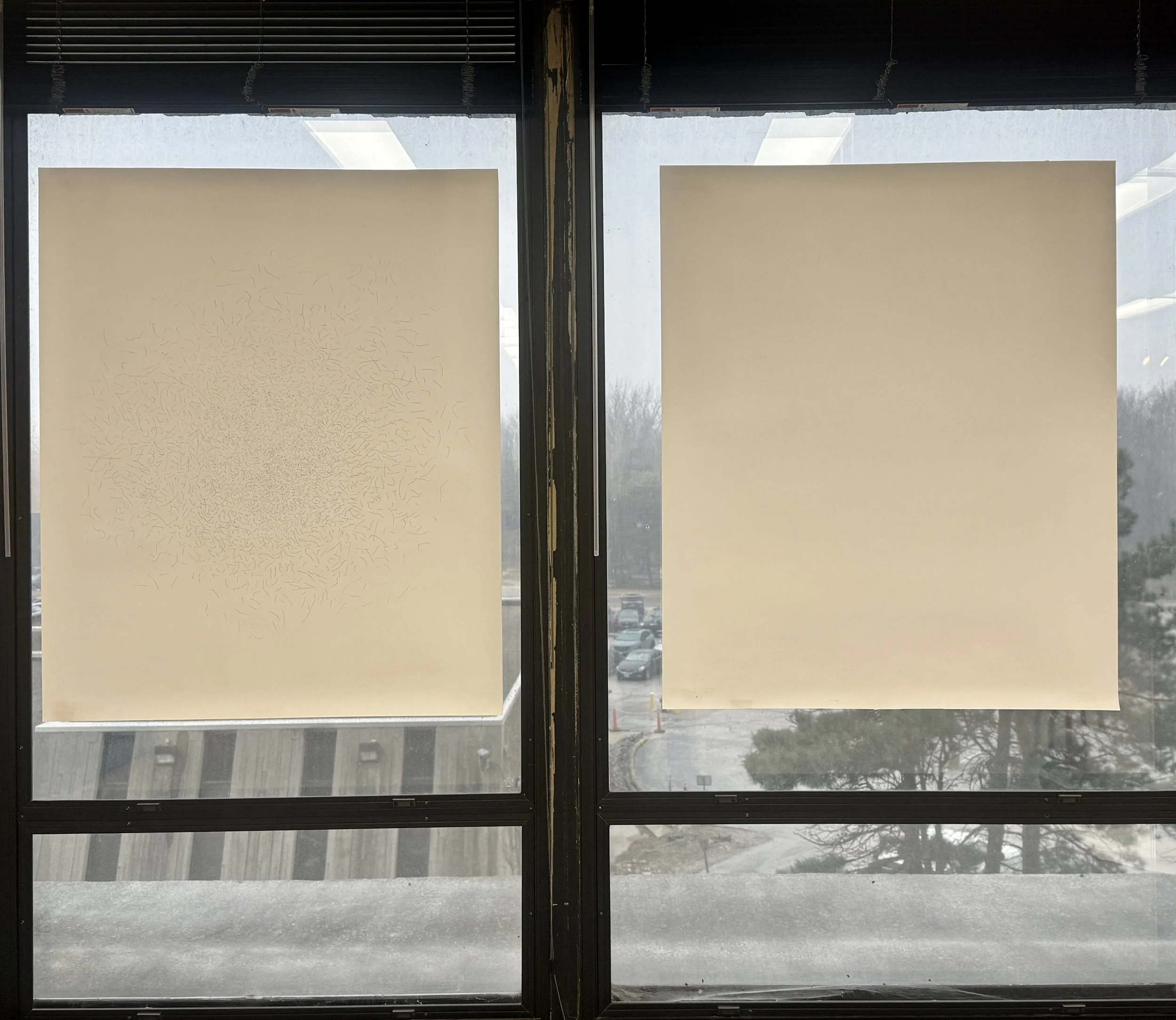
Randomly stipple through two separate papers with the needle until the pattern emerges. Random patterns are determined by connecting the pierced dots with pencil lines. This is just one interpretation out of infinity combinations. The second paper is left blank for others to interpret and make their own patterns. The piece is installed on the window. Depending on the conditions; light source (indoor or outdoor), day, night, cloudy, sunny, etc. the drawing will appear different depending on the amount and intensity of the light passing through the paper or being blocked by the paper.
-The paper with pre-drawn pattern lines strongly suggests the particular patterns to the viewer who will unquestionably accept them as the only option, as unequivocal truth. Even though there are q-numbers of possible patterns we will recognize and see only the predrawn one as the “pattern of truth”, the only possible one. It took the creativity of Marie Curie, Boltzmann, Maxwell, Einstein, De Broglie, etc. to see new patterns within the predetermined ones.
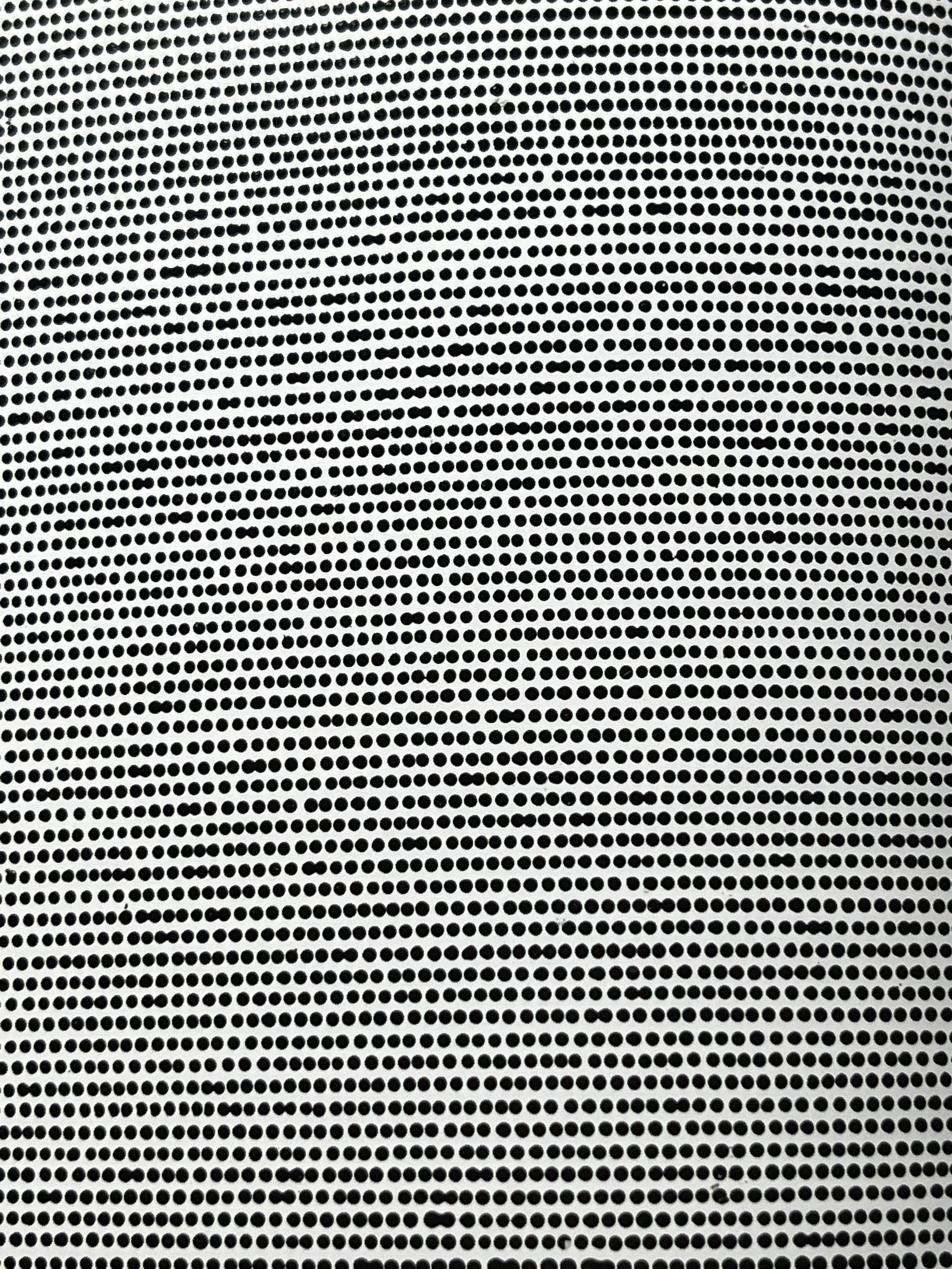
- When faced with the blank paper, how are we going to interpret it and which points will we connect into the patterns?
- Identity or the state of something is never definite; nothing is the way it is because IT IS, but because of the context and interactions with all the other states it is interacting with. Identity is ever changing and never permanent, just like the see through drawing changing depending on light, viewer’s position, time of the day, etc.
Each of 100 panels is 19" x 19"
Pencil on paper
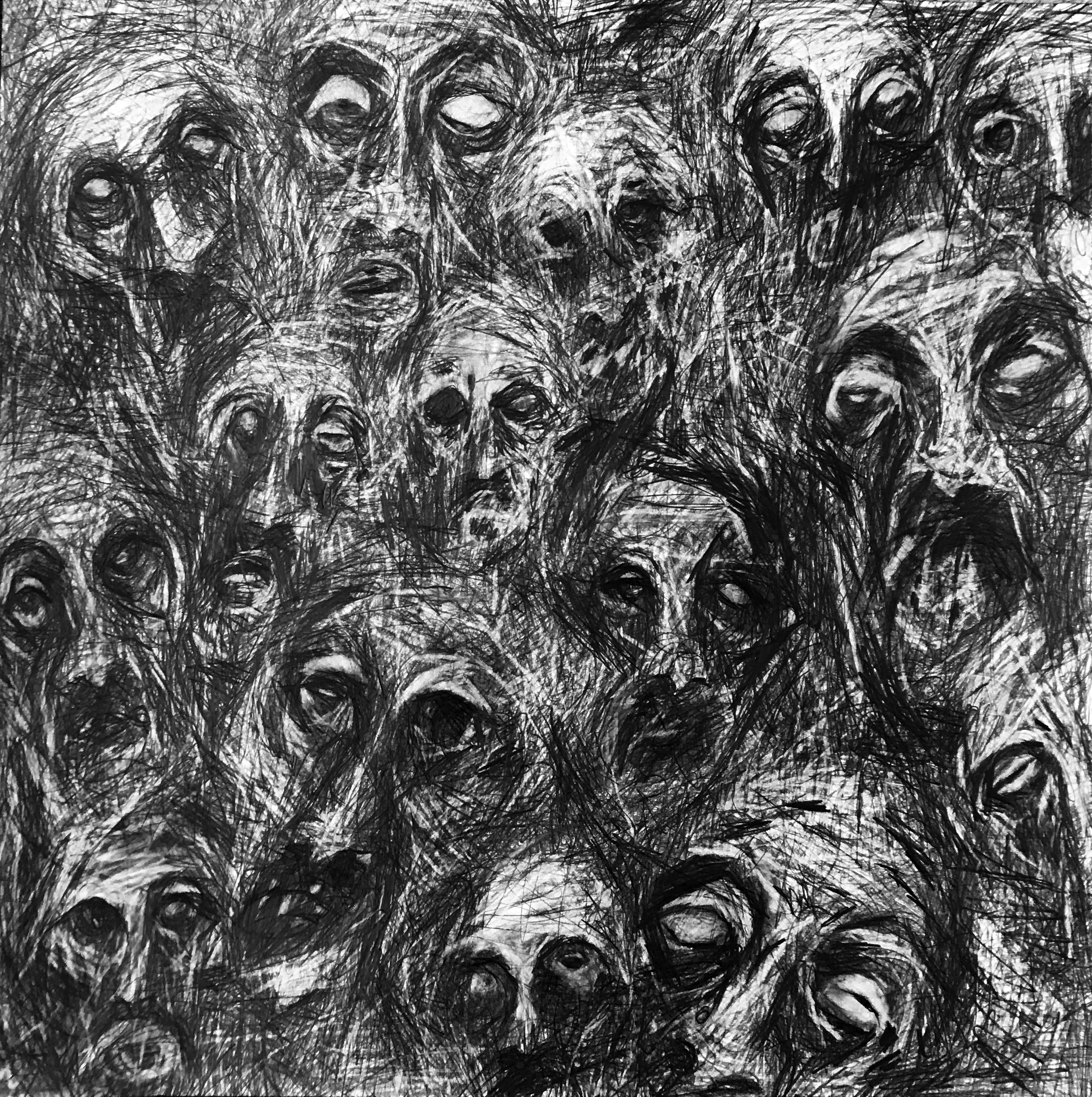
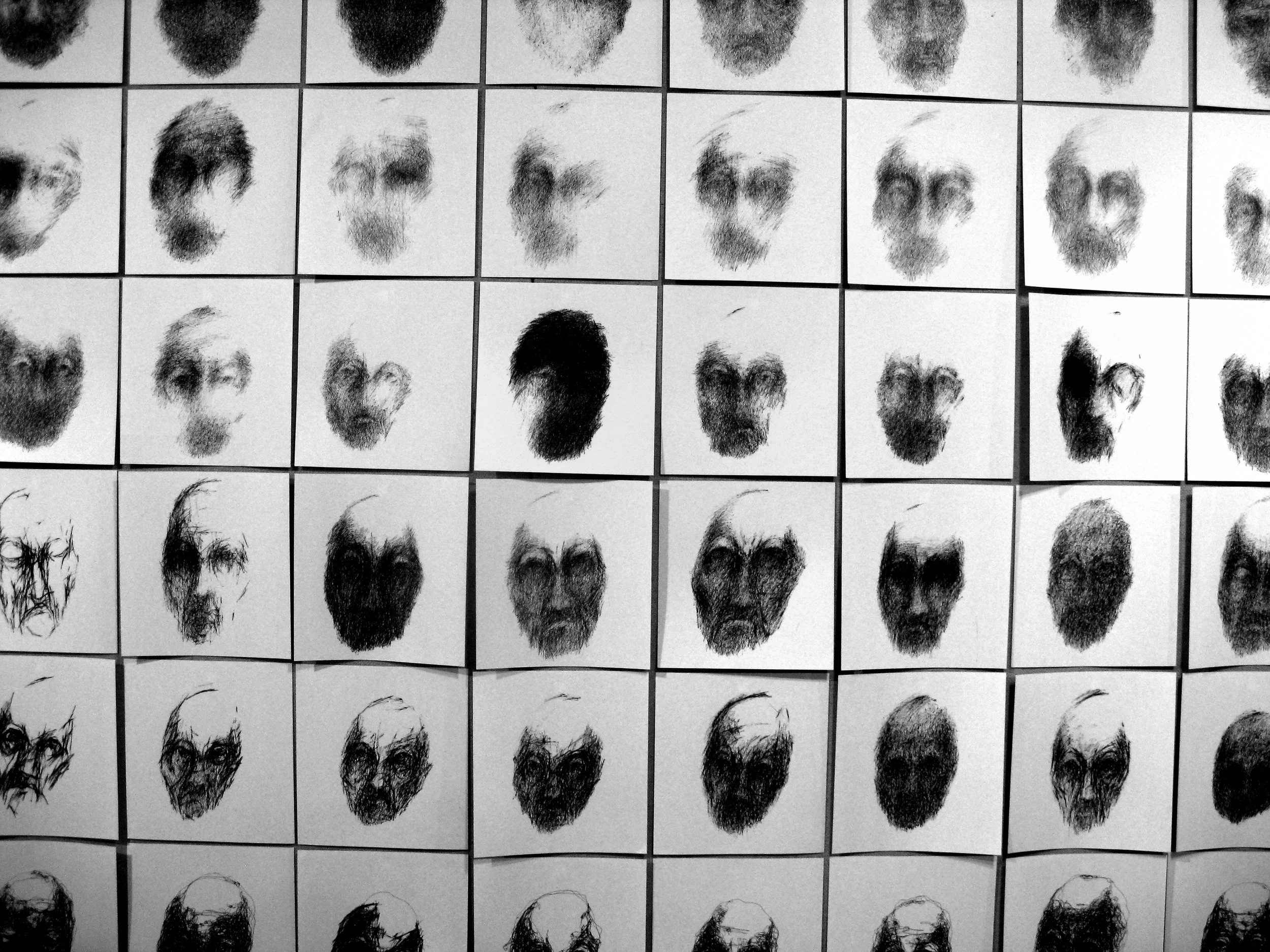
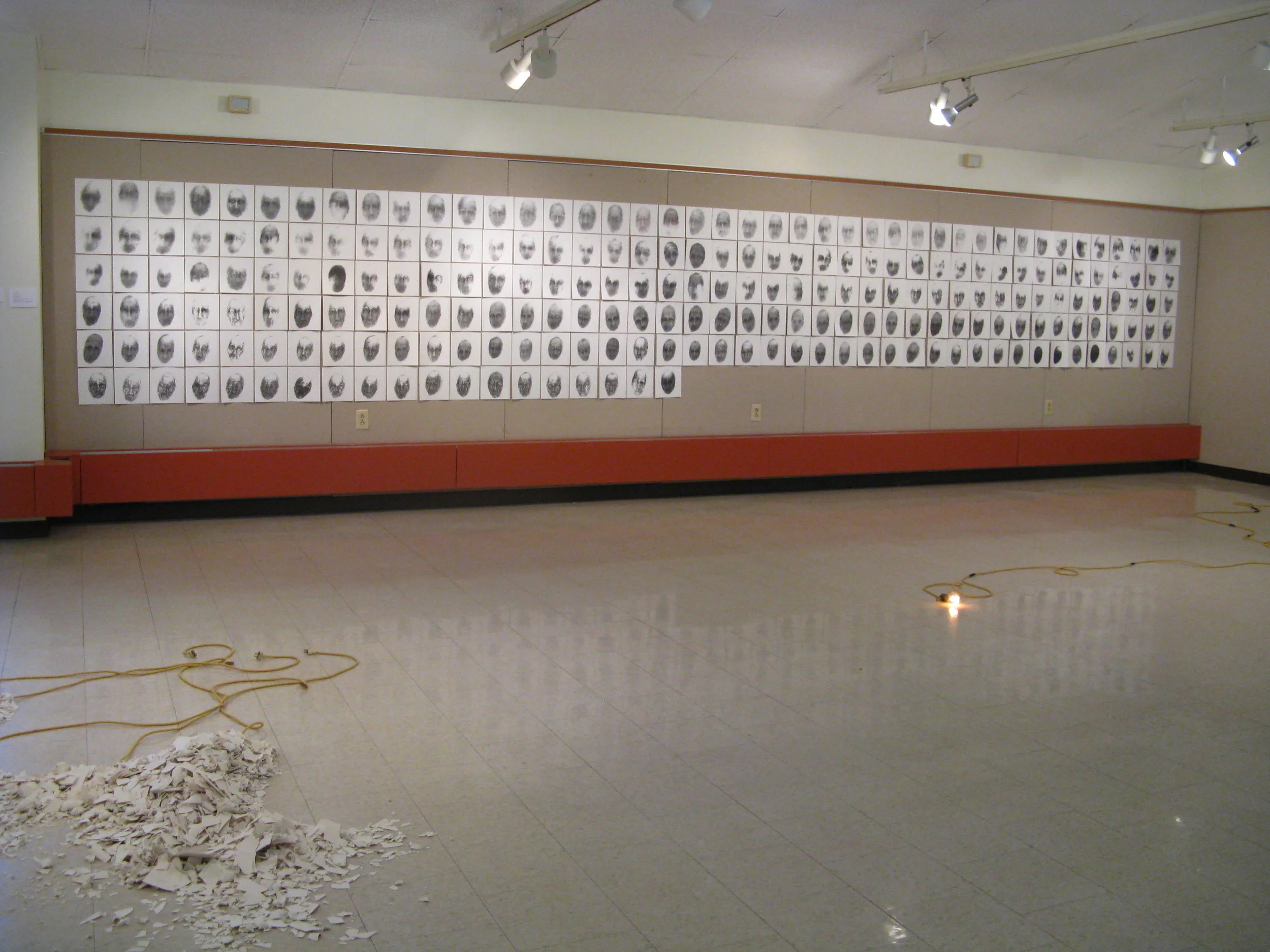
Process: Each of 100 panels is filed with portraits drawn by web of layered lines, erasing, and rebuilding them with more layering. Each portrait defines another. Each panel is drawn individually. Each panel is part of the whole piece and only perceived as such. Just like we are shaped by those around us, we are part of the group, and groups create the whole of humanity.
Detail
Detail
Detail
Watercolor and pencil on paper
12"x5" each
Total of 17,260 drawings of children. Based on the UNICEF fact: An estimated 6.3 million children under 15 years of age die, or 17,260 per day, or 1 every 5 seconds, mostly of preventable causes, according to mortality estimates released by UNICEF, the World Health Organization (WHO), the United Nations Population Division and the World Bank Group.
Detail
Detail
h8” x w5” each
.13 rapidograph on paper
Detail
Detail
Detail
Detail
Approximately 1300 bricks total
Paper, prints, and wood stain
Site specific Installation
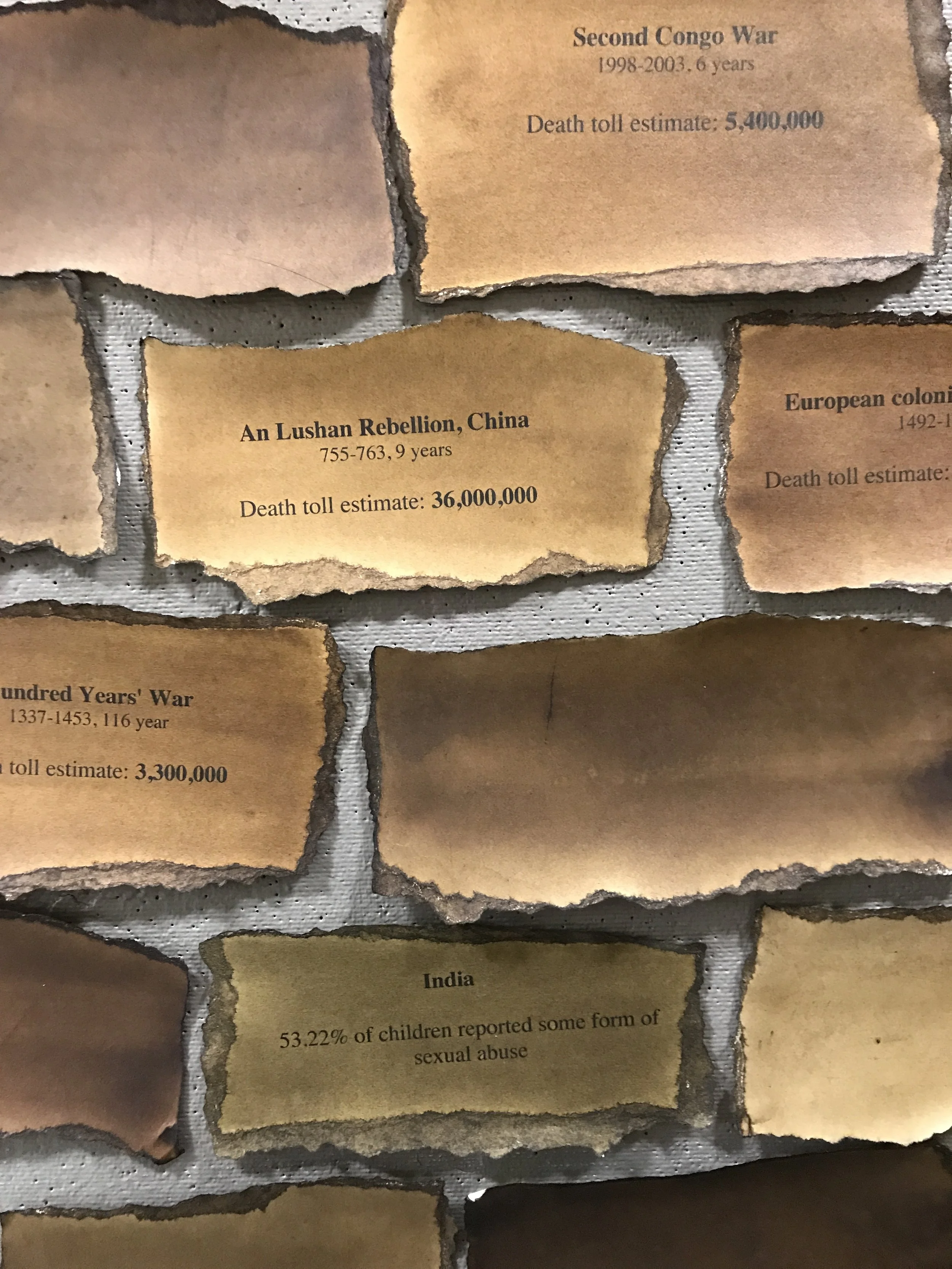
Some bricks state an atrocity committed throughout all of the humanity.
Detail
Detail
Each capsule is dated matching the medicine taken on that date.
Empty medicine capsules, pen, and paper.
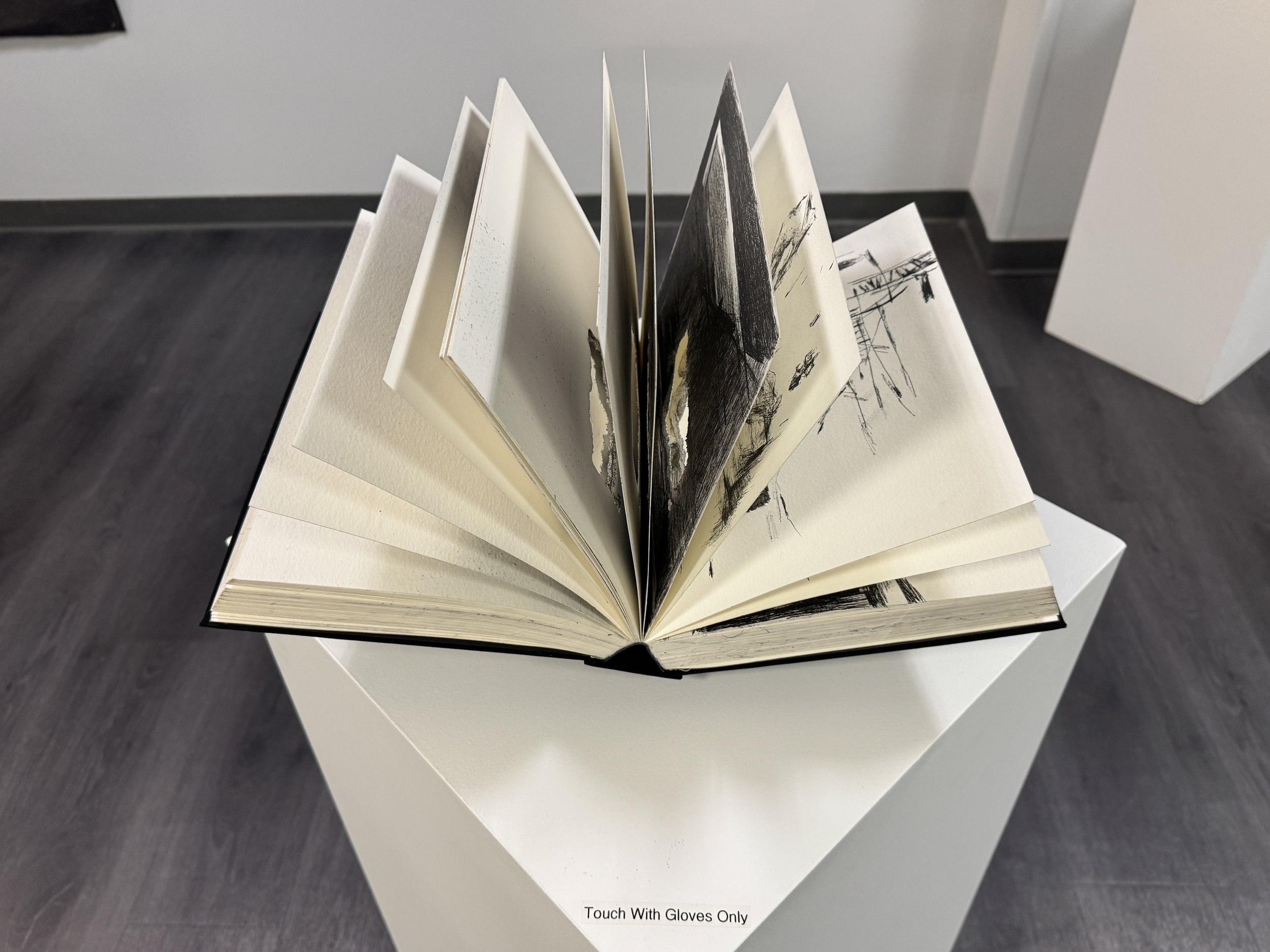
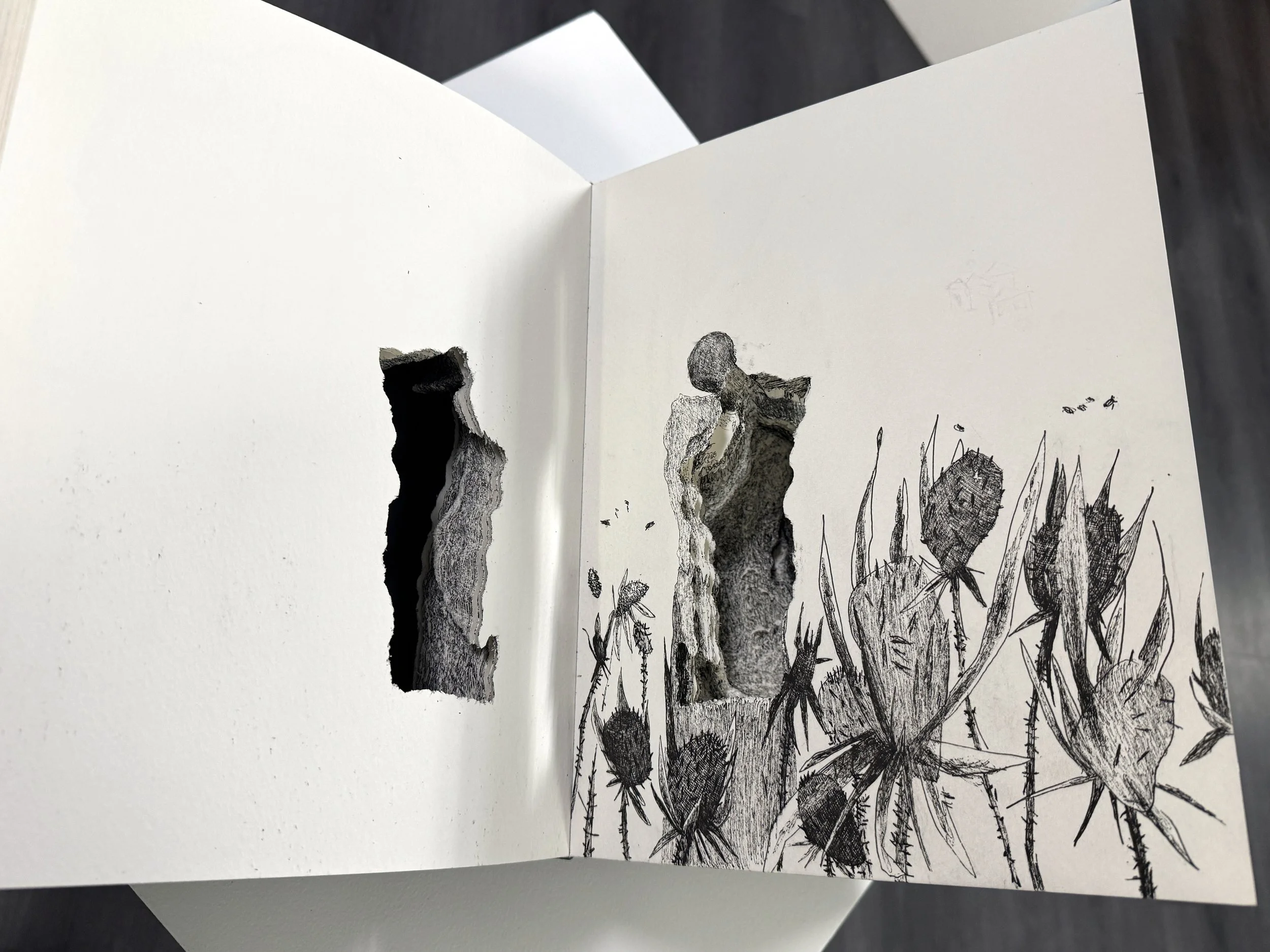
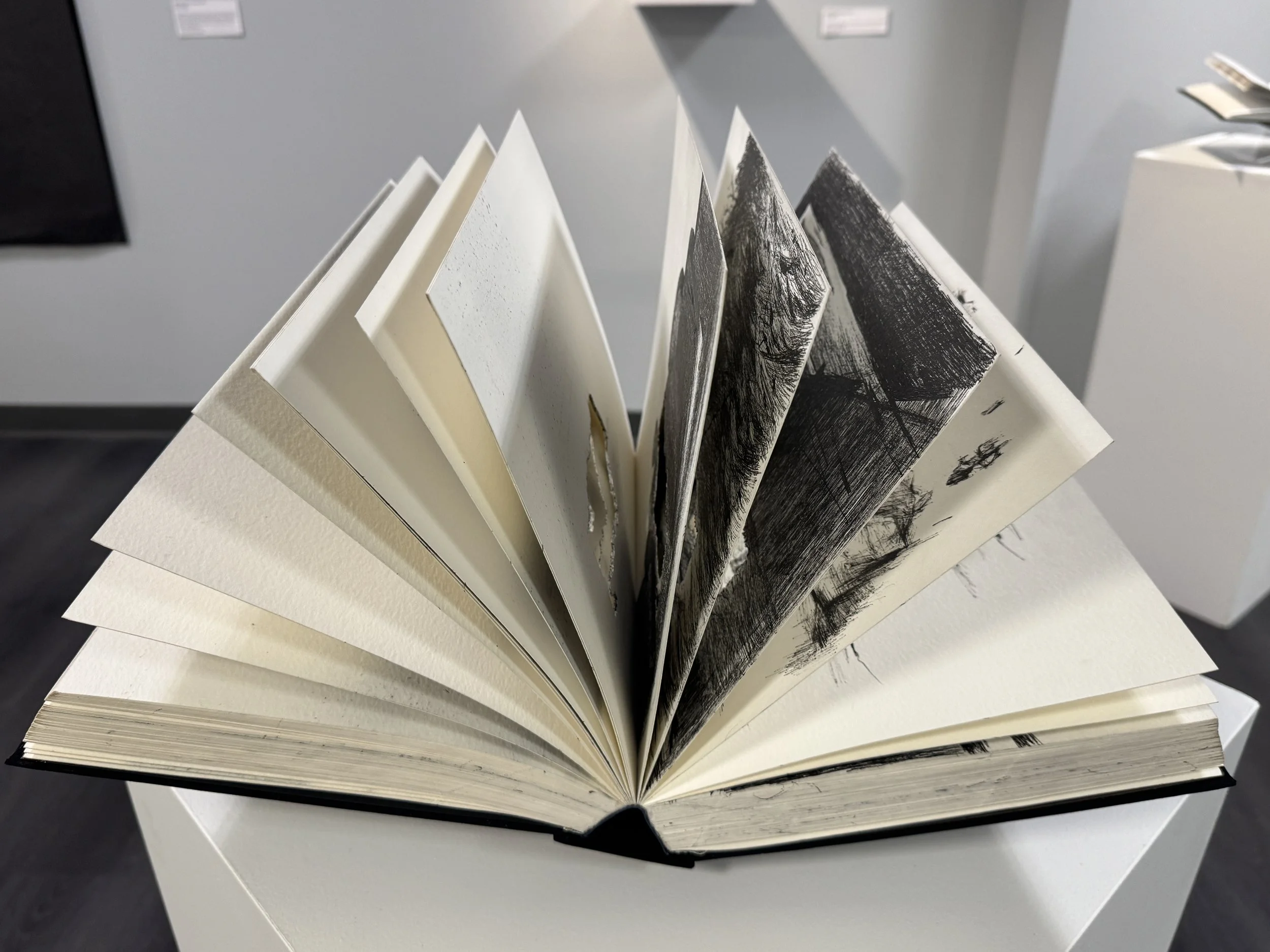
9” x 6”, book thickness 60”
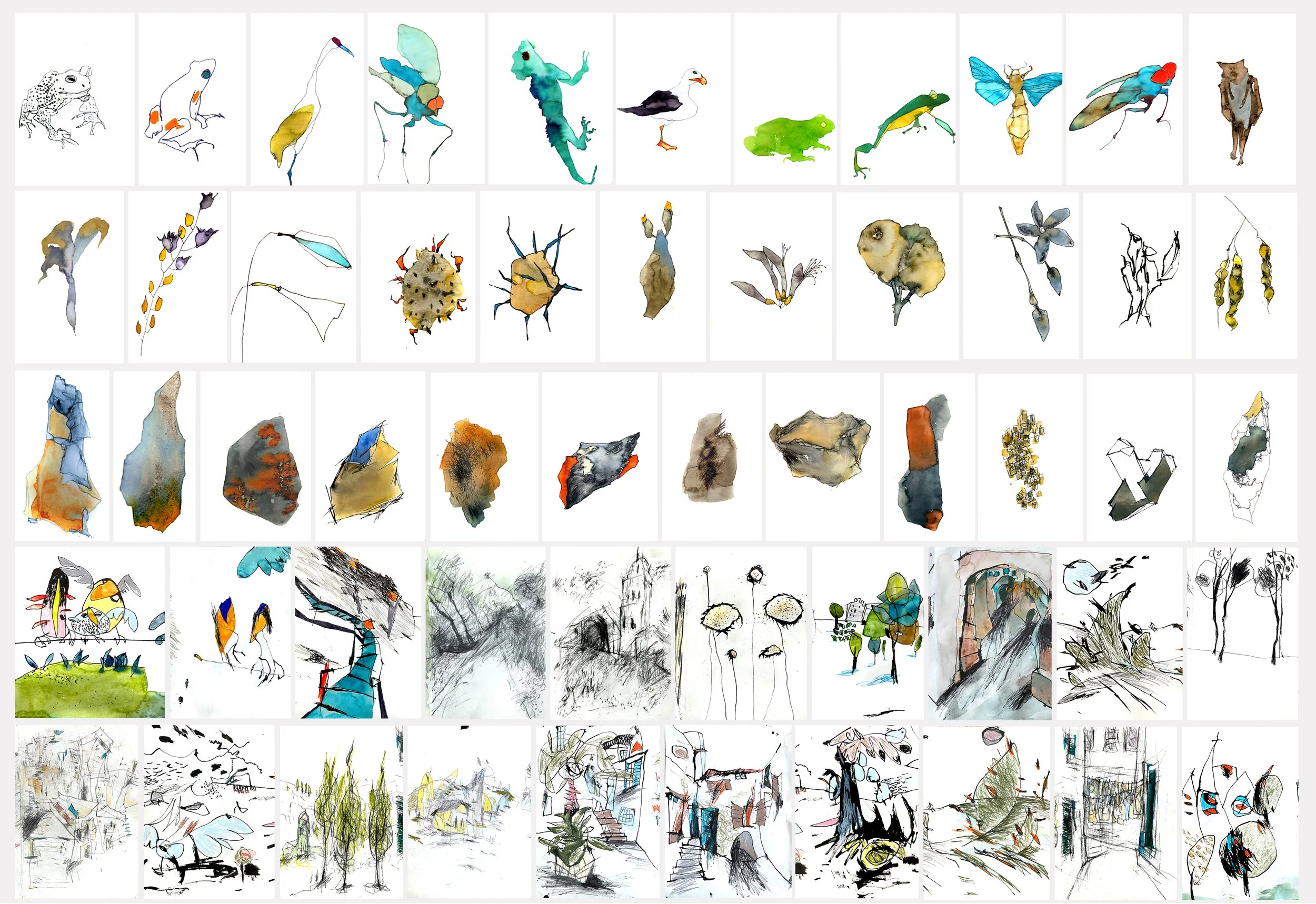
Ink, watercolor, pencil, charcoal on paper Process: The book of 10,000 things, the book of all, contains 4 sections, 2500 drawings each: plants, stones, animals (including humans), and places.
The Piece: The book is a collection of perceptions, of the world, of being in the world.
Pencil on paper
h68”xw30”
The number of marks on each drawing represents the number of births and deaths per day globally.
353,015 births
155,520 deaths
New installation,
Ink, watercolor, and pencil on paper
h75”x w36.5”
Pen on glass
h16” x w16”
Each side of the glass respectively contains the number of marks equal to the days in each of my parents’ life.
23703
21436
Detail
Detail
h54"x w84" each of two
Pencil on paper
In the first drawing, bits of information, in this case melancholic portraits, create peacefulness and tranquility of the entire image. Portraits vary from 1mm to 1cm in size. Anything that exists, reality, only exists by the virtue of the mutual information it shares with other objects in the Universe, as information theory explains. Each bit/portrait defines and shapes the space of the other. Collectively, bits define the whole, yet when observing the entire image the well defined bits become unperceivable. Just the same, when observing the bits a tranquil perception of the entire imagery is not perceivable any longer. Even if the bit defines the whole, a bit is unlike the whole. In the second drawing, portraits are blank. The space for information is present, but the information itself is not. Even though the information within the space is unknown, it is blank, the entirety of the image is fully comprehensible. How do we perceive the space of the missing information within the bits? Do we project previously perceived portraits, or are we capable of creating new perceptions? How different, if any, is our perception of the whole depending on our knowledge of the parts? By knowing a bit can we automatically claim the knowledge of the whole? 55,000 portraits and 95,000 blank portraits; there is more of the unknown then of the known.
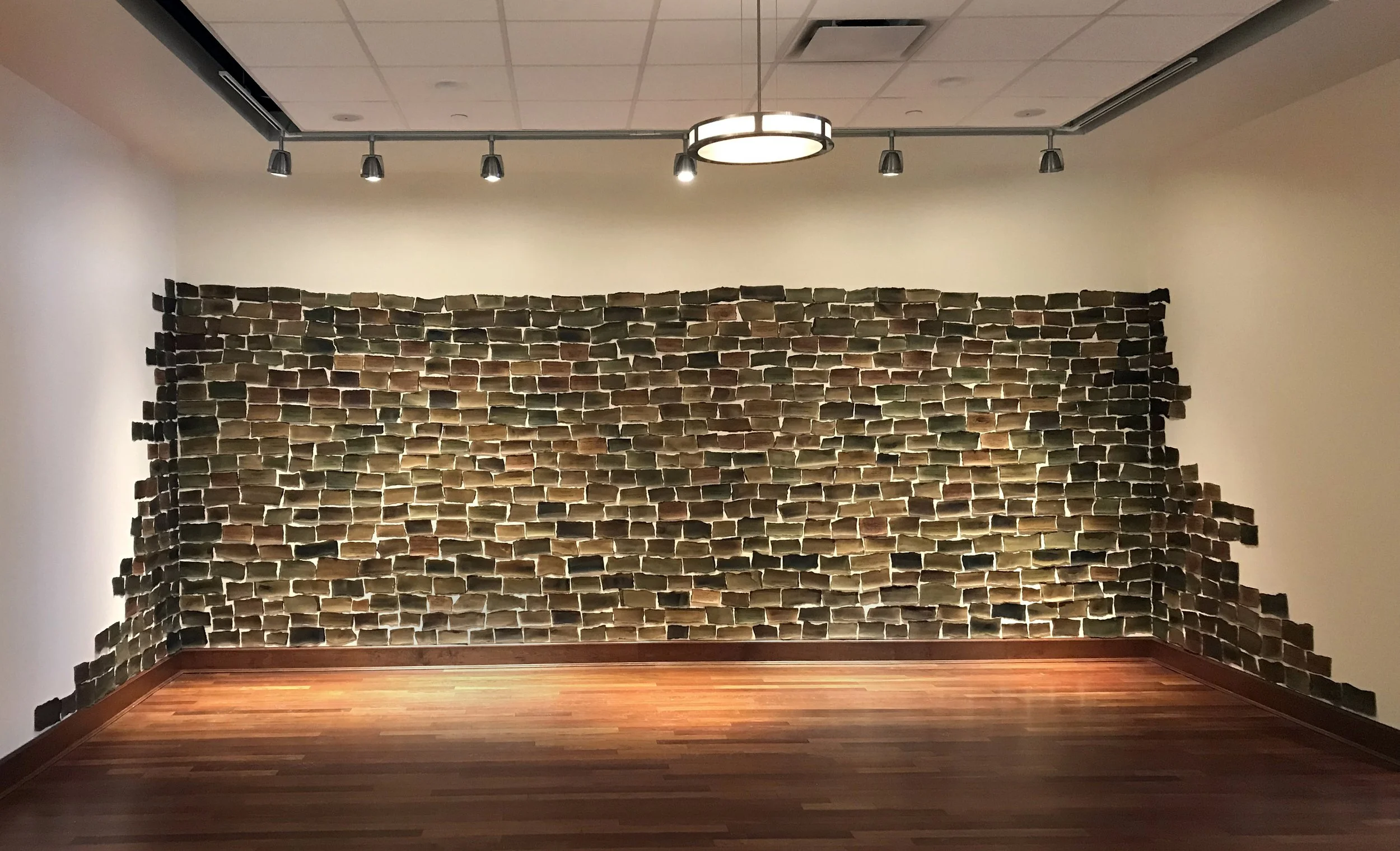
~230,000 bricks
Paper, gesso, wood stain
h60” x w90”
Detail
Approximately 1300 bricks total
Paper, prints, and wood stain
Site specific Installation
Some bricks state an atrocity committed throughout all of the humanity.
Detail
Detail
Part of Knowledge Shorts project is based on promoting and distribution of knowledge shorts. For example giving away Knowledge Shorts to passers by along the Magnificent Mile (shopping district in Chicago).
Begenings, 2012
Coloring pencils and paper were given daily, for a year, to a kid from 9 months of age (first moment of being able to hold a pencil).
Book of Marks
Book of Marks
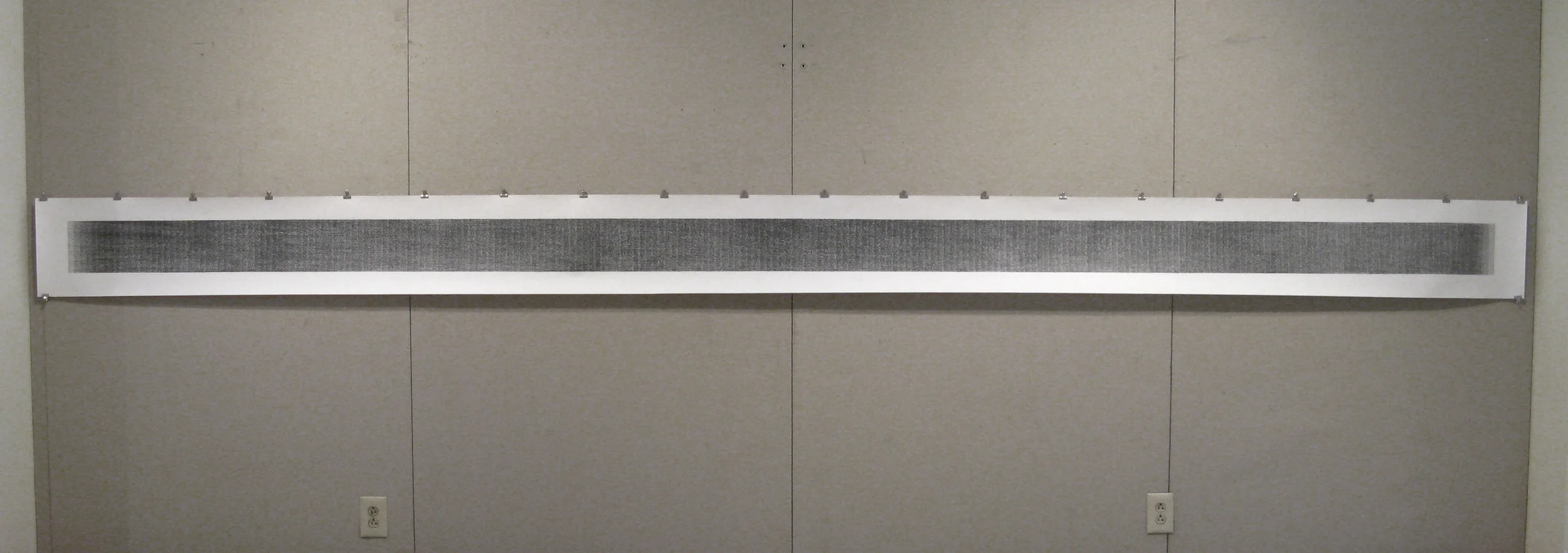
Calendar, 2005 Pen on paper h68” x w2” each of 365, installation w76’ or 912” Process: At the end of each day draw a constant line on 68” (personal height) long paper. Mark the date on the top. The piece: A line is a direct expression of an inner energy, energy that defines an entire mental state of the given moment. A line expresses the most fundamental energy/thought which words can never capture. This formal aspect of a line/mark is the most truthful documentation of energy through and for all time.
pen on paper
h1” x w1”
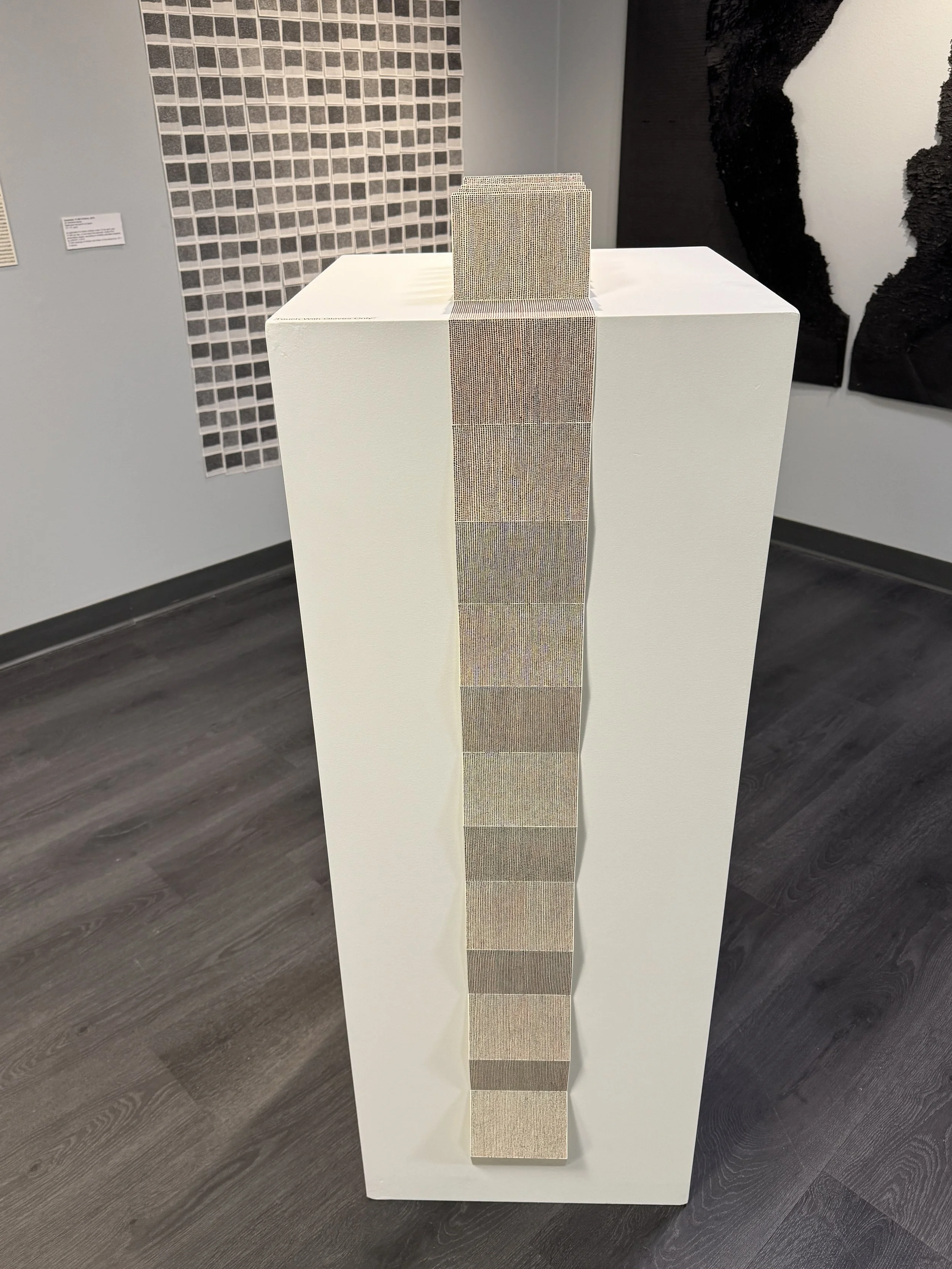
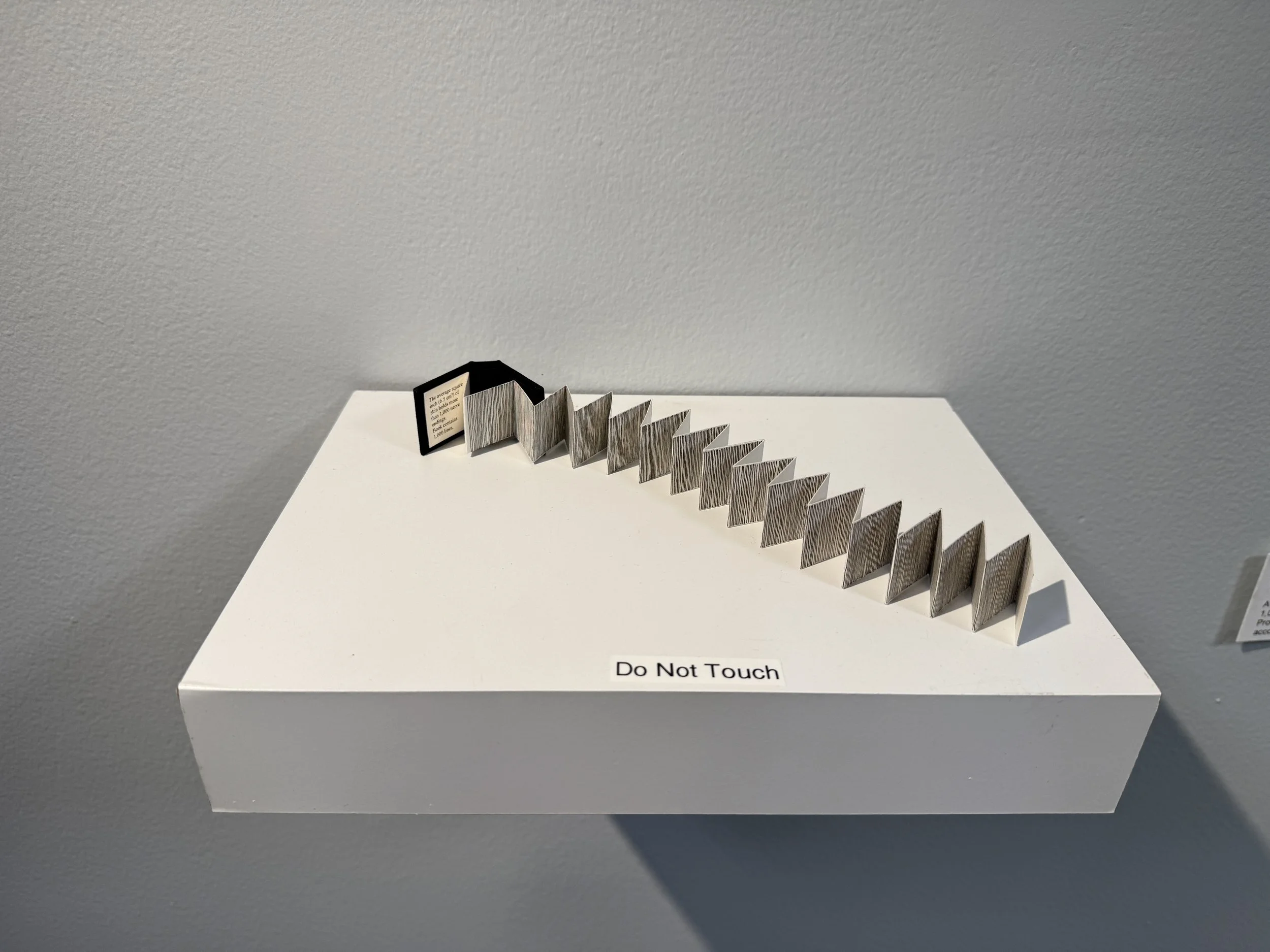
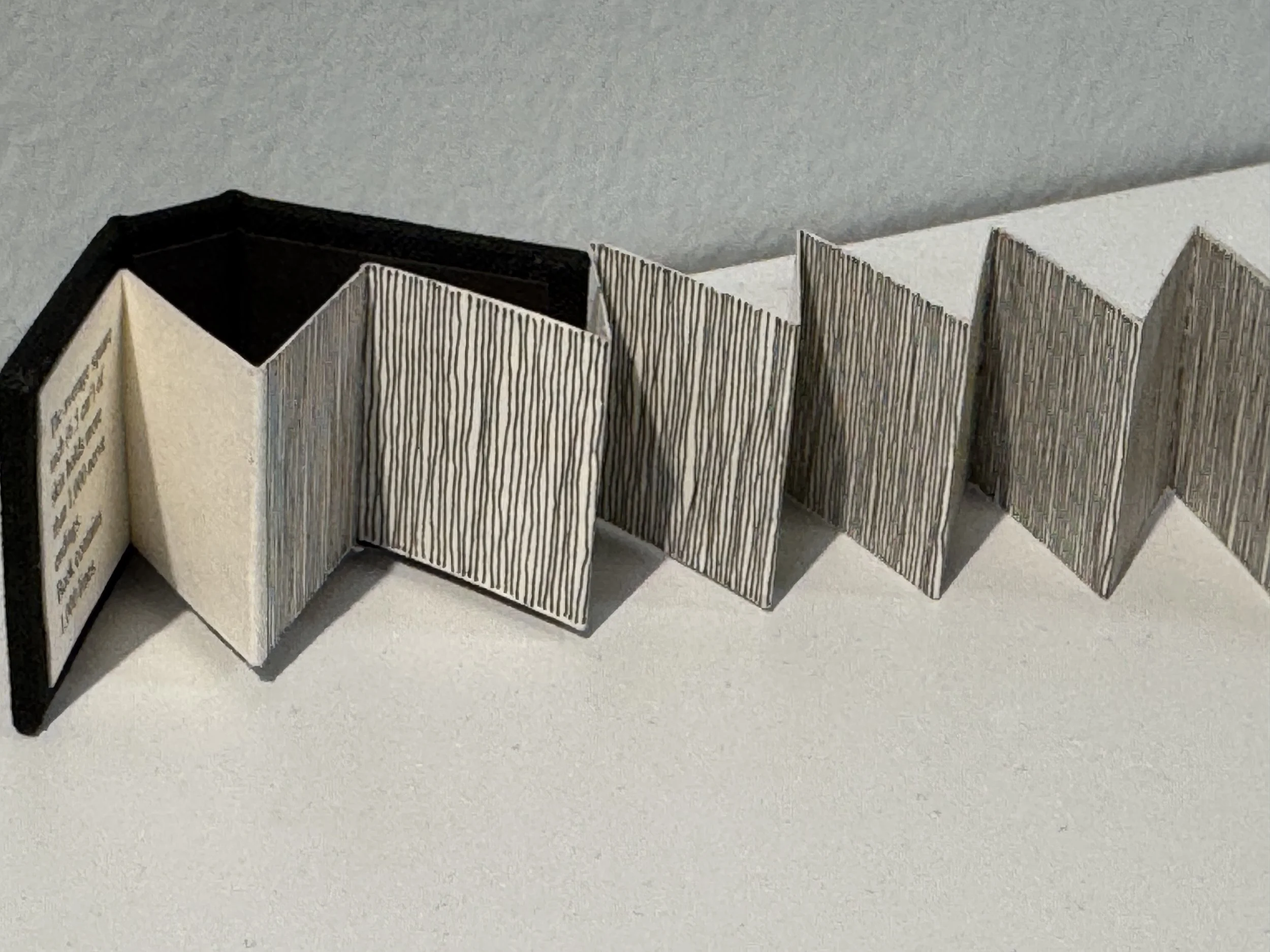
The average square inch (6.5 cm²) of skin holds more than 1,000 nerve endings.
In a 1” x 1” accordion style book, 1,000 lines are drawn (25” long).
Watercolors on paper
h5” x w3.5”
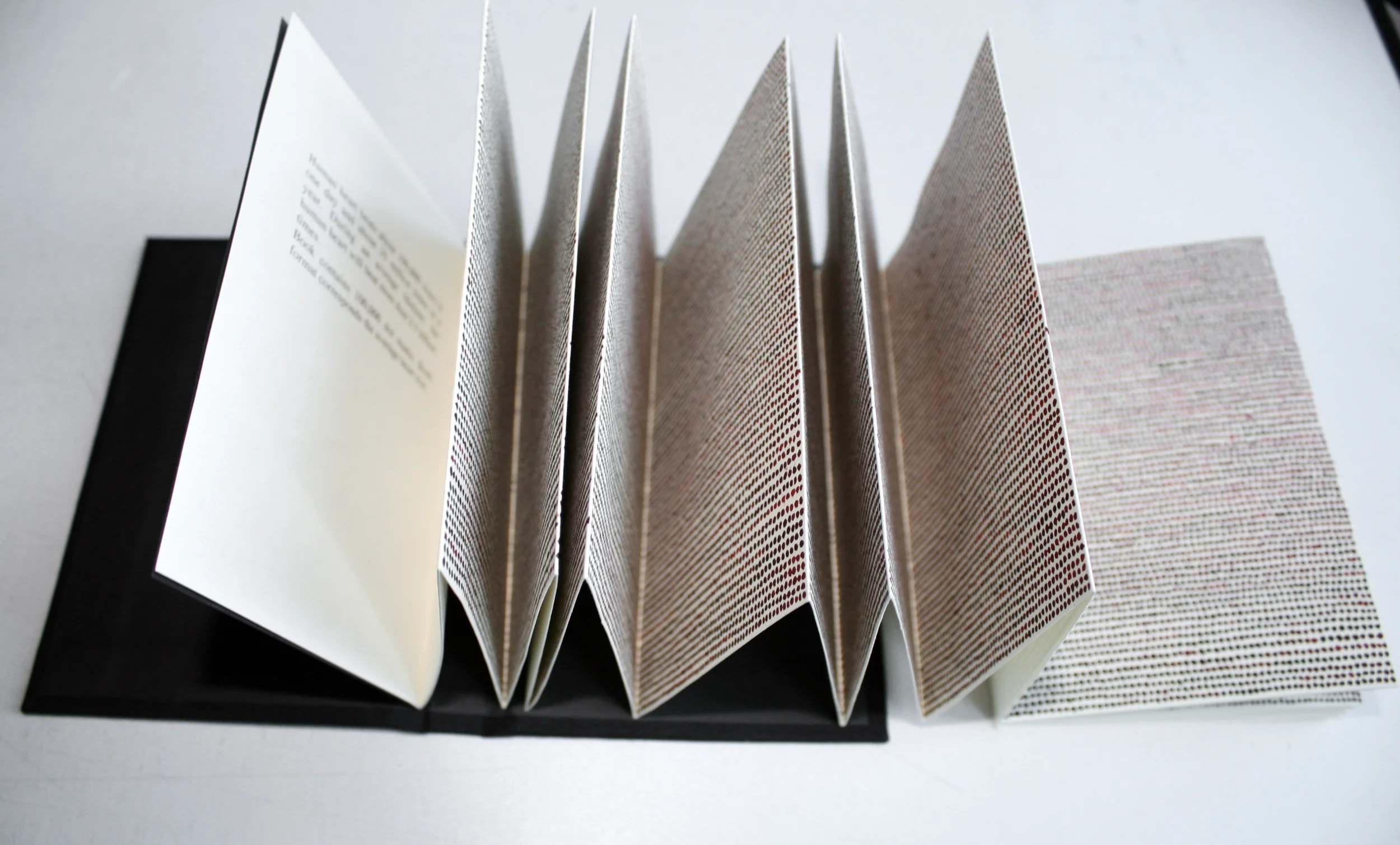
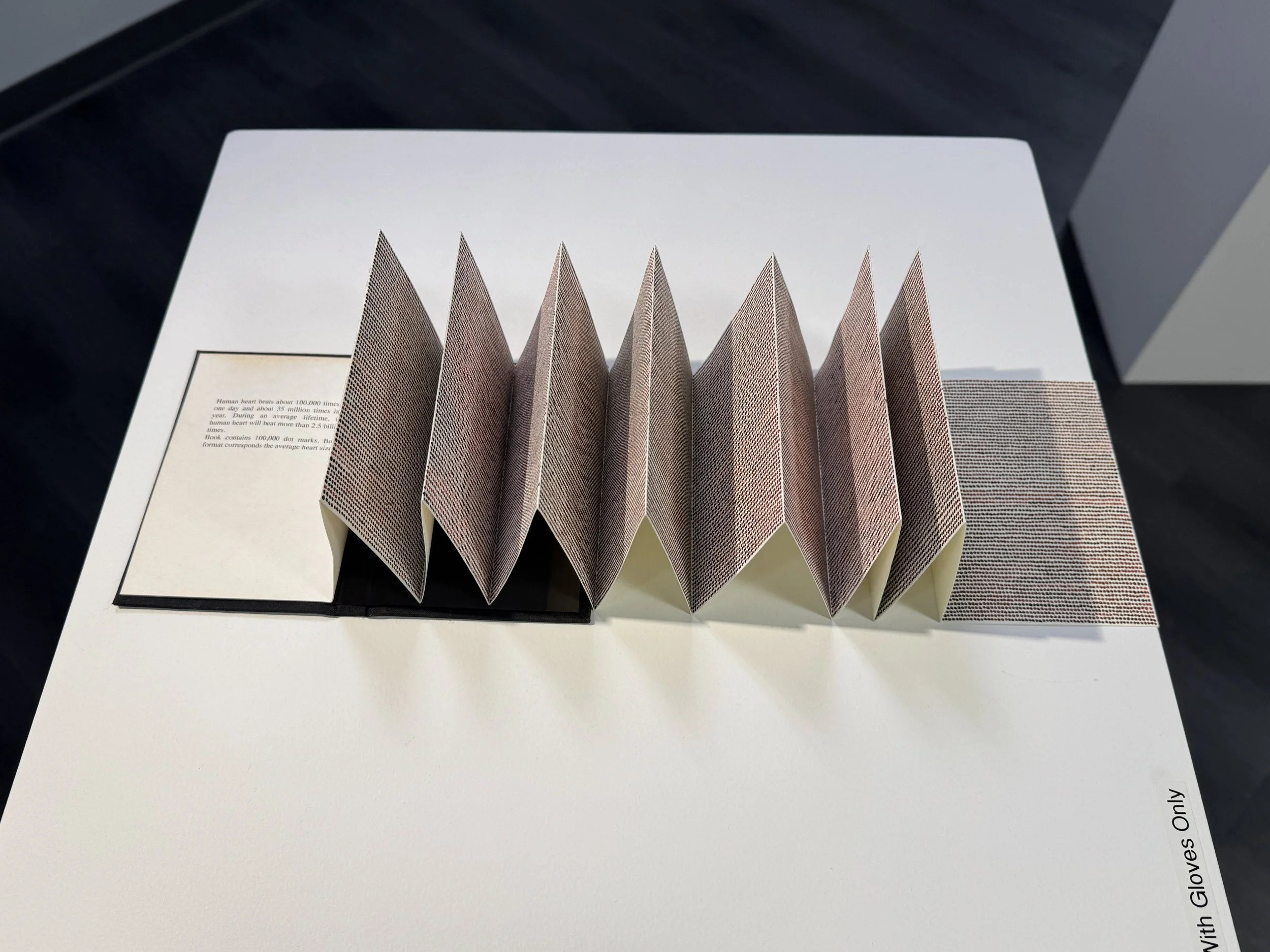
Human heart beats about 100,000 times in one day and about 35 million times in a year. During an average lifetime, the human heart will beat more than 2.5 billion times.
100,000 dot marks are drawn on 5” x 3.5” accordion style book. Book format corresponds the average heart size.
Pencil on paper
h8,5” x w8.5”
In humans there are about 200 different types of cells.
Detail
Detail
Detail
Pencil on paper
h68” x w30”
Human heart beats about 100,000 times in one day and about 35 million times in a year. During an average lifetime, the human heart will beat more than 2.5 billion times.
100,000 dot marks are drawn on 5” x 3.5” accordion style book. Book format corresponds the average heart size.
Detail
Pencil on paper
h68”xw30”
he number of marks on each drawing represents the number of births and deaths per day globally.
353,015 births
155,520 deaths
Detail
Detail
12” x 150”
Pen on paper
Process: An average brain size of 167 mm (6.574”) by 93 mm (3.661”) is a space filed with a continuous thoughts, daily, for 227 days, from conception to birth of my daughter. Each new day’s text is shifted 20mm from the beginning of the previous day, thus resulting in overlapping.
The piece is a documentation of reasoning, thinking, and feeling while experiencing life as carrying within itself another life. The piece's process follows perception of self-existence while being unified with another being. What happens with cognition, reasoning, and self perceptions?
Detail
Pen on paper
h8.5” x w9” each of 227
Process: Portrait drawing is made daily for 227 days, from conception to birth.
The piece: With each day noticeable morphological changes happen, which is documented through portraits.
Ink, watercolor, pencil, charcoal on paper
h6 x w9”, book thickness 40”
The piece: The book of 10,000 things, the book of all, contains 4 sections: plants, stones, animals (including humans), and places. A collection of perceptions, of the world, of being in the world.
18’ x 46.5”
Mechanical pencil on paper
Detail
Detail
Ink, watercolor, and pencil on paper
36.5” x 75” (drawing height matches personal height)
Detail
Pencil on paper
Personal height 68” x 26,5”
Each row is approximately 16th of an inch.
Filled-in drawing while reminiscing on past experiences.
Detail
Pencil on paper
Each of 30 drawings 68”x11”
Copious lines that turn into portrait are drawn daily for 30 days.
Detail
Pencil on paper
30x4 pieces, each one h5” x w5”
Process: A set of marks is drawn simultaneously with both hands on two pieces of paper while perceptually focusing only on the right hand, the same rules with the same set of marks is repeated but this time the perceptual focus is only on the left hand, 30 different sets of marks are repeated using the same rules.
The piece: Study of the physical ability based on perceptual focus.
Detail
Scratches on plexiglass
24” x 18”
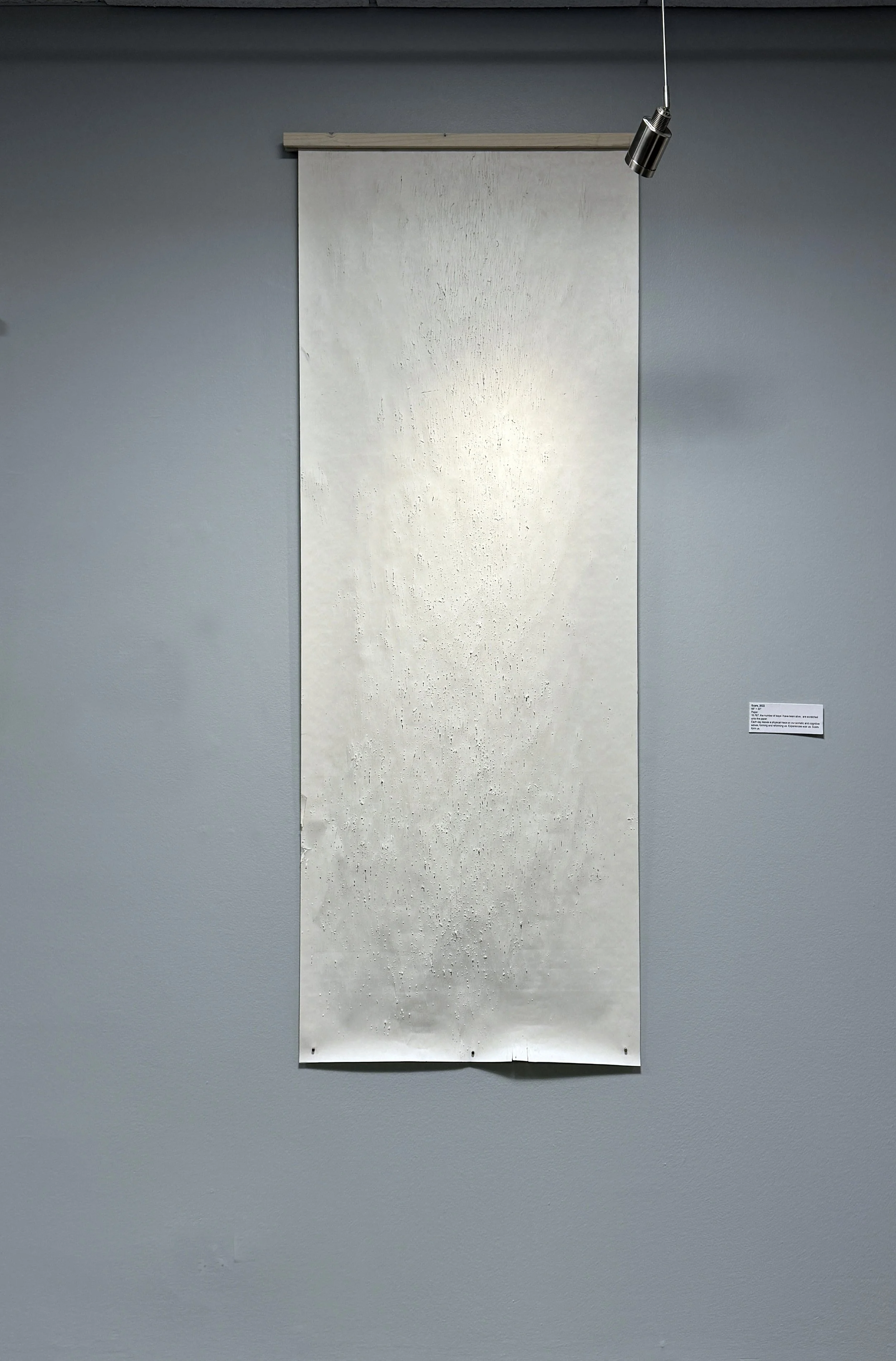
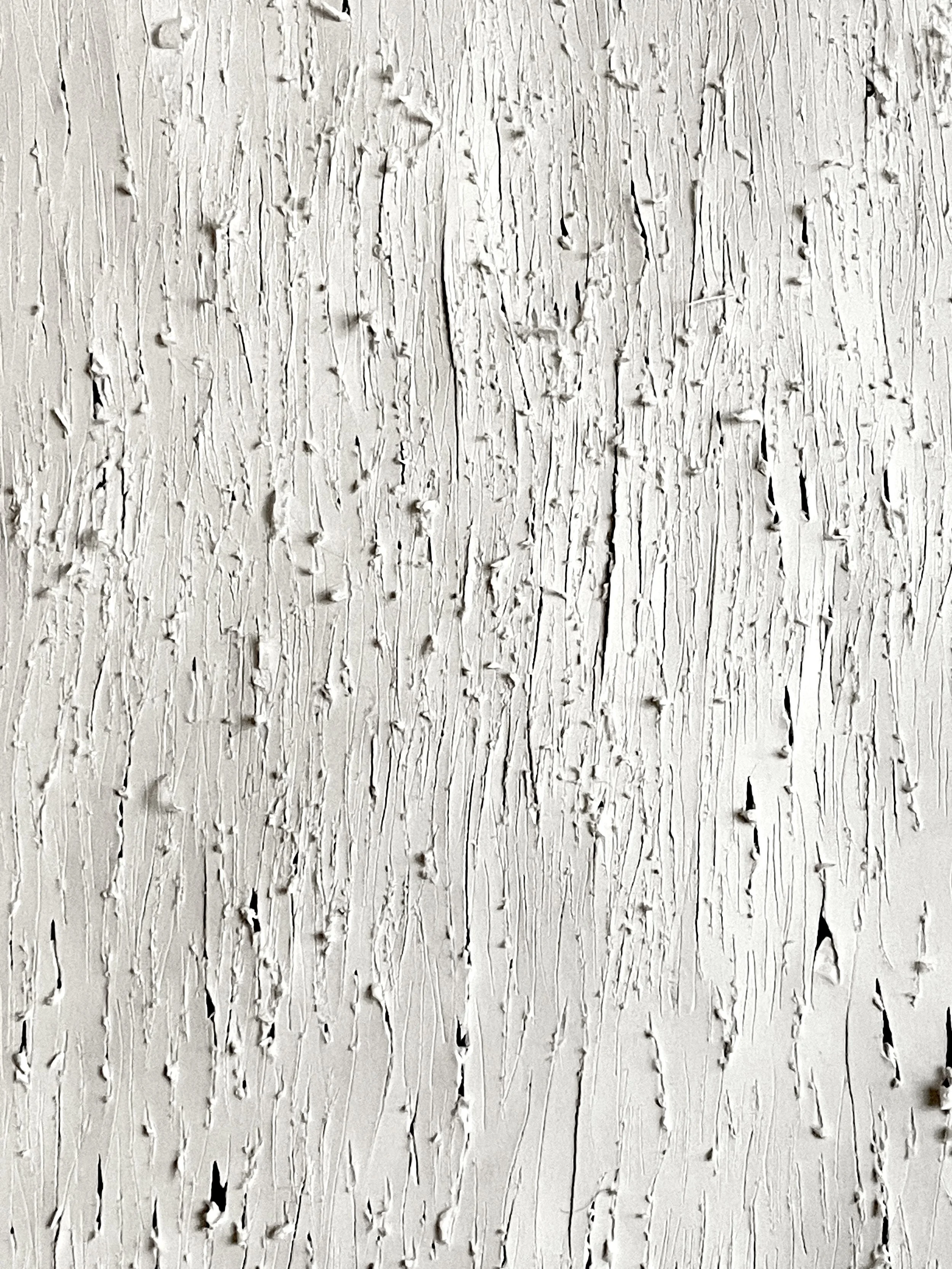
The number of scratched marks on the plexiglas represents the exact number of days I have been alive. Just like the plexiglass, we are practically invisible, see-through, until daily life experiences leave visible scars that shape us, materializing us into concreteness.
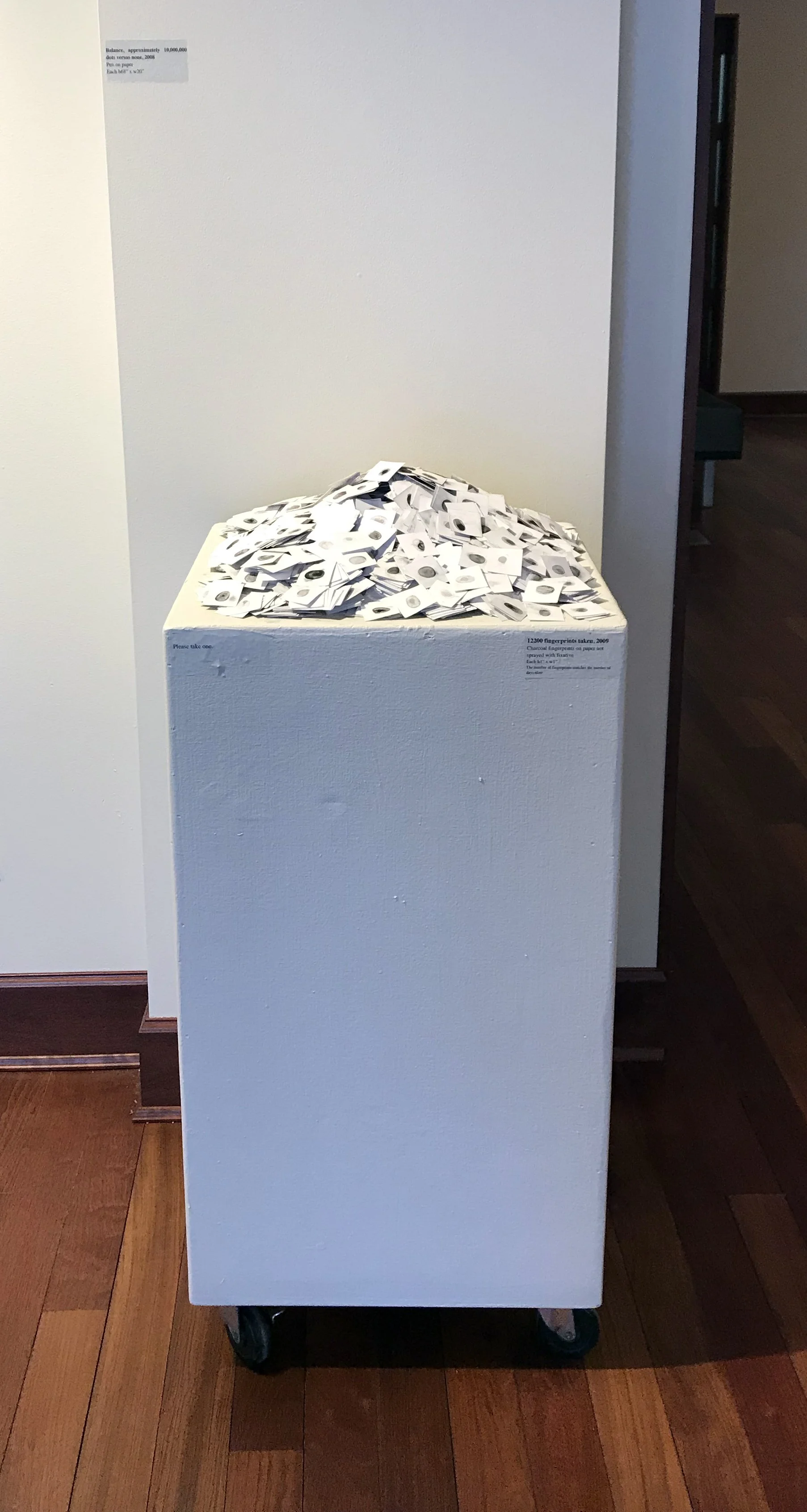
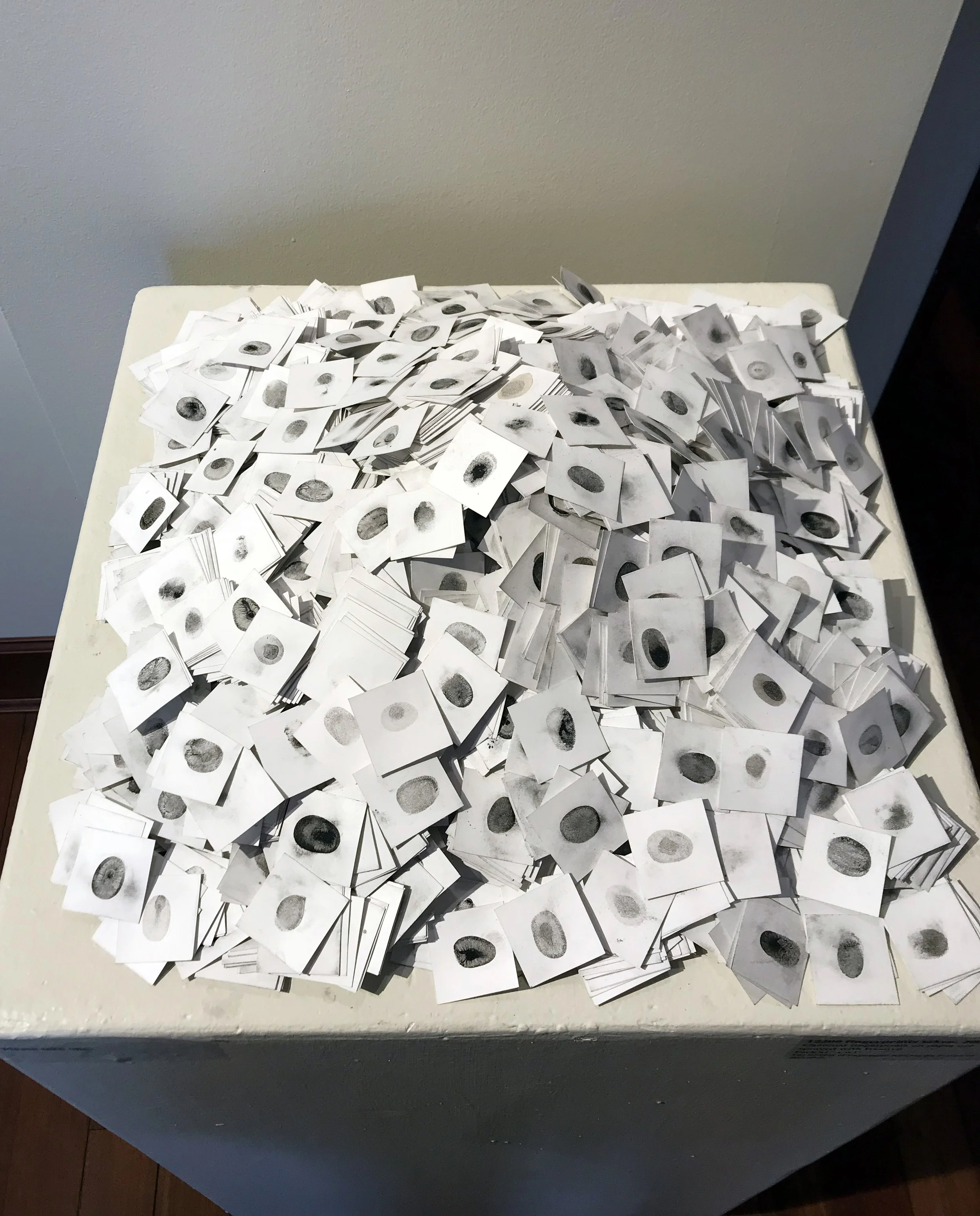
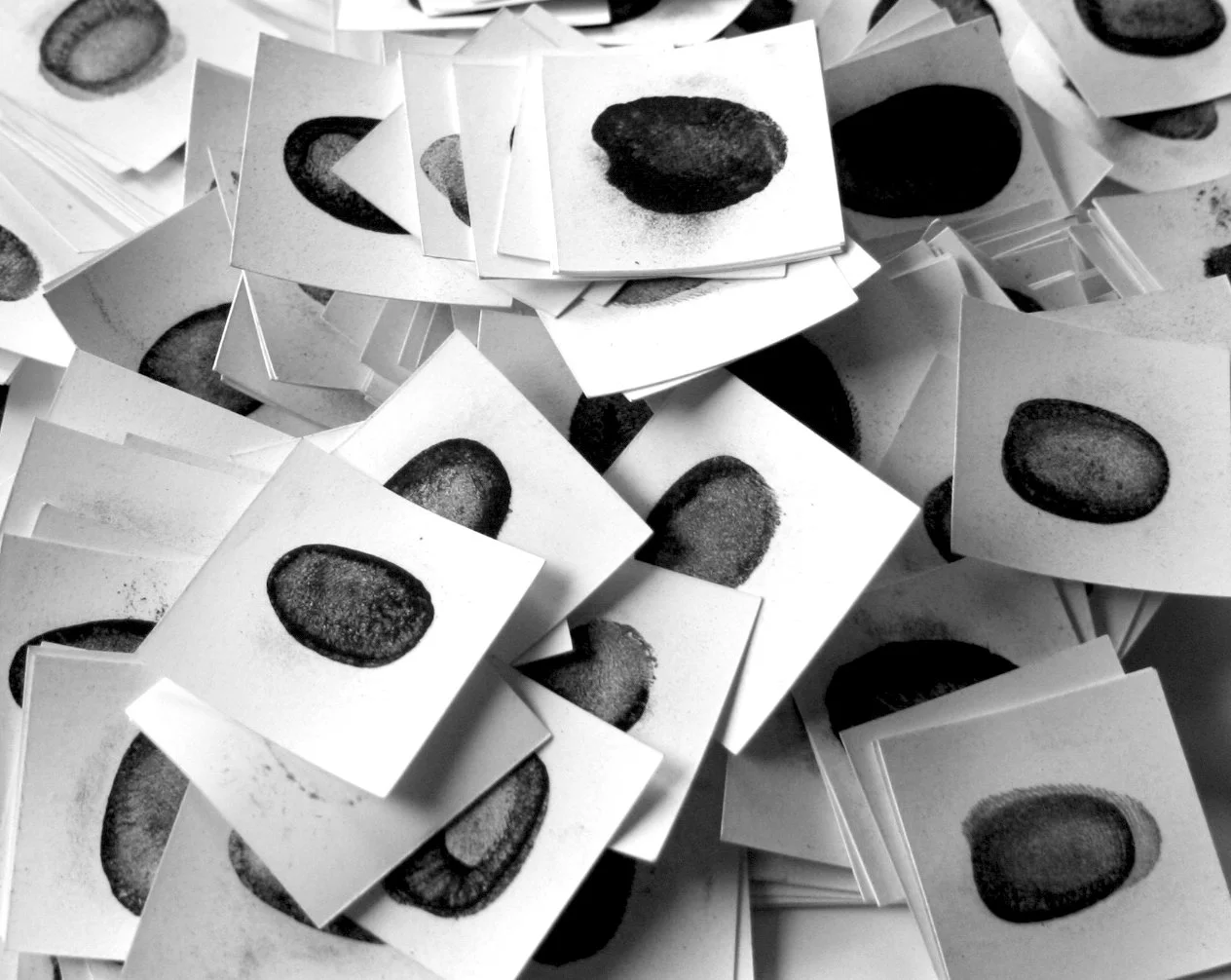
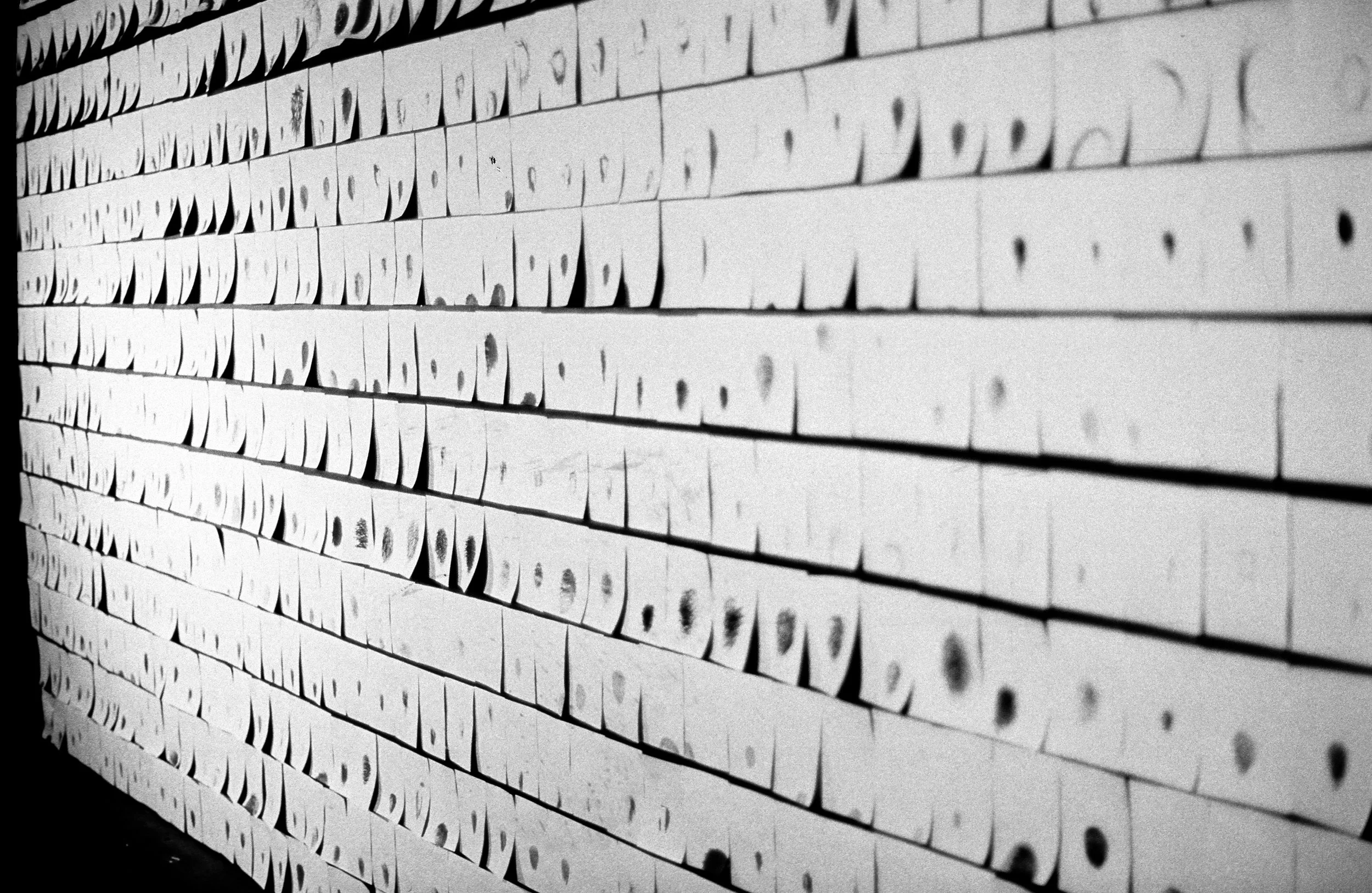
Charcoal fingerprints on paper not sprayedwith fixative
Each h1”x w1”
Process: A fingerprint was made for each day of my life. Viewers are encouraged to take one fingerprint from the pile.
Pen on glass
h16” x w16”
Each side of the glass respectively contains the number of marks equal to the days in each of my parents’ life.
23703
21436
Detail
Detail
Pencil on paper
Book format
Process : A continuous pencil drawing was made while reading each book.
Raymond Queneau, Pierrot Mon Ami, Louis Ferdinand Celin, Castle to Castle, Rene Crevel, My body and I, Arthur Schopenhauer, Essays and Aphorisms, Jose Saramago, Seeing, Reiner Maria Rilke, Auguste Rodin, Marjane Satrapi, Persepolis, Henri Michaux, Stroke by Stroke, Leon Lederman, The God Particle, Rory Stewart, The Places in Between, Rilke, Sonnets to Orpheus, James Lord, A Giacometti portrait, Jose Saramago, Death with Interruptions, Victor Pelevin, 4 by Pelevin, Joseph LeDoux, Synaptic Self, How Our Brains become who we are, Victor Pelevin, Babylon, Boris Vian, Blues for a Black Cat and Other Stories, Patrick Wall, Pain: The Science of Suffering, Naguib Mahfouz The Journeu of Ibn Fattouma, Werner Heisenberg, Physics and Philosophy: The Revolution in Modern Science
Pencil on paper
Each h70” x w14”, drawing h67” x w10”
While fasting for a week a ‘fill-in’ drawing is made: format reflects the physical body height.
Pen on paper
h8.5” x w10.25”
Intention: Each day fill-in one piece of paper for 100 days with circular pen marks.
Result: Most of the pages are only partly filled.
Desire and aspiration is always greater than self’s capability.
Pen on paper
14” x 8.5”
Process: From the sunrise (i.e. 4:57am) to the sunset (i.e. 8:46pm) …… would write continuously its thoughts, feelings, beliefs, perceptions and apperceptions. The book is written in thirty days where each new day of writing is a new paragraph. Thirty days/paragraphs reflect ……’s age : ……’s handwriting is undecipherable. The entire book of ALL is unreadable.
The piece : Words are used to communicate thoughts and feelings but an individual’s thoughts and feelings cannot be understood by others. Thoughts and feelings, which are fundamentally a Self-Being, are understood only by the one who is experiencing them at that particular moment (personal present experiences). No one will ever hear, see, nor understand another one’s thoughts/feelings. No one will ever know another one’s Self-Being. To communicate is a useless and pointless noise. The only conscious is a self consciousness.
Detail
Is Physical Reality, the experienced reality, the only real reality? What about Mind-independent Reality? Just because 100 years ago we did not know of the existence of the Dark Matter it doesn’t mean that it did not exist. Obviously the galaxies held together then just as well as today. Earth keeps spinning, with no interruptions, for dinosaurs, flat-earth-bolivars, as well as for those who have basic knowledge in astronomy and physics. How many more things hold our Reality together yet there is no consciousness to perceive it. Reality is mind-independent yet no less real. Is the blank paper ignored, less real, or equally important to the filled in paper? Can we consider what we don’t see as much as what we do see?
nk, pencil, charcoal washes, charcoal, pastels, shellac on paper
Each drawing h11 x w8.5”
The weight of the drawings/paper corresponds to body weight.
Pencil on paper
Each h6” x w3.75”
Ink fingerprints on paper
h60” x w220” (18.3’)
Process: Mark with fingerprints the number of days alive.
The piece: As the most constant and truthful manifestation of identity, each fingerprint symbolizes a day of self-existence. Due to the medium and finger’s pressure during an execution, each fingerprint differs from all the other. Is there a constant and unchanging self? What is a true identity?
Format : Average brain length = 167 mm / 6.574”
Average brain height = 93 mm / 3.661”
Process : Fill-in daily one paper with thoughts for 9 months. If it takes nine months for human life to be created and be born, how much does one change, if any, within nine months as an adult. One’s cognitive perceptions/thoughts are a direct reflection of one’s innermost Being, for this reason observing one’s thoughts for nine months will produce an accurate picture of how much one’s true Being has changed, developed, or not. Do we just live, or are we living?
Detail
Pen on paper
4” x 68” each of 30
Process: For each of 30 days draw a number of circles that equals the number of living days. Format reflects personal physical height.
The piece : Within each new day, one progresses through life by repetitious reliving of previous days. Perception of life changes each day (smaller/bigger drawing). Each day one adds a new circle to one’s existence but each new day is just another repetition, the same as all the previous ones. Perhaps this is the impossibility of self-change.
Detail
Mixed media
h2 1/4” x w1km (0.621 miles or 3,281 feet)
Pen on paper
18.75’ x 2.5’
Process: Circles were drawn for 30hr straight.
The piece: Impossibility of creating a circle / impossibility of creating self. An imperfect creation of an imperfect perfection. One has an image of what ideal self (circle) ought to be. One may search entire life for that fictional ideal self. One repeats self in hope that the next repetition may be better than the existing one but the further one gets the more tired one is, and the further from self (last hours of drawing). An imperfect self cannot create a self-perfection.
Pencil on paper
h16.25’ x w1.7’
A continuous line is drawn for 30 incessant hours.
Pen on paper
Wall drawing (96 pieces) h5.7’ x w5.5’, book h11” x w8.5”
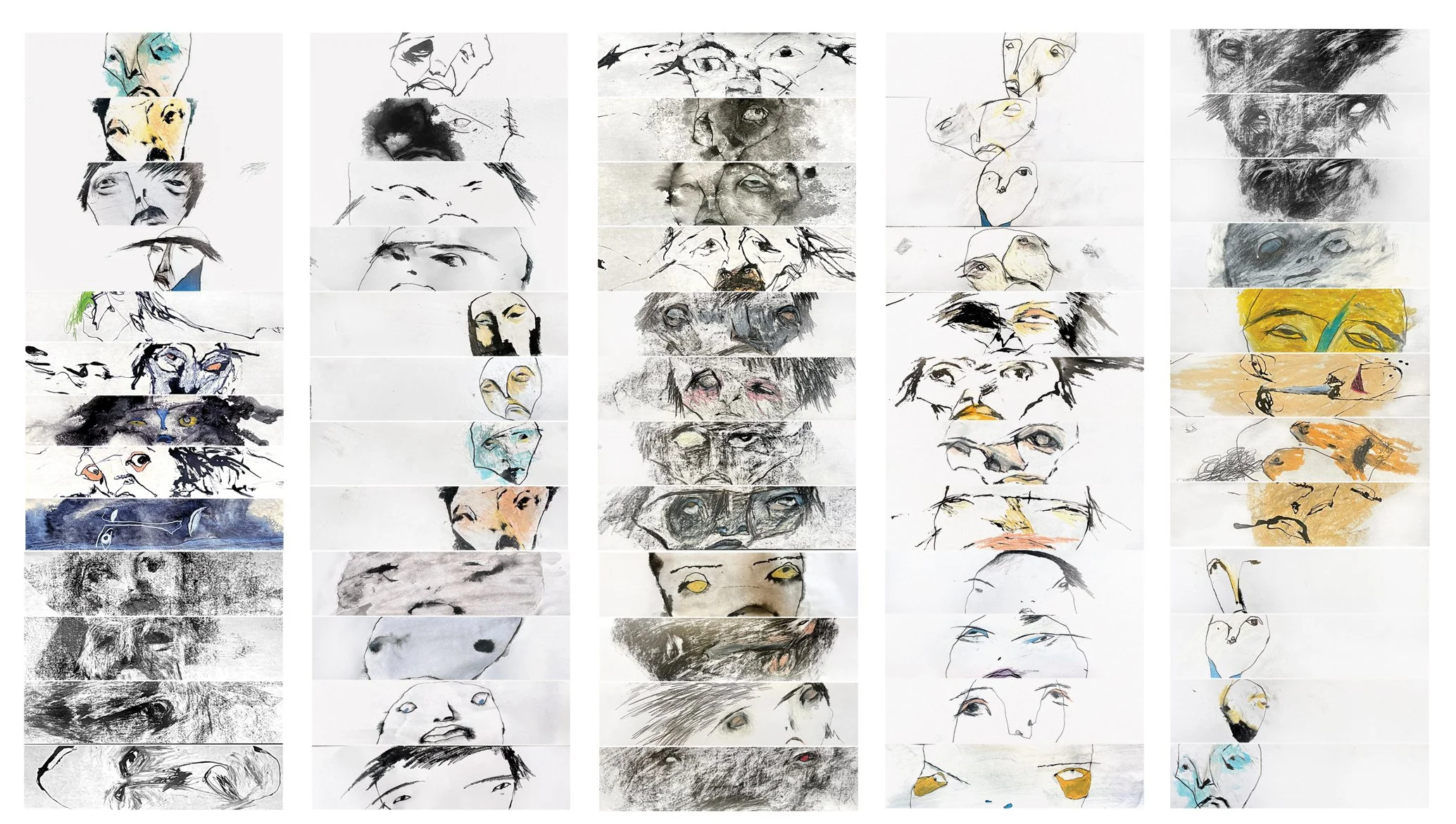
Process: Hair-line like pen marks are used to fill in 96 pieces of paper that all together make a drawing of a portrait, 5.7’x 5.5’. Copies are made of all the 96 pieces. Kept in order, the copies are then bound into the book that is installed on a pedestal in front of the portrait drawing so that both may be viewed simultaneously.
One is made of many pieces. If we focus only on one of the pieces at a time, a book page; only then an abstract image is perceivable. On the other hand if the focus is on the whole we fail to see fine/individual marks/pieces that the whole is made of. This is the human impossibility to perceive others or self in their entirety (tiniest pieces and the whole). Reality is a perceptual construct.
Pencil on paper
Each of four drawings h9.7’ x w3’
Process: Each of the four drawings is made with the three pencils. First drawing is blank with unused pencils on the side. The second drawing is made by using only one pencil (the other two pencils together with the leftovers of the used pencil are attached to the wall to the right of the drawing). The third drawing is made by using two pencils (leftovers of the used pencils and the unused one are attached to the wall). The last drawing is made by using all three pencils (leftovers are attached to the wall). Each drawing is a drawing of a portrait.
The piece. One has a certain totality of potentials (certain amount and kind of materials). One may use none, all, or part of this totality which is directly represented in one’s self-qualities/self-appearance/self-existence (in one’s portrait). How much and how one uses what is within (what is “given”) is what one becomes.
Pencil on paper
h67” x w23.25”
Pencil, charcoal on paper
Each 3.7” x 2.8”, box 68” long
Process: Constrain self to draw 5000 things from the same spot. Every 1000 drawings, draw in a different physical or mental state:
1. normal
2. fasting
3. sleep abstinence
4. continuous
5. time limitation (one-minute drawing)
Repeat the whole piece the same way as the first 5000 drawings (10,000 drawings in final piece).
The piece: One perceives the world based on a personal view which is entirely directed by physical-mental cognition. Due to the different physical/mental state, number of things needed to be seen in a limited space, as well as the constraints enforced on the drawing method, perception of mundane observation is transformed into a personally enriched experience of seeing what has not been seen before and perception of surrounding space in a new/different way. How much more the second experience influences/changes the perception as opposed to the first experience.
Pencil on paper
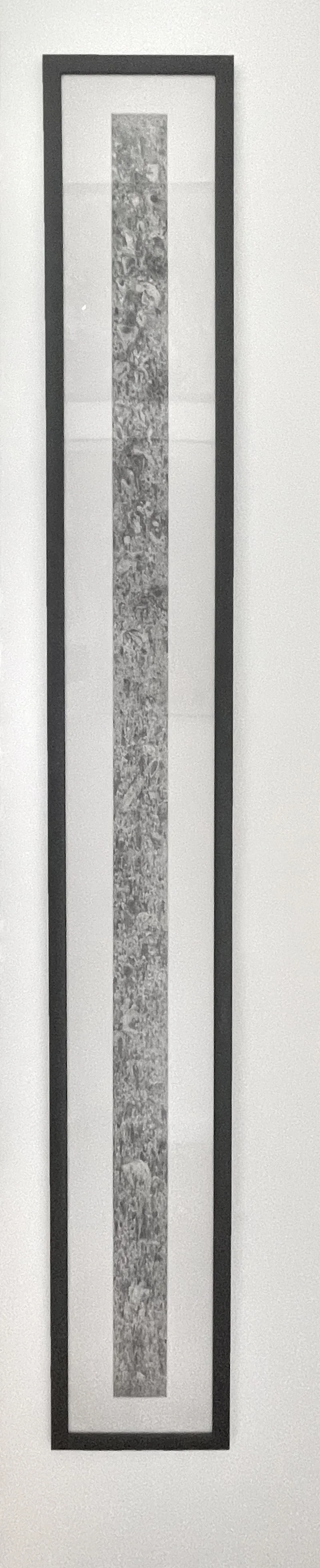
6” x length varies (approximately 50 feet each)
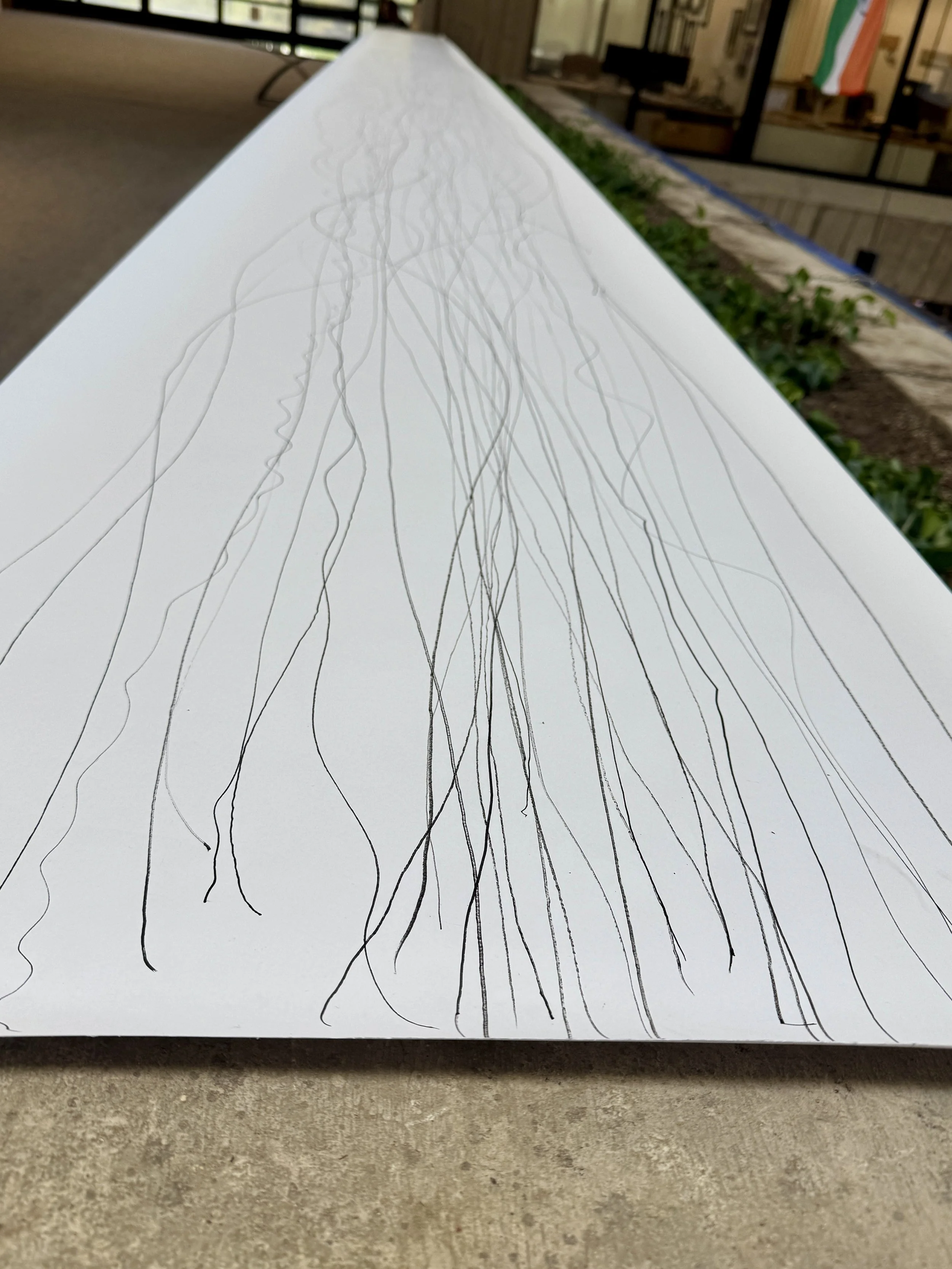
Process: For 4 consecutive days a line was drawn for each inhale and exhale for a duration of 20 hours. Sleep for 3 hours after every 20th hour of drawing.
The piece: Breathing is a constant linear continuum. Automatic unconscious repetition. Gaining consciousness over this automatism (that is taken for granted) which keeps one alive is gaining consciousness of life. Life in its entire purity. Life free of any disturbances.
John von Neumann was a Hungarian-American mathematician, physicist, computer scientist, engineer and polymath. “How can we make something of long duration from parts that are very short lived? How something that is perfect could be constructed out of imperfect components? This, Is a basses of living systems. 1,000,000, 2005 is a simple pen on paper drawing, h 129” x w 60”. A very small mark, brick like, about 1/8”, is drawn over and over, one million times. Any individual mark caries its own imperfection. Any of one million marks would be invisible by itself, insignificant. Nevertheless, one million of insignificant imperfections, together as a whole, give rise to the massive wall. Each unique part caries its information, connects with the other surrounding parts and so on until the one new whole is created, different in character from the individual parts yet caring the information of the part (the part and the whole are rectangular in shape).
Paper
14” x 12.5” x 9.5”
Process: Make one Holedrawing each minute constantly for 36 hours. Begin at 6 and end at 6 o’clock. 2160 pages and/or minutes.
Pen on paper
h68” x w2” each of 365, installation w76’ or 912”
Process: At the end of each day draw a constant line on 68” (personal height) long paper. Mark the date on the top.
The piece: A line is a direct expression of an inner energy, energy that defines an entire mental state of the given moment. A line expresses the most fundamental energy/thought which words can never capture. This formal aspect of a line/mark is the most truthful documentation of energy through and for all time.
Mixed media
h8.5” x w8.5” x d11”
In one stack of paper is a 3D hole-drawing portrait. Another same-sized stack of paper consists of multiple 2D drawings of the 3D portrait drawn continuously over a course of 24 hours. Blank pages are those left unfinished.
Throughout life, one develops numerous images of who and what oneself is. However to a great extent the self is unexplored and unseen.
Mixed media
h8.5” x w8.5” x d11”
In one stack of paper is a 3D hole-drawing portrait. Another same-sized stack of paper consists of multiple 2D drawings of the 3D portrait drawn continuously over a course of 24 hours. Blank pages are those left unfinished.
Throughout life, one develops numerous images of who and what oneself is. However to a great extent the self is unexplored and unseen.
Pen on paper, 5.5” x 8.5” x 3/8”
Process : Book 1 : draw marks on each page of the book as if you were writing.
book 2 : Draw exact number of marks used within book 1 on all outer sides of book 2.
One’s identity may be viewed and perceived by looking clearly at individual elements that one is built of (like reading a book 1 where each individual letter and word has its own meaning). Or one may merge all the individual elements together to see only the whole instead of the individual pieces. Viewing the whole, one perceives the overall energy of that which is within but fails to see individual pieces that the whole is built of (book 2). On the other hand if only individual pieces are observed perception fails to see the energy or the power of the whole entity (book 1). Only a perception of both views leads to a complete and full view of one’s self.
Pen on paper
26” x 18”
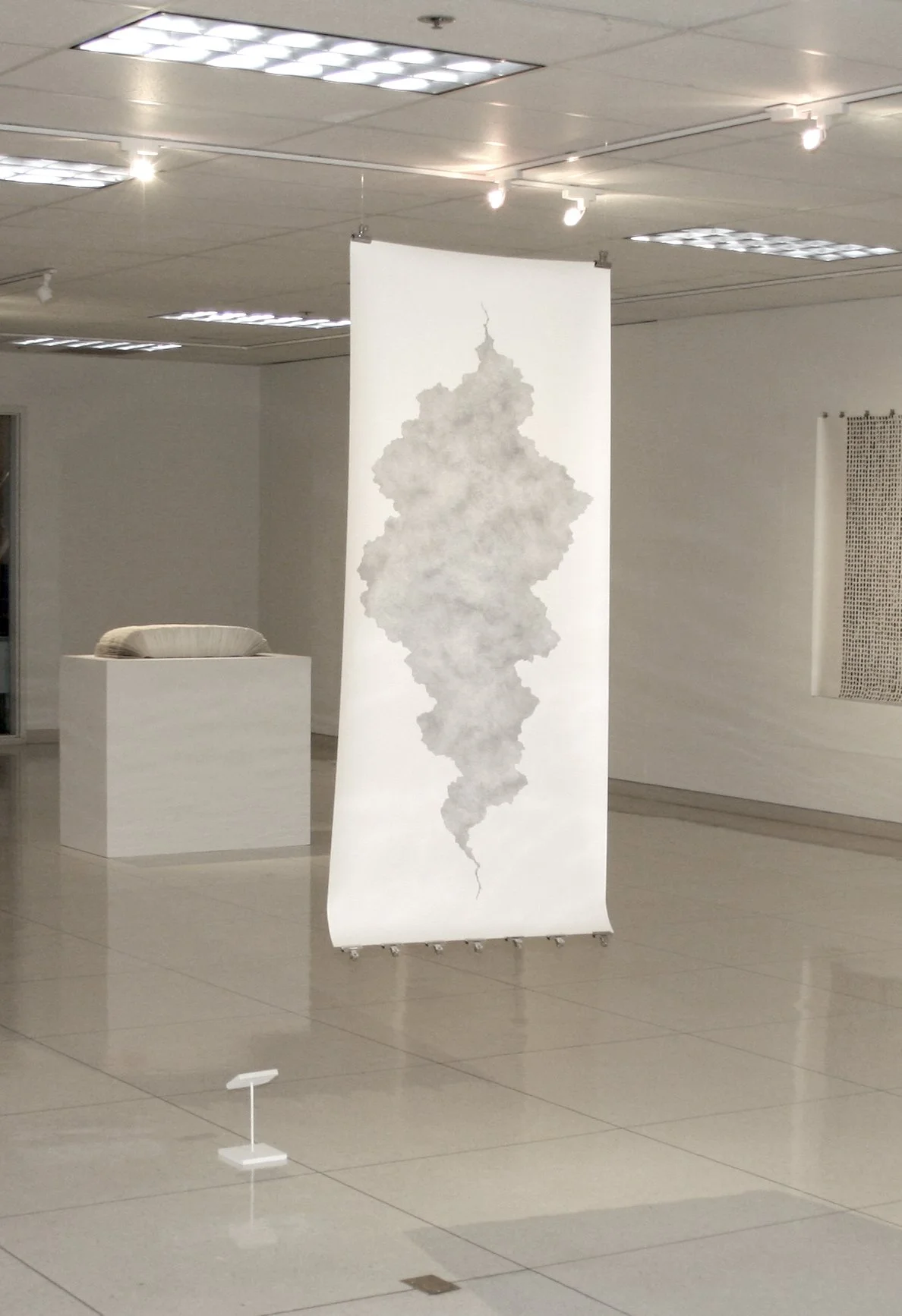
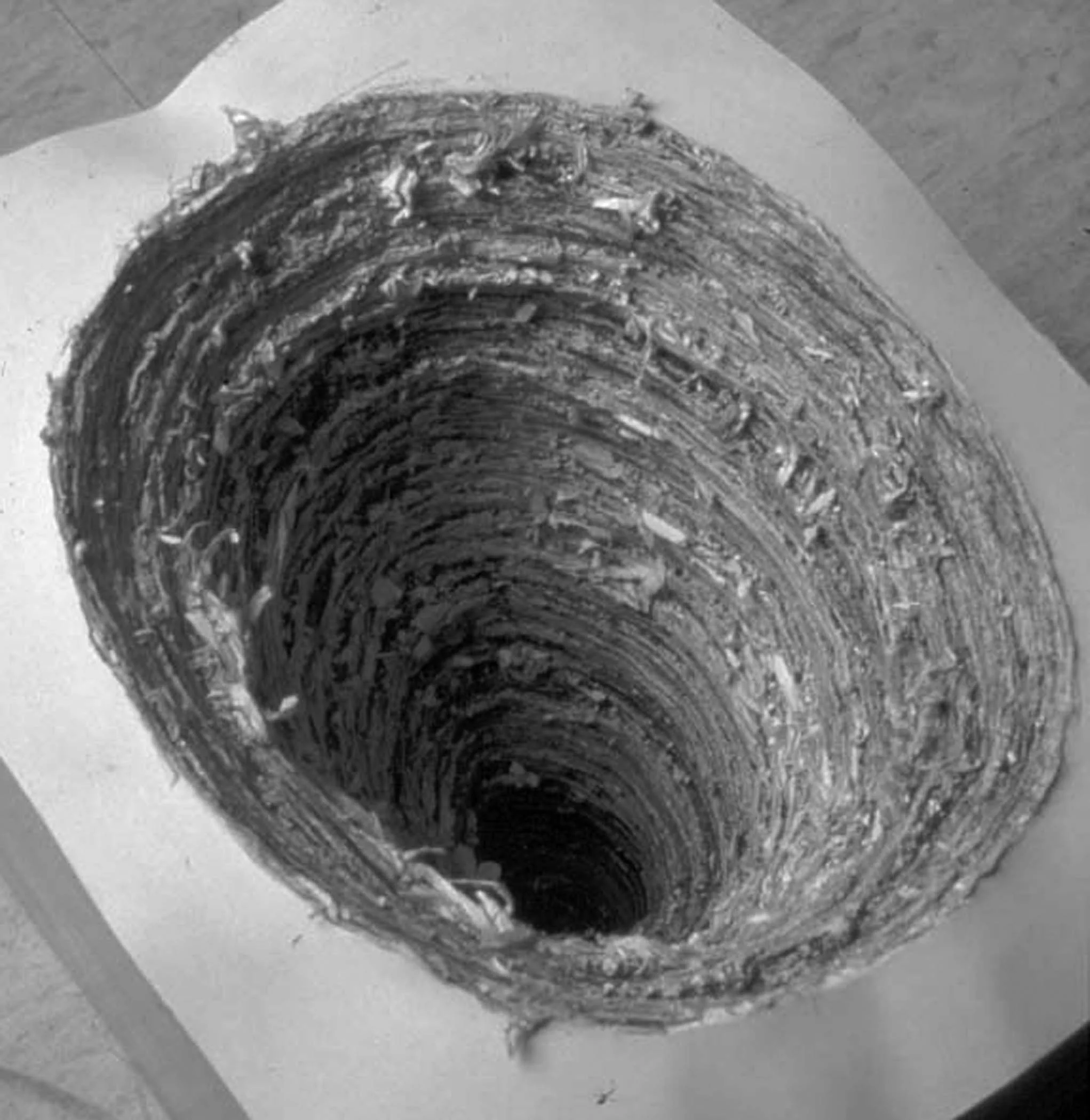
Process: Write continuously for 24hr all thoughts that appear in consciousness. Due to the over layering of writing hole will appear. All thoughts are merged together creating the hole.
Pen on paper
4.5” x 10.5” x 9.5”
Process : The drawing of the holedrawing figure has been made through the whole book. On each page of the book a 2D drawing of different spaces is drawn. The 2D drawing is taking over the 3D holedrawing of the figure as the hole gets smaller and closer to the end.
Life experiences cause, change and mold self but self always stays self until it vanishes.
Pen on paper
h68” x w82”
Process: The hole (a head-like shape) has been formed by layers of written thoughts. The self is what the self thinks. Thoughts create the self while the self creates thoughts.
Paper, pen and white ink
Closed book h 40 1/4” x w 26 1/4”.
Open h 40 1/4” x w 52 1/2”
Process of the piece: 9819 doors represents 9819 days I have been alive up to 2/12/03, the date of completion of the piece. Most of the doors are drawn with the white ink. However, some of the doors are hole-drawings that are appearing and disappearing randomly through the book and are influencing the pen drawing. The ink drawing changes from being representational to abstract.
The piece: Each day new door presents itself upon us. Most of the time we don’t choose-dare to open the door (ink drawings of the doors) and start with the new experiences. The doors we open (hole-drawings of the doors) however will lead to other doors that need to be open. The door we choose to open today will influence and determine the doors that will be presented to us subsequently. While walking through the life each step and the movement of our physical-cognitive part of self has to be thought of and directed towards something and the consequence of it will be put upon us. Perhaps we never open the right door. Perhaps all doors are equal. Perhaps it doesn’t matter what we chose but how we deal with the consequences.
Paper, pen and ink
Each of 6 drawing: h32” x w20”
Process of the piece: On each of the 6 cardboard panels (that have been installed in the space by hanging from the ceiling) have on one side a drawing of the identical hole-figure and on the other side a drawing of the different motif that is following the shape of the hole. Motifs are in order of: crowd, birds, trees, rocks, books, and field.
Mixed media
67” x 22” x 1”
Process: The life size hole-drawing of a figure is dug out on an inch thick paper stack. On each piece of paper that has been dug out from the hole-drawing an image of figures is drawn. The hole-drawing of the figure is installed on the wall while small drawings are scattered throughout the space. Each drawing has a different motif as an indication of the different thoughts and memories that transpire within a Being. Being is just a simple form. The inner states, thoughts, experiences, ideas, beliefs, feelings, is what spreads around and beyond space-time. The being is temporal, static, indistinct, transparent, plain, while the energy from within spreads energy throughout space-time. Being becomes part of and is being within All.
Pencil on paper
The piece: The story of one’s life is fully understood and comprehended only by oneself. One’s autobiography will vanish together with one’s own existence. For everything/everyone other than oneself, the autobiography is just a pile of dusty words (where only few words may be recognized and even less understood). Even for the self, the autobiography vanishes in front of one’s own eyes (that which happened is just a dusty shredded memory). No matter what one does in one’s life one will never overcome being an unrecognizable/misunderstood pile of dusty words. One will never know the other. One will never know oneself.
Details
Details
Each panel h 9” x w 7”
Wood, bricks, house paint
Process: Parts of houses were broken off with a hammer. The broken off pieces are glued on a white wood panel. Under each panel is the address number of the house from which that particular piece was taken.
Dimensions variable
Bricks, Pencil, Black wall
Process: Used brick that collected after the demolition is traced onto the black wall with the white pencil. The brick is then crushed into pieces and piled up in front of the traced drawing.
Detail
Bottles, wire, dirt
h 21” x w 17”
Process of the piece: Each bottle contains dirt collected from different graves. Above each bottle is a number representing the year of person’s death.
h9” x w5” each of 1440
Paper and pencil
Process: Scribble the linear field on paper every minute for 24 hours. Do we observe individual minutes/drawing or time as a whole, the entire installation? Does physical endurance influence cognition? Can one be aware of all the individual moments?
Detail
Detail
h68” x w63” each shape is h 68” x w 30”
Black wall, Incised lines
Process: The number of incised lines into the wall on the right-side shape equals number of days I have been alive, and the left-side shape, the number of nights. The height of the shapes matches personal height. Every day we leave physical trace that materializes us into who we are.
Detail
h7” x w11”
Paper, ink, video
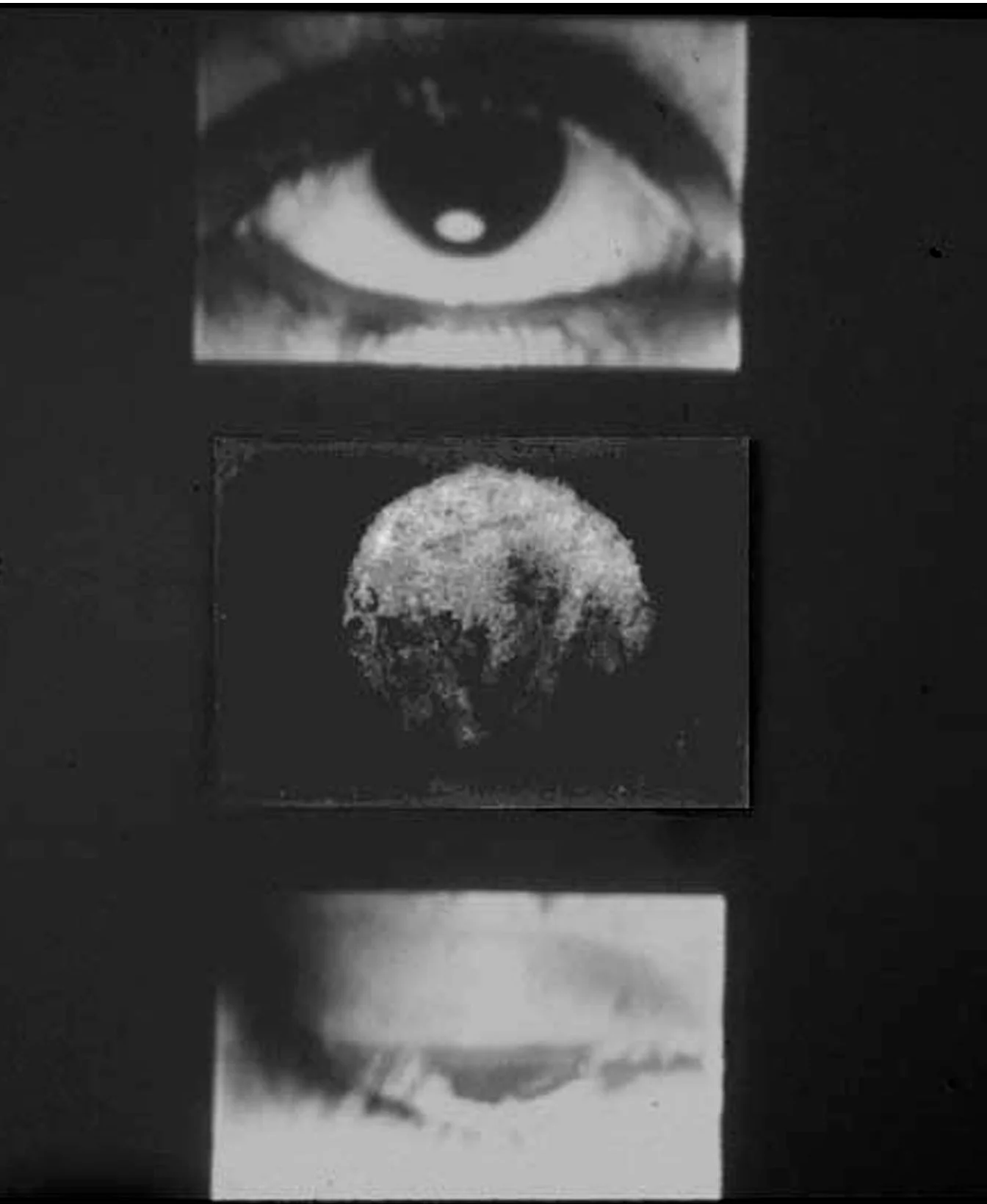
Process: While making a drawing of a moon, shoot a video of the eye when looking up at the moon and when looking down at the paper while drawing the moon. Two projections of the eye, one observing the moon and the other observing the drawing, are projected above and below the drawing. Through the observation one interprets things consequently giving them a meaning and understanding. Regardless of the physical reality of things, one’s interpretation will always be based on one’s projection of oneself. Things are never as one sees them, they are only the way the mind constructs them. Observer imposes conditions on the nature of the object, which creates a different kind of reality than existed independently. Perception that follows the observation is nothing more than confused though.
Each drawing h9” x w12”, Installation: h96” x w81”
Paper, ink, house paint, book
Process: After reading one page of the book the page has been painted black. Then, drawing is made based on the memory of what was read. This process is continued until the whole book is black. At the end all drawings are painted black as well. The drawings are installed in the grid and in the middle of them is the black book. Anything that is experienced, in this case reading a book, is transfigured by self. Physically, text is a static combination of letters. Meaning of text has an infinite number of interpretations. With any new reading text becomes something other than what it was or is. Identity of text/drawings is metamorphosing with any new reading or observer due to the projection of self. Any text is equally meaningful as blank/black pages of it considering that the only thing that is left after experiencing a book is self projection. Through the personal interpretation of the text, the book alters into the drawings. Drawings, just the same, are altered personalized interpretations.
Paper, ink
Each of 25 drawings h10” x w10”.
The whole piece h60” x w60”
Process of the piece: Number of marks used to draw each of 25 portraits is placed above each drawing. All marks wereadded which gave the final number of 57,722.
The mechanical and repetitious process engaged in drawings is used to express quantity within one and all. Each portrait is just a number of things/marks with which it was created. However, at the end it becomes and exists only as a part of the whole (number as a part of the larger number). Perhaps humanity functions this way as well.
Paper, ink
Each of 7pieces: h20 1/2” x w9 1/2”
Process of the piece: 35655 is the number that emerged from counting marks that were used to create 7 drawings of hands. The number of marks of each drawing is placed above the drawing. The final equation is 7:26315.
Paper, pencil, ink , house paint, enamel
h12” x w18”
Process of the piece : Each page of the book has a drawing of a figure reading/looking at a page of the Book. The page which the figure is looking at is the next page of the Book (the figure is looking at himself looking at the book but he sees himself as he will appear on the next page). As the book progresses the drawings of the figure become darker. At the end the figure becomes black and disappears within the black background.
Brick, tracing paper, pencil
Each is w10” x d12” x h from the ceiling to the floor
Process of the piece: Draw the brick. Break part of the brick with a hammer. Make a drawing of the brick that is left and a drawing of the broken part. The same process is repeated until there is no more brick. On the left are drawings of broken parts and on the right are drawings of the brick. Beneath the drawings on the left side are the broken parts and on the right side is a last piece of the actual brick that has been destroyed.
The piece: Mirror is a documentation of destruction thus creation. Destruction is a mirror reflection of life. While on one side destruction creates the diminishing of mater on the other it creates increases of the matter. In order for creation to happen destruction must occur.
Paper, pencil
h68” x w3”
Process of the piece: 9351 is the number of days I have been alive prior to November 1st 2001, which is the date of piece’s execution. The format matches my height.
Each day of our life we become new, different person based on the experiences.
Paper, pen
h45” x w25”
Process of the piece: Begin making continues line from the center of the paper with a new pen until pen runs out of ink. One pen lasted 17 1/2 hours, which has created 123 square inches of covered surface.
Paper, pen
6” x 1” x 3”
Process of the piece: Sign your signature constantly until exhaustion of the hand. Due to the strong pressure of the pen in this case it took 4hr for which time 1” signaturehole was made.
Paper, pen
9” x 6” x 14”
Process of the piece: The hole is the result of 100 000 self signatures that have been drawn.
Paper, pen
1” x 3” x 12”
Process of the piece: Cover the first page with the signatures. Repeat signing on the top of the page until pen digs all the way through the 1” stack of paper. The smooth transition is made between the hole on the top and first page.
Combination of 2D drawing and the negative 3D drawing is made here. Signature is the ultimate reflection of Self, more so then self-portrait that reflects only physical aspects of self. Self is created by self by recreating Self over and over again. Repeating self until it becomes new self free from superfluous selves, repeating signatures until the hole is made. The hole has new character even though it was made by the same signatures.
Paper, pen
h9” x w”6
Process of the piece: One Holedrawing has been made constantly each minute for 24 hours. 1440 pages in the stack.
Paper, pen
9 1/4” x 11” x 8.5”
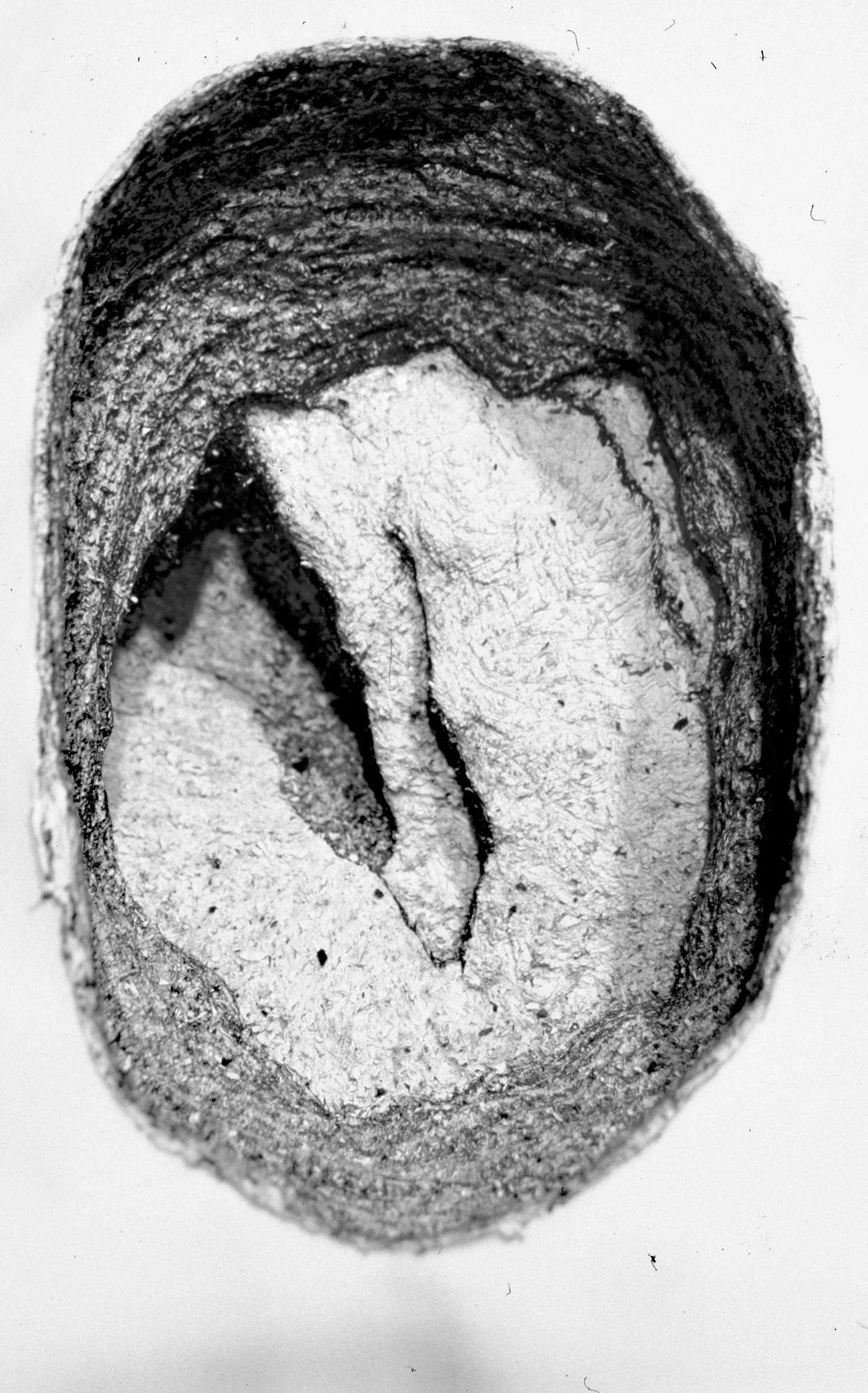
Process of the piece: The oval-shaped drawing (in a size of my face) is created on the 9 1/4” stack of paper. The drawing is repeated until the bottom of the paper stack is reached.
The drawing is created not as a 2D illusion of the 3D space but as a 3D negative space that becomes positive. The hole is fictional world. Hole is always within something. It defines what something is by defining what something is not. Perhaps the part that is invisible (the part that is missing) is what defines self. Building what we are not is the way to create what we are.
Paper, pen
9 1/4” x 11” x 9”
Process of the piece: The oval-shaped drawing is created on the 9” stack of paper. The drawing is repeated until the hole in the paper stack is made.
Paper, pen, knife
The piece: Self among self; Will to power over self; The fullest existence (tallest stack of paper – 15”).
Self among others; One of many; Self inexistence (thinnest stack of paper – 3/4”).
Paper, pen
10” x ”13
Process of the piece. The Holedrawing is made so that top of the drawing is placed to be the bottom. To see is to look. To realize is to be involved.
Paper, pen, knife
h3” x w3” x l67.5”
Paper, pen
h3” x w67.5” each of 3
Process of the piece: Draw continuously until no more devoid of any perception of time other then before the beginning and right after decision is made to end. Proximately 25hr in this case. Execution of each 282 figure becomes moment for it self instead of given time.
Paper, pen
Each h20” x w15”
Process of the piece: One drawing is made for each of the following category.
1: One train ride. Draw continuously from first to the last stop.
2: Through the window in 10000 seconds. Look through the window for 10000 seconds and simultaneously draw whatever appears outside it.
3: One neighborhood. Draw continuously while walk through a neighborhood (all streets and alleys) while drawing all that appears.
4: One house. Walk through the house and draw every possible view.
5: 67 miles. While riding in a car for 67 miles draw all that appears.
Paper, pen
11” x 12” each of 5
The integration of drawing with the hole.
Paper, pen
11.5” x 11.5”
Process of the piece: Draw the holedrawing of a self portrait. Make each subsequent drawing following only the hole that is made by the first holedrawing until there is no more hole. Total 25 drawings. In each moment one is a sum of all past-future moments.